
 City Tour
May through early June and September through early October are the best months to visit Hallstatt for mild weather, good photography light, and crowds that feel manageable rather than overwhelming. If July or August is your only option, arrive before 9:00 AM or return after 4:30 PM to sidestep the peak day-trip wave. Winter, particularly the Advent market weeks in late November and early December, rewards travelers who want atmosphere over accessibility, though some attractions run reduced hours.
Key Takeaways
May through early June and September through early October offer the best balance of weather, light, and manageable crowds for a Hallstatt visit, with overnight stays consistently delivering the most rewarding experience regardless of season.
| Point | Details |
|---|---|
| Best months to visit | May–early June and September–early October for mild weather and fewer crowds. |
| Summer crowd reality | Hallstatt can receive upwards of 10,000 visitors per day in July–August on busy days. |
| Timing tactic | Arrive before 9:00 AM or after 4:30 PM to avoid the peak day-trip window. |
| Winter highlight | The Advent market typically runs from late November through to the third week of December in a quiet, atmospheric setting. |
| Nextviewtours option | Day trips and private tours from Vienna and Salzburg handle transfers, timing, and local guide access. |
Table of Contents
- How each season shapes your Hallstatt experience
- Month-by-month planner for picking your exact dates
- What you can actually do in Hallstatt each season
- Crowd levels, costs, and how far ahead to book
- Seasonal packing and day-trip essentials
- When to reconsider your dates and what’s nearby
- A tour operator’s honest perspective on timing
- Plan your Hallstatt visit with Nextviewtours
- Sources
How each season shapes your Hallstatt experience
| Season | Best for | Typical weather | Crowd level | Main activities | Cost pressure |
|---|---|---|---|---|---|
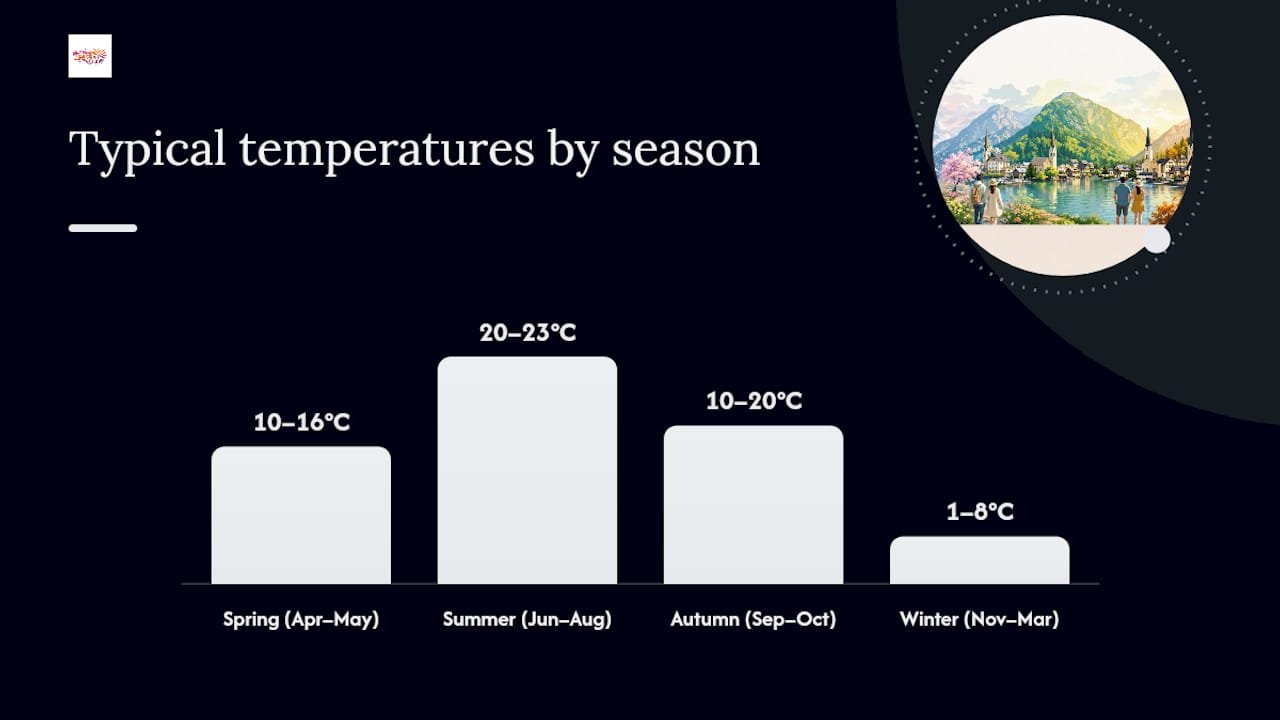
| Spring (Apr–May) | Photography, hiking, wildflowers | 10–16°C, occasional rain | Low to moderate | Trails, salt mine, Skywalk, boat trips | Low |
| Summer (Jun–Aug) | Swimming, full activity schedule | 20–23°C, sunny spells | Very high | Bathing Island, lake swimming, all attractions | High |
| Autumn (Sep–Oct) | Foliage, misty mornings, quieter trails | 10–20°C, crisp | Moderate | Hiking, photography, boat trips | Moderate |
| Winter (Nov–Mar) | Snow photography, Advent market | 1–8°C, snow possible | Very low | Christmas market, winter walks, limited mine tours | Low |
Summer is where the numbers tell the starkest story. During peak summer days in July and August, Hallstatt receives a very high number of visitors, most of them arriving by coach between 10:00 AM and 4:00 PM. The market square and dock viewpoint become genuinely difficult to move through. School holidays across Central Europe drive this surge, so the effect is consistent rather than occasional.
The Bathing Island at Lake Hallstatt is open daily and accessible 24/7, a short walk from the market square. All lakeside beaches in Dachstein-Salzkammergut are free of charge, making them one of the best-value warm-weather activities in the region.
Month-by-month planner for picking your exact dates
January–March brings genuine quiet. Snow transforms the village into something close to a film set, and you may have the lakeside promenade almost to yourself. Some attractions run limited winter schedules, so confirm salt mine and Skywalk hours before you go.
April–May is when Hallstatt wakes up. Wildflowers appear on the lower trails by mid-April, and by late May the higher mountain paths are largely clear of snow. Crowds are still light compared to summer, and the morning light on the lake is exceptional for photography.
June sits in a sweet spot. Weather is warm and reliable, all attractions are fully open, and the coach-tour wave has not yet peaked. Early June mornings, before 9:00 AM, can feel almost private.
July–August is peak season in every sense. Lake temperatures reach roughly 16–23°C, making swimming genuinely enjoyable. If you visit now, book accommodation months ahead, arrive early, and plan to leave the village center between 11:00 AM and 3:00 PM, returning after 5:00 PM when coaches depart. Weekdays are noticeably calmer than weekends.
September–October is the season most experienced travelers prefer. The second and third weeks of October typically bring peak autumn foliage, and misty mornings over the lake produce some of the most striking photography conditions of the year. Crowds thin considerably after the first week of September.
November–December splits into two distinct moods. Late November through approximately December 20 hosts the Hallstatt Advent market, a small but atmospheric gathering of roughly 20–30 stalls. After the market closes, the village enters its quietest period of the year.
- Overnight stays change the experience entirely. Guests who sleep in Hallstatt have the village to themselves in the early morning and evening, long after day-trippers have left.
- Weekday visits are consistently calmer than weekends throughout the year.
- Book the earliest available salt mine tour slot and use the midday lull to rest or explore the lake by boat.
What you can actually do in Hallstatt each season
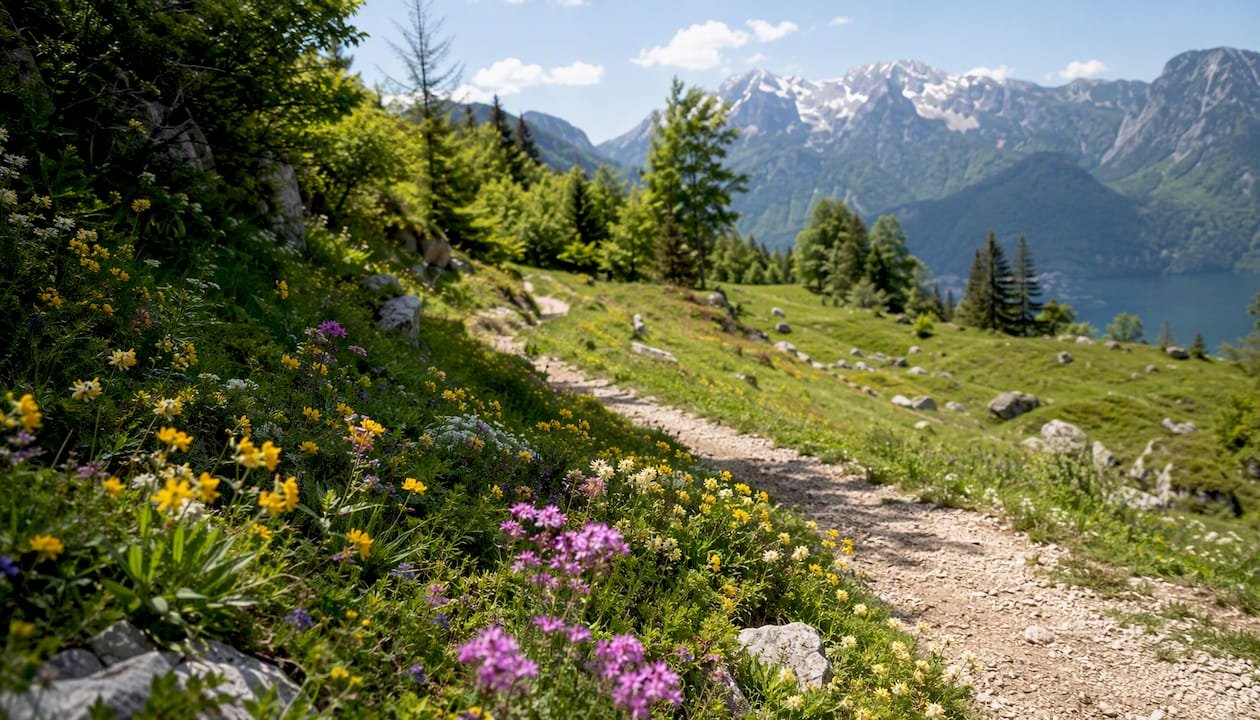
Spring opens the full trail network by late May. Wildflowers line the lower paths, and the Skywalk viewpoint offers unobstructed mountain panoramas without summer’s queue. Boat rentals are available, and the salt mine runs its regular schedule. One caution: trails above 1,000 meters may still carry snow patches in April, so check conditions before heading up.
Summer is the season for swimming in Hallstatt. With lake temperatures peaking around 20–23°C in July and August, the Bathing Island and free shoreline beaches are genuinely inviting. Every attraction operates at full capacity: the Hallstatt Salt Mine, the Skywalk, boat rentals, and ferry crossings all run their peak schedules.
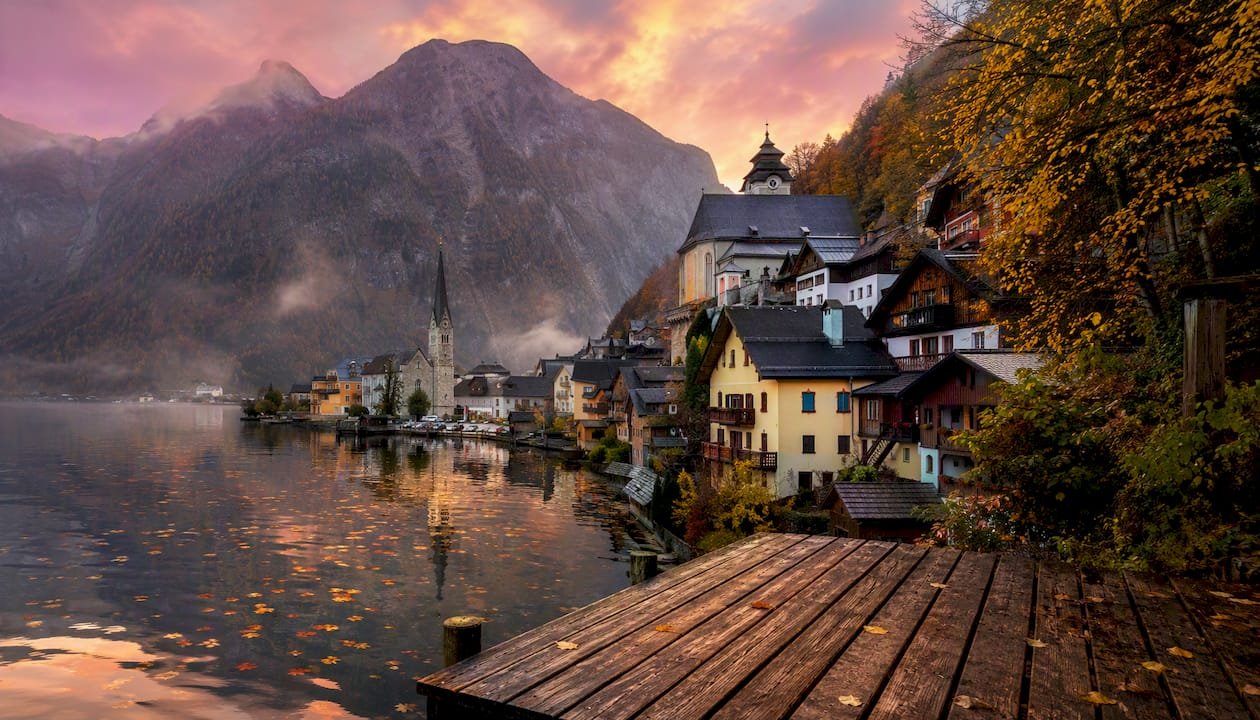
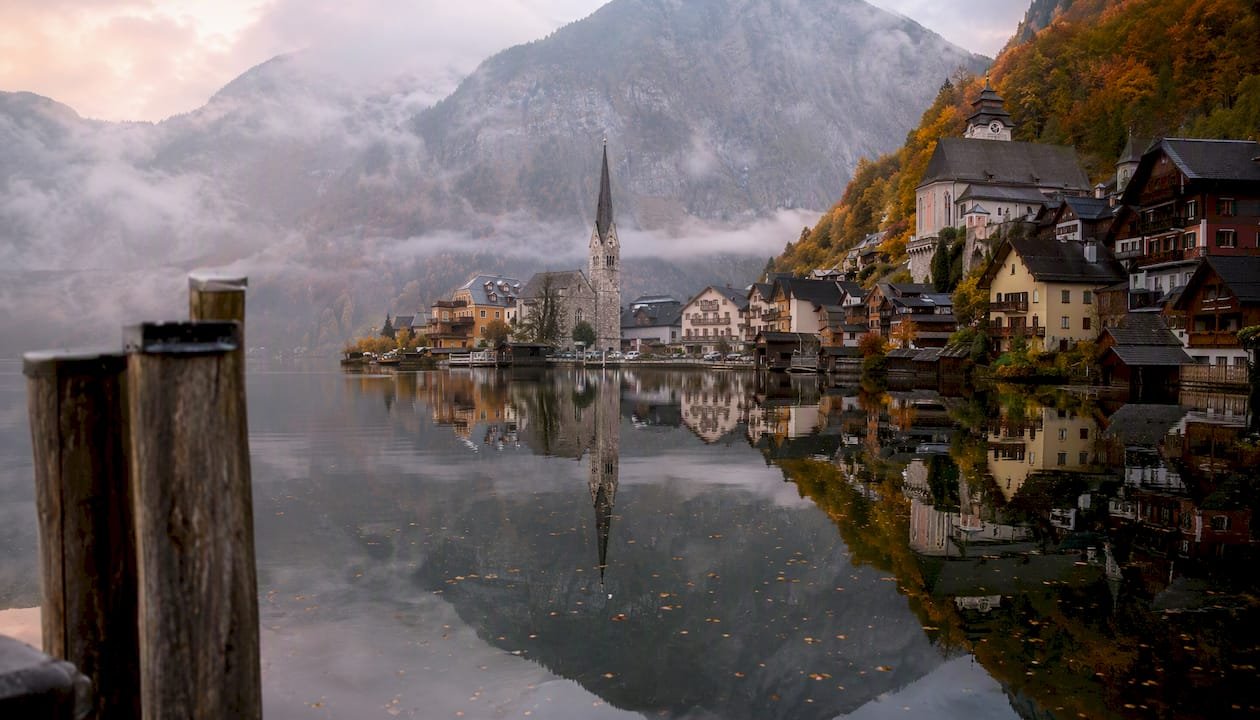
Autumn rewards photographers and hikers above all. The second and third weeks of October bring the most reliable foliage color, and the trails are quieter than at any point since spring. Misty mornings over the lake, with the village reflected in still water, are a defining Hallstatt image that summer’s brightness rarely produces.
Winter narrows the activity menu but deepens the atmosphere. The Advent market weeks offer mulled wine, handcrafted goods, and candlelit evenings that feel genuinely local. Snow photography from the lake shore or the hillside cemetery is spectacular when conditions align. Confirm salt mine and Skywalk hours in advance, as winter schedules are reduced.
Crowd levels, costs, and how far ahead to book
Booking timelines vary sharply by season. For summer visits, particularly July and August, secure accommodation three to six months ahead. Shoulder-season travelers in May, June, September, and October can usually book six to eight weeks out and still find good options. Winter visits outside the Advent market weeks need very little advance planning.
Typical day-trip travel times:
- From Salzburg: approximately 1.5–2 hours each way by train and bus, making a comfortable day trip with four to five hours in the village.
- From Vienna: approximately 3.5–4 hours each way, which means an early departure (around 6:00–7:00 AM) is necessary for a Hallstatt day trip from Vienna to feel unhurried.
Summer accommodation prices in Hallstatt itself can run significantly higher than in nearby towns. Staying in Obertraun or Bad Ischl and commuting by bus or ferry cuts costs and often improves the experience, since you arrive before the coach crowds and leave after they go.
Nextviewtours offers guided day trips and private tour options departing from Vienna and Salzburg, handling transfers and timing so you can focus on the village rather than the logistics.
Seasonal packing and day-trip essentials
Spring (April–May):
- Waterproof jacket and layers for variable temperatures
- Sturdy walking shoes for wet trails
- Camera with a wide-angle lens for lake reflections
Summer (June–August):
- Swimwear and a towel for the Bathing Island and free lakeside beaches
- Sunscreen and a hat for midday lake exposure
- Light layers for cooler evenings on the water
Autumn (September–October):
- Mid-weight fleece and a windproof shell
- Polarizing filter for misty-morning lake photography
- Comfortable hiking boots for foliage trails
Winter (November–March):
- Insulated, waterproof jacket and thermal base layers
- Grip-sole boots for icy lakeside paths
- Hand warmers for long photography sessions
Pro Tip: Pack a reusable water bottle. The village has limited café seating during peak hours, and staying hydrated without queuing for a table makes the midday crowd period much easier to navigate.
When to reconsider your dates and what’s nearby
Avoid Hallstatt on summer weekends between late June and late August if solitude matters to you. Austrian and German public holidays during this window bring additional visitor spikes on top of the regular coach traffic.
Crowd-avoidance tactics that actually work:
- Stay overnight in Hallstatt and walk the promenade before 8:00 AM.
- Take the ferry from the opposite shore (Hallstatt train station side) to arrive at the dock before coaches unload.
- Visit on a Tuesday or Wednesday rather than Friday through Sunday.
- Plan your salt mine or Skywalk visit for the first tour slot of the day.
Nearby quieter alternatives:
- Obertraun, a ten-minute bus ride away, has its own lakeside beaches and direct access to the Dachstein caves, with a fraction of Hallstatt’s foot traffic.
- Bad Goisern, further along the Salzkammergut valley, offers cycling, hiking, and a genuinely local market-town atmosphere without the tourist infrastructure.
A tour operator’s honest perspective on timing
The single piece of advice that changes a Hallstatt visit more than any other is this: stay at least one night. Every guest who has done it reports the same thing. The village at 7:00 AM, with mist on the water and no coaches in sight, is a completely different place from the one that exists at noon. That contrast is not subtle.
May and early September are the windows where the experience most consistently matches what travelers imagine when they picture Hallstatt. The light is good, the trails are open, and the village feels like a place people actually live in rather than a backdrop for photographs. July and August can still be wonderful, but they require deliberate planning around the crowd patterns described above. Going in without a timing strategy in peak summer is the most common pitfall we see.
One practical note: if you are traveling from Vienna, build in more time than you think you need. The journey is longer than many itineraries account for, and rushing the return leg is the most frequent regret among first-time visitors.
Plan your Hallstatt visit with Nextviewtours
Timing a Hallstatt visit well means more than picking the right month. It means coordinating transfers, booking the right tour slot, and knowing when to be where. Nextviewtours offers day trips, private tours, and customized multi-day itineraries departing from Vienna and Salzburg, with local guides who know the crowd patterns, the best photography windows, and the ferry schedules that make the difference between a rushed visit and a memorable one.

Whether you want a fully customized private experience timed to the shoulder season or a structured group day trip with transfers included, Nextviewtours handles the logistics so you arrive at the right moment. Browse available Hallstatt departures and check current dates at Nextviewtours.
Sources
- Bathing Island Hallstatt — POI
- Best Hallstatt Travel Guide 2026: Austria’s Most Beautiful Fairytale Village
- Best Time to Visit Hallstatt Austria in 2026: Month-by-Month Guide
- Lake Hallstatt – Hallstatt Austria
- Hallstatt Travel Guide (2026): Viewpoints, Salt Mine, Boating & Crowd Strategy


Comments are closed