

 Uncategorized
TL;DR:
- Choosing a central hub city for day trips reduces travel time, costs, and logistical stress during Europe visits.
- Limiting travel time to 1-3 hours per direction allows for more meaningful onsite experiences and flexibility in planning.
- Travel during shoulder seasons, avoiding peak summer months, enhances enjoyment, avoids crowds, and improves site access.
You arrive in Vienna, Prague, or Budapest with two glorious free days and an ambitious list of places you absolutely cannot miss. By mid-afternoon on day one, you’ve spent six hours on trains, eaten a sad station sandwich, and arrived at a hilltop castle thirty minutes before closing. Sound familiar? Choosing day trips in Europe requires more than enthusiasm. It demands a clear method, honest time assessment, and a willingness to do less better. This guide walks you through every step so that your next European getaway feels expansive rather than exhausting.
Table of Contents
- Set your starting point: the hub-and-spoke strategy
- Assess time and feasibility: make every hour count
- Timing your trip: seasons, crowds, and local events
- Set your budget and book with confidence
- Why slowing down leads to better day trips
- Ready to craft your perfect European day trip?
- Frequently asked questions
Key Takeaways
| Point | Details |
|---|---|
| Start with a central hub | Choosing a well-connected base city makes day trips easier and more rewarding. |
| Keep journeys short | Stick to destinations within 1-3 hours for maximum onsite enjoyment and less travel fatigue. |
| Plan for the right season | Travel in shoulder months for comfort, value, and access to both cultural and natural sites. |
| Book smart and budget ahead | Secure tickets in advance and use city passes or combo tickets for the best deals. |
| Quality beats quantity | Slow down—fewer, well-chosen trips often create the most memorable experiences. |
Set your starting point: the hub-and-spoke strategy
Now that you know why efficient planning matters, let’s begin with the foundation: picking the right launch point for your adventures.
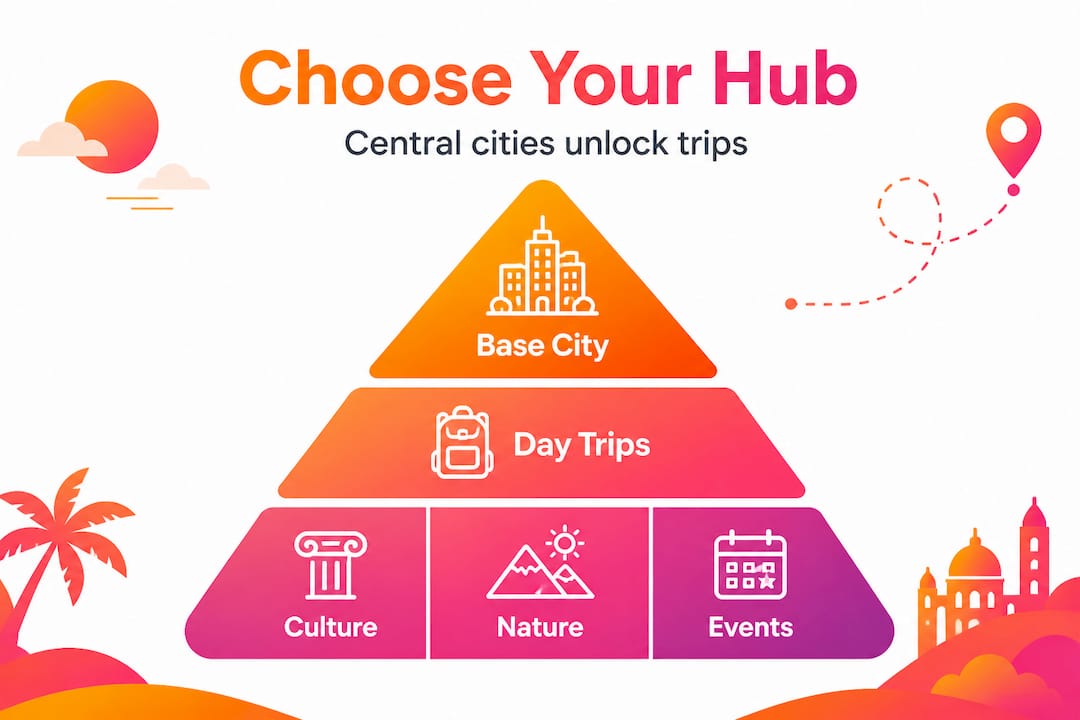
The single most powerful thing you can do before booking anything is choose a smart base city. Think of it like a wheel. Your base is the hub, and every day trip radiates outward like a spoke. You unpack once, sleep in the same bed each night, and step out each morning ready to explore. No dragging luggage between cities. No wasted hours figuring out a new transit system every two days.
Travel experts consistently recommend using a central city hub to maximize cultural depth while minimizing logistical friction. The approach is also budget-friendly. Rick Steves advises basing near big sights for side-trips rather than bouncing city to city, precisely because constant movement drains both your energy and your wallet through what he calls “transit tax.” Every hour on a bus is an hour not spent standing in front of a Klimt painting or hiking along a river gorge.
Which cities make the best European hubs? Here is a quick comparison:
| Base city | Reachable day trip highlights | Typical travel time |
|---|---|---|
| Vienna | Hallstatt, Salzburg, Bratislava, Český Krumlov | 1 to 3 hours |
| Prague | Kutná Hora, Karlštejn Castle, Ceský Krumlov | 1 to 2.5 hours |
| Budapest | Visegrád, Eger, Szentendre, Bratislava | 1 to 3 hours |
| Salzburg | Hallstatt, Berchtesgaden, Mondsee | 45 min to 2 hours |
| Paris | Versailles, Giverny, Chartres, Fontainebleau | 1 to 2 hours |
Notice how each of these cities sits at the center of a rich web of cultural and natural destinations. That is no accident. These are historic crossroads, and their transport links reflect centuries of connectivity.
When organizing multi-day tours around a single base, you also benefit from familiarity. By night two, you know which bakery opens early, which metro line skips the crowds, and where to grab a late dinner. That local rhythm matters more than most travelers realize.
Pro Tip: Before committing to a base city, count how many day trip destinations you genuinely want to see. If four out of five are within two hours of Vienna, Vienna wins. Don’t force geographic balance where none exists.
Key reasons the hub-and-spoke model works so well:
- You avoid the hidden cost of repeated check-ins, check-outs, and luggage storage fees
- Familiarity with your base city grows each day, reducing navigation stress
- You can return early if a destination disappoints without losing an overnight booking
- Emergency flexibility: bad weather means you simply stay local that day
Assess time and feasibility: make every hour count
Once you’ve chosen your base city, the next key is to make sure every day trip is truly feasible and enjoyable without spending most of your day on a train or bus.
Here is a truth most travel bloggers gloss over: travel time is not free. Every hour in transit is an hour subtracted from the experience you actually came for. Limiting day trips to 1 to 3 hours of travel by public transport allows you 4 to 8 quality hours at your destination, which is the sweet spot between a rushed visit and genuine immersion.
A practical travel time framework looks like this:
| Journey time (one way) | On-site time available | Verdict |
|---|---|---|
| Under 1 hour | 7 to 9 hours | Ideal |
| 1 to 2 hours | 5 to 7 hours | Excellent |
| 2 to 3 hours | 3 to 5 hours | Manageable |
| Over 3 hours | Under 3 hours | Avoid for day trips |
For expert itinerary tips on structuring time at your destination, it also helps to know that most major European museums and castles close between 5 and 6 PM. If you arrive past 2 PM, you are already working with a reduced window.
How to evaluate any day trip for feasibility:
- Open the national rail planner or Google Maps and check the fastest direct connection from your base
- Add buffer time for platform changes, ticket queues, and unexpected delays (15 to 20 minutes each way)
- Calculate realistic arrival and departure times, not optimistic ones
- Research site opening hours and last entry times before assuming you can squeeze in one more stop
- Check if a guided group departure handles all the logistics for you, which often saves 45 minutes on coordination alone
“The best day trips are the ones where you feel like you had a full experience, not the ones where you technically visited the most places.” This is a distinction worth holding onto every time you are tempted to add one more stop.
There are also clear warning signs that a destination is too far for a comfortable same-day return. If you need to catch the first train of the morning and the last train of the evening to make it work, the experience will feel like a relay race. Avoid trips over 3 hours in each direction, especially to remote nature sites in winter when closures and weather delays compound the problem.
Pro Tip: When two destinations sit close together geographically (like Fontainebleau and Barbizon in France, or Kutná Hora and Kolín in Czechia), combine them into one day. You get twice the discovery with minimal extra transit time.
Timing your trip: seasons, crowds, and local events
Even with the perfect destination nearby, when you go can make all the difference. Timing impacts both what you’ll see and how much you enjoy it.
Shoulder seasons in spring and autumn are consistently the best time for day trips across most of Europe. Temperatures are comfortable, lines are shorter, and the landscape often looks its most photogenic, think cherry blossoms in April or vineyards turning amber in October. Summer delivers the longest daylight hours, which is genuinely valuable for nature-based trips to alpine lakes or coastal trails. Winter, however, narrows your options significantly. Many rural sites, gorges, and open-air attractions close between November and March, making city-based cultural day trips the more reliable choice.
Here is how each season shapes your planning:
- Spring (March to May): Wildflowers, manageable crowds, mild temperatures, and full opening hours at most sites. Ideal for castle gardens and hiking trails
- Summer (June to August): Maximum daylight, all attractions open, but peak crowds and higher prices. Book everything weeks ahead
- Autumn (September to November): Golden light, harvest festivals, and noticeably thinner crowds after mid-September. A favorite season for seasoned travelers
- Winter (December to February): Christmas markets in cities are magical, but rural and nature sites often close entirely. Focus on cultural and museum-heavy destinations
One underrated factor is local events. A regional festival can transform a quiet village into an unforgettable experience. Conversely, a national holiday can mean that the one museum you traveled two hours to visit is completely shut. Always check the local tourism board calendar before finalizing any day trip.
You can also explore saving on travel in peak seasons by booking accommodations further ahead and being flexible on which day of the week you travel. Midweek day trips, particularly Tuesday through Thursday, consistently offer lower transport costs and smaller crowds at popular sites.
Look at budgeting for seasonal trips carefully because costs fluctuate dramatically between July and October at the same destinations.
Pro Tip: If you visit a popular natural site like Hallstatt or the Plitvice Lakes, aim to arrive by 8 AM in summer. The light is stunning, the crowds haven’t arrived, and you’ll have the iconic views largely to yourself.
Set your budget and book with confidence
With your destination and timing set, let’s make sure you travel smart by budgeting well and pre-booking key experiences.
Day trip costs vary widely depending on where in Europe you are and what you want to do. A useful baseline from travel research: budget €40 to €70 per day for shoestring travel in Eastern Europe, and €70 to €150 for mid-range experiences. That range covers your main attraction entry fee (typically €10 to €25), a sit-down lunch (€15 to €30), coffee and snacks, and your round-trip transport from your base.
Steps to build a realistic day trip budget:
- Look up the exact admission fee for your target attraction. Many now charge differently for adults, students, and families
- Check if a city pass or regional travel card covers both transit and entry fees. In Vienna, for example, the Vienna City Card bundles public transport with museum discounts across one, two, or three days
- Calculate round-trip transport costs including any regional train supplements or bus passes
- Set aside €10 to €20 as a buffer for spontaneous purchases, an unexpected side trail entry, or a better coffee than the station offered
- Look for combo tickets that bundle two nearby attractions at a reduced combined rate
For popular sites, pre-booking is not optional, it is essential. Timed entry tickets for high-demand spots like Monet’s garden at Giverny or the Alhambra in Granada sell out weeks ahead. Arriving without a reservation often means turning around at the gate. Always verify opening days before you travel because many European museums and historic sites close on Mondays.
Key money-saving strategies worth building into every trip:
- Use rail passes only if you plan more than three or four long-distance trips; otherwise, individual tickets are usually cheaper
- Download the local transit app before you travel. Real-time updates prevent missed connections
- Eat your main meal at lunch, not dinner. Set menus at midday are often 30 to 40% less expensive than identical evening menus
- Book your day trip through a reputable operator when the destination is complex or transport-heavy. The time and stress you save usually outweighs the cost
Learning how to book day trips through verified platforms protects you from scams and gives you access to guides who genuinely enrich the experience. A local expert who knows where the best viewpoint is, or which room of a palace most visitors walk past, adds value that no travel app can replicate.
Review the travel budget checklist before departure to make sure nothing slips through the cracks.
Pro Tip: Always screenshot your tickets and rail passes. Data coverage in rural European areas can be spotty, and offline access to your bookings eliminates a stressful scramble at the gate.
Why slowing down leads to better day trips
Having laid out the steps for a perfect day trip, it’s worth reflecting on how your mindset can shape your entire experience.
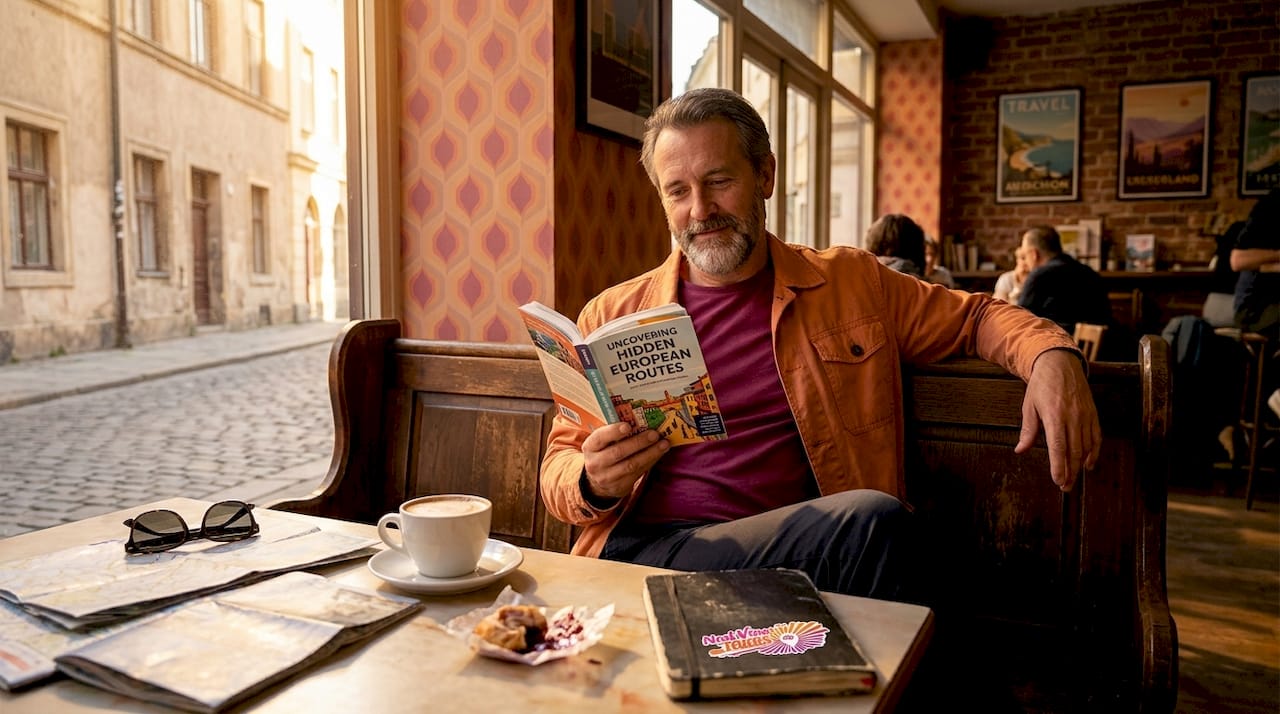
We live in an era that celebrates coverage. Travel feeds are full of “I visited seven countries in ten days” posts, and there is an odd social pressure to maximize destinations per trip. But here is what that approach actually delivers: a series of photographs taken from bus windows, a collection of rushed, half-understood experiences, and a body that needs a vacation from the vacation.
Fast-paced travel costs more in every measurable way. You pay the transit tax in time, money, and energy. Constantly moving between cities means repeated transport costs, accommodation change fees, and the cognitive load of navigating an unfamiliar place before you’ve even had breakfast.
Slow travel is not laziness. It is strategy. When you choose one destination and give it your full attention, you start noticing things that rushed travelers never see. The side street in Salzburg where locals actually eat. The unmarked trail above Hallstatt that reveals the lake from an angle no postcard has ever captured. The church in a small Bohemian village where a choir happens to be rehearsing the afternoon you walk in.
The multi-day organization guide we use at Next View Tours is built entirely on this philosophy. We have watched hundreds of travelers transform their relationship with Europe the moment they stop trying to see it all and start trying to feel one place deeply.
Intentional downtime is not wasted time. It is the space where the real discoveries happen. Give yourself permission to sit in a square, miss a sight, and let the afternoon take you somewhere unexpected. That, more than any checklist, is what you will remember six months later.
Ready to craft your perfect European day trip?
If you’re inspired to see more of Europe but want to skip the guesswork, here’s where you can start building your own unforgettable adventure.
At Next View Tours, we specialize in taking the complexity out of European day trips so you can focus entirely on the experience. Whether you prefer a private tour tailored to your pace, a small group with a passionate local guide, or a fully customized tour built around your specific interests, we have you covered. Browse our full range of options across trip types including adventure, nature, cultural, and seasonal journeys from Vienna, Salzburg, Prague, Budapest, and beyond. Ready to stop planning and start exploring? Discover how easy it is to book day trips in Europe with a team that knows every train connection, hidden viewpoint, and local gem worth your time.
Frequently asked questions
How long should a day trip last in Europe?
A well-planned day trip typically allows 4 to 8 hours on-site, with total one-way transport kept under 3 hours to prevent travel fatigue and leave room for genuine exploration.
What’s the best season for day trips in Europe?
Spring and autumn offer the best balance of weather, crowd levels, and full attraction access, while summer maximizes daylight for nature trips and winter suits city-based cultural experiences.
How do I find day trips near my base city?
Use the national rail planner or Google Maps to locate top destinations within 1 to 3 hours of your base, prioritizing cities with strong direct transport connections and multiple attractions in close proximity.
Should I book attractions in advance for popular day trips?
Yes, always pre-book timed tickets for in-demand sites because popular attractions like Giverny or the Alhambra sell out well in advance, and many European museums close on Mondays.
How much should I budget per day trip?
Plan on €40 to €70 per person for budget travel in Eastern Europe and €70 to €150 mid-range, covering entry fees, food, and round-trip transport from your base city.
Recommended
- 7 Expert Tips for Planning a Day Trip Itinerary Europe – Next View Tours
- 7 Essential Summer Trip Options Europe Travelers Should Know – Next View Tours
- How to book day trips in Europe for 2026 success – Next View Tours
- Day Trip from Bucharest to Transylvania – Discover the enigmatic Castle of Dracula


Comments are closed