

 Uncategorized
Choosing from the hundreds of European tour destinations available can feel paralyzing when you’re trying to plan a trip that fits your interests, budget, and travel style. Whether you’re drawn to day trips exploring Vienna’s imperial palaces or multi-day adventures through the Alps, the sheer volume of options makes confident selection difficult. This guide provides a structured, step-by-step method to help you evaluate destinations systematically and choose tours that align perfectly with your travel goals.
Table of Contents
- Prerequisites To Choosing Tour Destinations
- Step-By-Step Guide To Choosing Tour Destinations
- Safety And Accessibility Considerations
- Common Mistakes And Practical Solutions In Tour Selection
- Expected Outcomes And Benefits Of Thoughtful Tour Selection
- Explore Tailored European Tours With Next View Tours
- FAQ
Key takeaways
| Point | Details |
|---|---|
| Define your traveler profile first | Identify your interests, group type, and trip preferences before researching destinations to ensure alignment. |
| Use a decision matrix for comparison | Systematically evaluate destinations against criteria like cost, travel time, safety, and accessibility. |
| Prioritize safety and accessibility | Family tours and special needs require careful vetting of infrastructure and tourist support services. |
| Avoid common planning mistakes | Underestimating travel time and ignoring seasonality are frequent errors that reduce trip satisfaction. |
| Customized selection improves outcomes | Tailoring tours to traveler type boosts satisfaction ratings by 35%. |
Prerequisites to choosing tour destinations
Before diving into destination selection, you need foundational knowledge to guide your choices effectively. Start by identifying your core travel interests and group composition. Are you traveling solo for cultural immersion, bringing your family for educational experiences, or seeking adventure with friends? Each profile demands different destination characteristics.
Understand typical budget ranges to set realistic expectations. Day trips across Central Europe typically cost €50 to €150 per person, covering transportation, guided experiences, and entry fees. Multi-day tours range from €300 to €1,500 depending on accommodation quality, included meals, and activity intensity. Knowing these benchmarks helps you filter options quickly.
Baseline safety and accessibility matter significantly for comfort. Research destination infrastructure, especially if traveling with children, elderly family members, or individuals with mobility needs. Budgeting for Europe travel requires understanding both direct costs and hidden expenses like travel insurance or accessibility upgrades.
Key prerequisites to establish:
- Clear definition of your traveler type and primary interests
- Realistic budget boundaries for your trip duration and group size
- Basic awareness of seasonal weather patterns and tourist peak times
- Understanding of travel logistics including transit times between destinations
- Recognition of any special accessibility or safety requirements
Pro Tip: Create a simple checklist of your must-have destination features before researching options. This prevents decision paralysis when comparing similar tours.
Step-by-step guide to choosing tour destinations
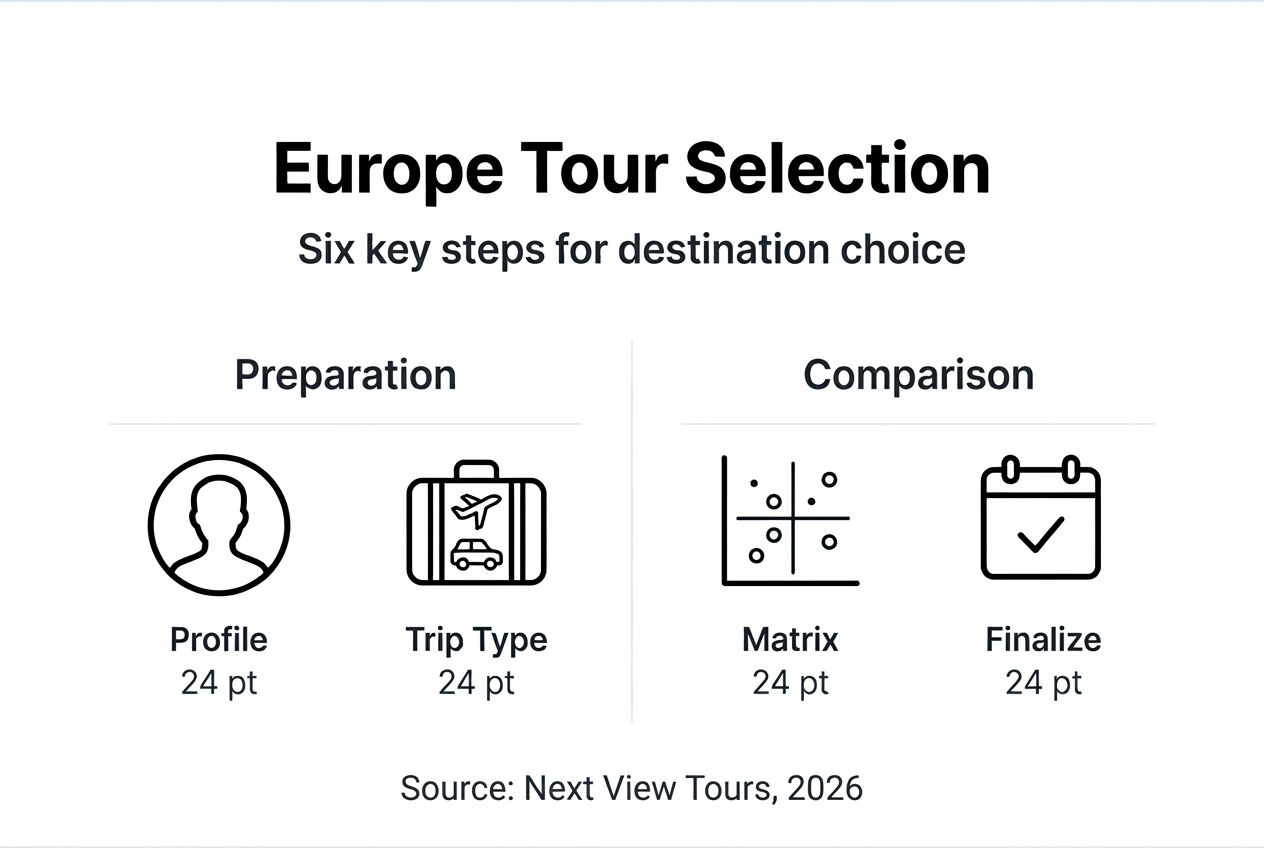
Applying a systematic process transforms overwhelming options into manageable choices. Follow these six steps to select European tour destinations confidently.
Step 1: Identify your traveler profile and core interests. Define whether you’re seeking cultural experiences, outdoor adventures, family-friendly activities, or romantic getaways. Your profile determines which destination types fit best. Families might prioritize interactive museums and safe outdoor spaces, while adventure seekers focus on hiking trails and winter sports.

Step 2: Decide trip type and duration. Choose between day trips for quick exploration or multi-day tours for deeper immersion. Day trips work well for travelers based in cities like Vienna, Prague, or Budapest who want to explore nearby regions. Multi-day tours suit those wanting comprehensive regional experiences across multiple countries.
Step 3: Research destinations matching your criteria. Use your profile and interests to narrow options. Search for tours aligned with your season, noting that summer tours emphasize outdoor activities while winter tours focus on cultural experiences and skiing. Consider family-friendly trip options if traveling with children or customized private tours for personalized experiences.
Step 4: Evaluate cost and travel time logistics. Calculate total expenses including tour fees, transportation, meals, and accommodations. Assess realistic travel times between your base and destinations, allowing buffers for unexpected delays. Destinations requiring more than three hours of one-way travel may feel rushed for day trips.
Step 5: Create a decision matrix for comparison. Build a simple table comparing your shortlisted destinations across key factors.
| Destination | Cost (€) | Travel Time | Safety Rating | Accessibility | Interest Match |
|---|---|---|---|---|---|
| Hallstatt | 120 | 2.5 hours | High | Moderate | Cultural + Nature |
| Salzburg | 95 | 3 hours | High | High | Cultural + Family |
| Prague | 150 | 4 hours | High | High | Cultural + Historical |
| Slovak Alps | 180 | 3.5 hours | High | Low | Adventure + Nature |
Score each criterion on a 1 to 5 scale and calculate totals to identify top matches. This objective comparison reveals which destinations truly align with your priorities rather than relying on subjective appeal alone.
Step 6: Finalize your itinerary with safety and efficiency focus. Confirm your chosen destination meets safety standards and offers appropriate accessibility. Book through established providers who handle logistics professionally. Review customized tour ideas to understand how professional planning improves experiences. Verify tour experience types match your expectations before committing.
Pro Tip: Contact tour providers directly with specific questions about accessibility, pacing, and customization options. Quality operators welcome inquiries and provide detailed answers that help you decide confidently.
Safety and accessibility considerations
Evaluating safety and accessibility prevents uncomfortable situations and ensures enjoyable experiences for all travelers. These factors become critical when planning family tours or traveling with individuals who have special needs.
Assess tourist safety infrastructure before finalizing choices. Destinations with higher tourist flow typically maintain better infrastructure and report fewer safety incidents. Major cities like Vienna, Prague, and Budapest invest heavily in tourist safety with visible police presence, well-maintained pathways, and comprehensive emergency services.
Accessibility requirements vary significantly across European destinations. Historic city centers often feature cobblestone streets and limited elevator access, challenging for wheelchair users or families with strollers. Modern attractions and recently renovated sites typically offer better accessibility. Always verify specific accommodations before booking.
Key safety and accessibility factors to research:
- Emergency services availability and response times in destination areas
- Wheelchair accessibility and mobility aid availability for tours and attractions
- Family facilities including restrooms, changing areas, and child-friendly dining
- Seasonal safety risks such as winter road conditions or summer heat concerns
- Tour guide experience with special needs groups or family dynamics
Consider seasonal travel risks carefully. Winter months bring snow and ice to Alpine regions, potentially limiting accessibility for some travelers. Summer crowds at popular destinations like Hallstatt can create challenging conditions for young children or elderly visitors. Family-friendly trips require careful timing to balance weather, crowds, and activity availability.
“Safety ratings vary significantly across European destinations. Regions with established tourist infrastructure and higher visitor numbers consistently demonstrate better safety records and accessibility options, particularly important for family groups and travelers with special requirements.”
Common mistakes and practical solutions in tour selection
Avoiding frequent planning errors saves time, money, and frustration. Learn from common traveler mistakes to improve your selection process.
Underestimating travel time between destinations ranks as the most frequent error. Travelers often calculate point-to-point driving time without accounting for traffic, rest stops, border crossings, or parking. Always add 20 to 30% buffer time to published travel durations. For a destination showing three hours of travel time, plan for four hours realistically.
Ignoring traveler type alignment causes significant dissatisfaction. A tour perfect for adventure-seeking couples may overwhelm families with young children. Cultural tours appealing to history enthusiasts might bore teenagers seeking active experiences. Match tour characteristics precisely to your group’s interests and capabilities.
Overlooking seasonality impacts results in missed opportunities or disappointing experiences. Some Alpine hiking trails close until late spring due to snow. Christmas markets operate only in December. Summer festivals create accommodation scarcity and price spikes. Check destination calendars thoroughly before booking.
Insufficient preparation for adventure tours creates safety risks and reduces enjoyment. Adventure activities require appropriate fitness levels, gear, and sometimes specific skills. Verify requirements clearly and assess honestly whether your group meets them. Consider training or skill-building before departure if needed.
Neglecting accessibility verification leads to uncomfortable situations for travelers with mobility challenges. Don’t assume attractions accommodate wheelchairs or that tours pace appropriately for elderly participants. Request detailed information about physical requirements, walking distances, and available accommodations.
Practical solutions to implement:
- Build comprehensive itineraries using professional tour planning resources that account for realistic timing
- Review detailed tour descriptions and contact providers with specific questions about group fit
- Create backup plans for weather-dependent activities or seasonal attractions
- Honestly assess your group’s capabilities and choose tours rated appropriately for your fitness and skill levels
- Request written confirmation of accessibility accommodations before making non-refundable deposits
Pro Tip: Read recent reviews from travelers with similar profiles to yours. A family with young children provides more relevant insights for your family trip than reviews from solo backpackers, even if both rate the tour highly.
Apply these lessons when using step-by-step Europe tour planning guides to avoid repeating common errors.
Expected outcomes and benefits of thoughtful tour selection
Applying systematic selection methods produces measurable improvements in travel satisfaction and planning efficiency. Understanding realistic outcomes helps set appropriate expectations.
Thoughtful planning directly improves trip satisfaction. Research shows customizing tours to traveler type increases satisfaction ratings by 35% compared to generic tour selection. When destinations align precisely with interests, budgets, and logistics, travelers report significantly higher enjoyment and lower stress.
Professional tour providers reduce planning time by approximately 50% compared to independent planning. They handle complex logistics, research optimal routes, secure reservations, and provide local expertise that individual travelers spend weeks gathering. This efficiency lets you focus on anticipation rather than administrative details.
Budgeting accuracy improves dramatically with structured selection. By defining trip type and duration early, you establish realistic cost parameters. Unexpected expenses decrease when you thoroughly research included services versus additional costs. Most travelers using systematic selection methods report actual spending within 10% of budgeted amounts.
| Outcome Metric | Without Systematic Selection | With Systematic Selection | Improvement |
|---|---|---|---|
| Satisfaction Rating | 3.2/5.0 | 4.3/5.0 | +34% |
| Planning Time | 40 hours | 20 hours | 50% reduction |
| Budget Accuracy | ±25% variance | ±10% variance | 60% improvement |
| Activity Completion | 65% | 92% | +27 points |
Key benefits you should expect:
- Higher confidence in booking decisions reduces pre-trip anxiety
- Better alignment between expectations and actual experiences minimizes disappointment
- Efficient use of travel time maximizes activity completion and destination exploration
- Reduced logistical errors and missed connections improve trip flow
- Accurate budgeting prevents financial stress during travel
These outcomes compound over time. Successfully planned trips build expertise and templates you can adapt for future European travel. The systematic approach becomes faster and more intuitive with practice.
Realistic budgeting for European travel combined with careful destination selection creates sustainable travel habits that support repeated visits rather than one-off expensive trips that exhaust your travel budget.
Explore tailored European tours with Next View Tours
Next View Tours simplifies destination selection by offering expertly curated experiences across Central Europe. Their comprehensive trip types span day trips, multi-day adventures, family tours, couple getaways, and customized itineraries designed around your specific interests.
Whether you’re planning day trips from Vienna to Hallstatt, multi-day explorations through the Czech Republic and Slovakia, or specialized adventure tours in the Austrian Alps, their local expertise removes planning complexity. Their customized tours let you apply the selection framework from this guide with professional support that ensures logistical excellence.
Explore their adventure trip selection guide to discover how professional tour design transforms your European travel from stressful planning into confident, enjoyable experiences.
FAQ
What factors should I prioritize when choosing a European tour destination?
Prioritize traveler interests first, ensuring destinations offer activities and experiences your group genuinely enjoys. Balance this with practical factors including budget constraints, travel time from your base, safety infrastructure, and accessibility requirements. Seasonal suitability matters significantly since weather and crowd levels impact experience quality dramatically.
How can I effectively balance budget and experience when selecting tours?
Define firm budget limits before researching options to prevent aspirational creep toward unaffordable choices. Compare tour inclusions carefully, noting that higher prices don’t always indicate better experiences. Consider affordable European travel strategies that maximize value through smart timing, group bookings, or day trips over multi-day tours when appropriate.
What are common pitfalls to avoid when planning European tours?
Avoid underestimating travel time between destinations, which causes rushed experiences and missed connections. Ignoring seasonal factors leads to closed attractions or uncomfortable weather conditions. Neglecting traveler type alignment creates dissatisfaction when tour pacing or activities don’t match group capabilities. Use comprehensive tour planning resources to build realistic itineraries with appropriate buffers.
How important is customizing tours to traveler type?
Customization significantly impacts satisfaction, with tailored tours improving ratings by 35% compared to generic options. Family tours require different pacing, activities, and safety considerations than adventure trips or romantic getaways. Matching tour design to your specific group profile ensures everyone enjoys the experience rather than compromising for a one-size-fits-all approach.


Comments are closed