

 News & Tips
Planning a personalized journey across Europe often means wanting more than just a checklist of landmarks. Choosing the right tour guide can make the difference between a surface-level visit and a truly transformative adventure. Tour guides are storytellers and cultural interpreters who connect travelers to the rich depths of local history, art, and traditions in ways guidebooks cannot match. This guide will show how skilled professionals turn every destination into a memorable narrative that speaks directly to your unique interests and curiosity.
Table of Contents
- Defining The Role Of Tour Guides
- Types Of Tour Guides In Europe
- Core Skills And Qualifications Required
- How Tour Guides Enhance Travel Experiences
- Responsibilities And Legal Risks For Guides
Key Takeaways
| Point | Details |
|---|---|
| Role of Tour Guides | Tour guides act as cultural interpreters, providing deep knowledge and building connections between travelers and destinations through storytelling. |
| Diverse Guide Types | Different categories of tour guides, such as City Guides and Specialized Cultural Guides, each bring unique expertise and enhance the travel experience. |
| Core Competencies | Essential skills for successful tour guides include communication, cultural intelligence, and adaptability, which are crucial for creating memorable experiences. |
| Legal Responsibilities | Tour guides have significant legal and ethical responsibilities, including ensuring traveler safety and providing accurate information throughout tours. |
Defining the Role of Tour Guides
Tour guides are dynamic professionals who transform ordinary travel experiences into extraordinary journeys. Beyond basic navigation, these cultural interpreters play a multifaceted role in connecting travelers with destinations through deep knowledge, storytelling, and interpersonal skills.
The modern tour guide serves several critical functions in the travel ecosystem:
- Cultural Translation: Explaining local customs, historical contexts, and societal nuances
- Educational Ambassador: Providing in-depth insights about geographic locations, historical sites, and regional traditions
- Safety Coordinator: Managing group logistics, ensuring traveler security, and handling unexpected situations
- Emotional Guide: Creating meaningful connections between travelers and destinations through engaging narratives
Today’s tour guides are more than mere information providers. They are storytellers, cultural bridges, and experience architects who curate immersive travel experiences that go far beyond simple sightseeing. Their expertise allows travelers to understand destinations at a deeper, more authentic level.
Tour guides transform destinations from mere geographic locations into living, breathing narratives that resonate with travelers’ personal experiences.
Professional Competencies that define exceptional tour guides include:
- Deep local knowledge
- Multilingual communication skills
- Adaptability and problem-solving abilities
- Strong interpersonal and emotional intelligence
- Comprehensive understanding of cultural sensitivities
Pro tip: When selecting a tour guide, prioritize professionals who demonstrate passion for storytelling and genuine connection with local cultures.
Types of Tour Guides in Europe
European tour guides represent a diverse and specialized professional landscape, offering multiple guide classifications that cater to different travel experiences and tourist needs. These professionals range from urban explorers to specialized cultural experts, each bringing unique skills and perspectives to travelers’ journeys.
The primary categories of tour guides in Europe include:
- City Guides: Specialized in comprehensive urban exploration and local history
- Step-On Guides: Experts in coach-based city tours and transportation-focused experiences
- Freelance Guides: Independent professionals offering personalized tour experiences
- Transfer Guides: Professionals providing essential information during transit
- Driver-Guides: Combining transportation and guided tour expertise
- Specialized Cultural Guides: Focusing on specific themes like art, history, or culinary experiences
Each type of tour guide brings distinct advantages to travelers. City guides offer deep local knowledge, while specialized guides provide incredibly nuanced insights into specific cultural domains. Freelance guides often provide more personalized and flexible experiences, adapting their narratives and routes to individual traveler interests.

Here’s a comparison of major tour guide types in Europe and their primary strengths:
| Guide Type | Main Area of Expertise | Typical Client Experience |
|---|---|---|
| City Guide | Urban history and landmarks | Comprehensive city immersion |
| Step-On Guide | Group logistics, local info | Seamless touring by coach |
| Freelance Guide | Customization, flexibility | Personalized journeys |
| Transfer Guide | Transit information, logistics | Informative transfers between sites |
| Driver-Guide | Navigation, local highlights | Private, efficient sightseeing |
| Specialized Cultural Guide | Art, history, or cuisine | Deep thematic exploration |
European tour guides are not just information providers, but cultural ambassadors who transform geographical locations into living, breathing narratives.
The professional skills required for these guide types vary, but some core competencies remain consistent:
- Comprehensive local knowledge
- Language proficiency
- Storytelling abilities
- Cultural sensitivity
- Adaptability to diverse tourist groups
Pro tip: When booking a European tour, match the guide type to your specific travel interests and desired depth of cultural exploration.
Core Skills and Qualifications Required
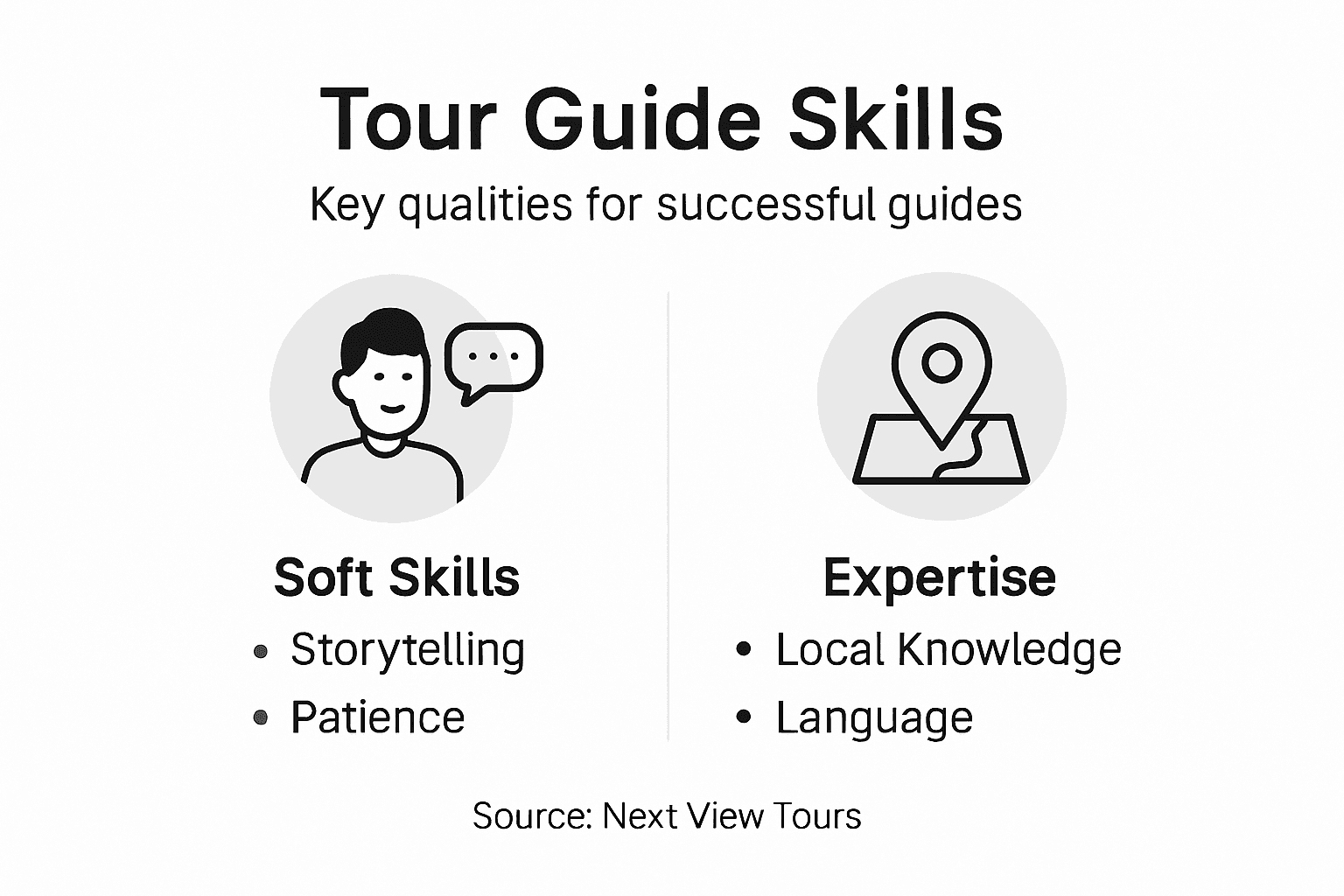
Professional tour guides must develop a comprehensive skill set that goes far beyond basic information delivery. Essential qualifications blend interpersonal and technical abilities to create memorable and meaningful travel experiences for diverse groups of travelers.
The core competencies for successful tour guides include:
- Communication Skills: Crystal-clear verbal articulation and active listening
- Cultural Intelligence: Deep understanding of local traditions and social nuances
- Language Proficiency: Multilingual capabilities, especially in European tourist destinations
- Technical Knowledge: Expertise in historical, geographical, and cultural contexts
- Adaptability: Quick thinking and flexibility in managing unexpected situations
- Emotional Intelligence: Ability to read and respond to group dynamics
Successful tour guides must also possess robust professional credentials. Many European destinations require specific certifications, ranging from local tourism board approvals to specialized training programs. These qualifications ensure guides can deliver high-quality, safe, and informative experiences across various travel contexts.
A great tour guide transforms raw information into a living, breathing narrative that connects travelers emotionally with their destination.
The key professional development areas for tour guides include:
- Continuous historical and cultural education
- Advanced language training
- Customer service excellence
- Safety and emergency management
- Digital technology integration
Pro tip: Invest in ongoing professional development and seek certifications that demonstrate your expertise and commitment to exceptional tourist experiences.
How Tour Guides Enhance Travel Experiences
Tour guides transform ordinary travel into extraordinary journeys by creating immersive cultural narratives that go far beyond traditional sightseeing. Their unique ability to interpret destinations turns simple visits into meaningful, emotionally resonant experiences that connect travelers deeply with local cultures and histories.
The key ways tour guides enhance travel experiences include:
- Contextual Storytelling: Bringing historical sites and cultural landmarks to life through engaging narratives
- Cultural Translation: Explaining local customs, traditions, and social nuances with depth and sensitivity
- Insider Access: Providing unique insights and perspectives not available through standard guidebooks
- Personalized Experiences: Adapting tour content to match specific group interests and learning styles
- Safety and Comfort: Offering professional guidance and support throughout the travel journey
- Language Bridge: Facilitating communication in diverse linguistic environments
Professional guides act as experience architects, carefully crafting journeys that engage multiple senses and emotional dimensions. They use sophisticated interpretive techniques that help travelers move beyond passive observation to active, meaningful cultural engagement. Each interaction becomes an opportunity for deep learning and personal connection.
A truly exceptional tour guide doesn’t just show you a destination – they help you understand its soul.
The transformative impact of tour guides extends across multiple dimensions of travel experience:
This table summarizes how tour guides enhance traveler experiences:
| Enhancement Dimension | Description | Benefit to Travelers |
|---|---|---|
| Emotional Engagement | Story-driven narratives and connections | Memorable, meaningful visits |
| Cultural Insight | Deep dives into local traditions | Authentic understanding |
| Personalized Adaptation | Tailored tours to interests and needs | Unique, relevant experiences |
| Group Confidence | Professional safety, support, and guidance | Worry-free travel |
- Emotional connection to destinations
- Deeper cultural understanding
- Enhanced historical comprehension
- Improved traveler safety and confidence
- Personalized learning experiences
Pro tip: Choose tour guides who demonstrate genuine passion for storytelling and deep local knowledge to maximize your travel experience.
Responsibilities and Legal Risks for Guides
Tour guides occupy a complex professional landscape with significant legal and ethical responsibilities that extend far beyond simple travel commentary. Their role requires careful navigation of professional standards, legal compliance, and traveler safety across multiple jurisdictions and cultural contexts.
The key legal responsibilities for tour guides include:
- Traveler Safety: Ensuring physical and psychological well-being of tour participants
- Accurate Information: Providing truthful and verified historical and cultural insights
- Professional Conduct: Maintaining ethical standards and representing tourism industry professionally
- Risk Management: Identifying and mitigating potential hazards during tours
- Consent and Privacy: Respecting individual traveler boundaries and personal information
- Regulatory Compliance: Adhering to local and national tourism regulations
Legal risks for tour guides can be substantial and multifaceted. Professional liability often encompasses potential scenarios involving personal injury, misinformation, or breach of professional standards. Insurance and comprehensive training become critical protective mechanisms for managing these inherent professional vulnerabilities.
Tour guides are not just storytellers, but legal representatives responsible for creating safe and enriching travel experiences.
The primary legal risk management strategies for tour guides include:
- Maintaining current professional certifications
- Carrying comprehensive professional liability insurance
- Documenting tour protocols and safety procedures
- Conducting regular risk assessments
- Staying updated on local tourism regulations
Pro tip: Invest in professional insurance and continuous legal education to protect yourself against potential professional liability risks.
Discover the Impact of Expert Tour Guides on Your European Journey
Understanding the essential role tour guides play can transform your travel from simple sightseeing into an immersive cultural experience. The article highlights challenges like needing knowledgeable storytelling, cultural sensitivity, and personalized guidance to truly connect with destinations. At Next View Tours, we solve these pain points by offering carefully curated experiences led by passionate guides who bring history and local traditions to life.
Explore our diverse offerings from deep city explorations with City Tour – Next View Tours to uniquely tailored adventures across Europe. Our guides embody the key professional competencies: emotional intelligence, adaptability, and multilingual skills, ensuring your journey is not just seen but deeply felt.

Ready to elevate your travel experience with expert guidance that makes every moment memorable? Visit Next View Tours today and choose from our customizable tours. Whether you seek group adventures or private cultural immersion, your next extraordinary trip starts here.
Frequently Asked Questions
What is the role of a tour guide?
Tour guides serve as cultural interpreters, providing in-depth knowledge, educational insights, and ensuring traveler safety while creating connections between travelers and destinations through storytelling.
How do tour guides enhance travel experiences?
Tour guides create immersive cultural narratives, offer personalized adaptations based on traveler interests, and provide insider access to deeper insights, making visits more meaningful and memorable.
What skills and qualifications should a good tour guide have?
A good tour guide should possess excellent communication skills, cultural intelligence, language proficiency, and adaptability. They also need professional credentials which may include certifications from local tourism boards.
What legal responsibilities do tour guides have?
Tour guides have legal responsibilities that include ensuring traveler safety, providing accurate information, maintaining professional conduct, managing risks, and complying with relevant regulations.


Comments are closed