
 Uncategorized
TL;DR:
- Prague offers a walkable, affordable experience combining medieval sights with insider knowledge.
- Three to five days allow visitors to see highlights, with longer stays exploring neighborhoods and nearby towns.
Prague is defined as one of Europe’s most walkable, historically preserved, and affordable capital cities. The Prague Lonely Planet approach to travel here combines iconic medieval sights with practical, insider knowledge that most visitors miss. Prague costs 30–40% less than comparable Western European capitals like Paris, Amsterdam, and London. That price gap makes it one of the best-value destinations on the continent. Whether you are planning your first visit or returning for a deeper look, this guide delivers the essential Prague travel advice you need for 2026.
What does the Prague Lonely Planet approach recommend for trip length?
The right trip length determines how much of Prague you actually experience. A 3-day minimum covers the headline sights: Old Town Square, Prague Castle, Charles Bridge, and the Jewish Quarter. Three days gives you enough time to walk the historic core without rushing, but not enough to feel the city’s full character.
Four to five days is the recommended length for most travelers. That extra time opens up regional day trips to Kutná Hora, with its famous Sedlec Ossuary, or Český Krumlov, a UNESCO-listed town in the Bohemian countryside. Both destinations are reachable within two hours by train or bus from Prague’s main station.
- 1–2 days: A brief impression of the Old Town and Charles Bridge only.
- 3 days: Covers all major sights at a comfortable pace.
- 4–5 days: Adds day trips and deeper neighborhood exploration.
- 5+ days: Suits travelers who want to move beyond tourist highlights into residential districts like Vinohrady and Holešovice.
Pro Tip: Book your Prague Castle tickets online before you arrive. The castle complex is free to enter, but key internal attractions like St. Vitus Cathedral require a combined ticket, and lines at the gate can run 45 minutes or longer in peak season.
What are the best times to visit Prague?
Timing your visit directly affects your budget, comfort, and experience. The best months to visit Prague are may, june, september, and october, when temperatures are mild, crowds are manageable, and prices sit below their summer peak. September and october carry a particular charm, with autumn color across the parks and cultural events like the Vinobraní wine festival held just outside the city.
- May and June: Warm days, long evenings, and full outdoor café culture. Crowds build toward late June.
- July and August: Peak tourist season. Prices rise, Old Town Square fills with tour groups, and hotel availability tightens fast.
- September and October: The sweet spot. Cooler air, fewer crowds, and autumn light that makes the city’s Baroque architecture look extraordinary.
- November through February: Cold and occasionally gray, but Prague in winter offers the lowest prices, Christmas markets in december, and a quieter, more local atmosphere.
Pro Tip: Avoid booking Old Town accommodation on weekends in july and august. Weekend crowd density spikes noise and prices significantly. Staying in Vinohrady or Malá Strana and commuting by tram saves money and stress.
What are the must-see attractions and things to do in Prague?
Prague’s historic core holds some of the best-preserved medieval and Baroque architecture in Europe. The best attractions in Prague are concentrated within a walkable area, which means you can cover a remarkable amount of ground on foot in a single day.
- Old Town Square and the Astronomical Clock: The clock, built in 1410, performs an hourly mechanical show that draws large crowds. Arrive five minutes early and position yourself to the left of the clock for the best view without the main crowd block.
- Prague Castle complex: The largest ancient castle complex in the world by area. St. Vitus Cathedral and Golden Lane are the two standout internal attractions. Purchase a combined ticket online to skip the queue.
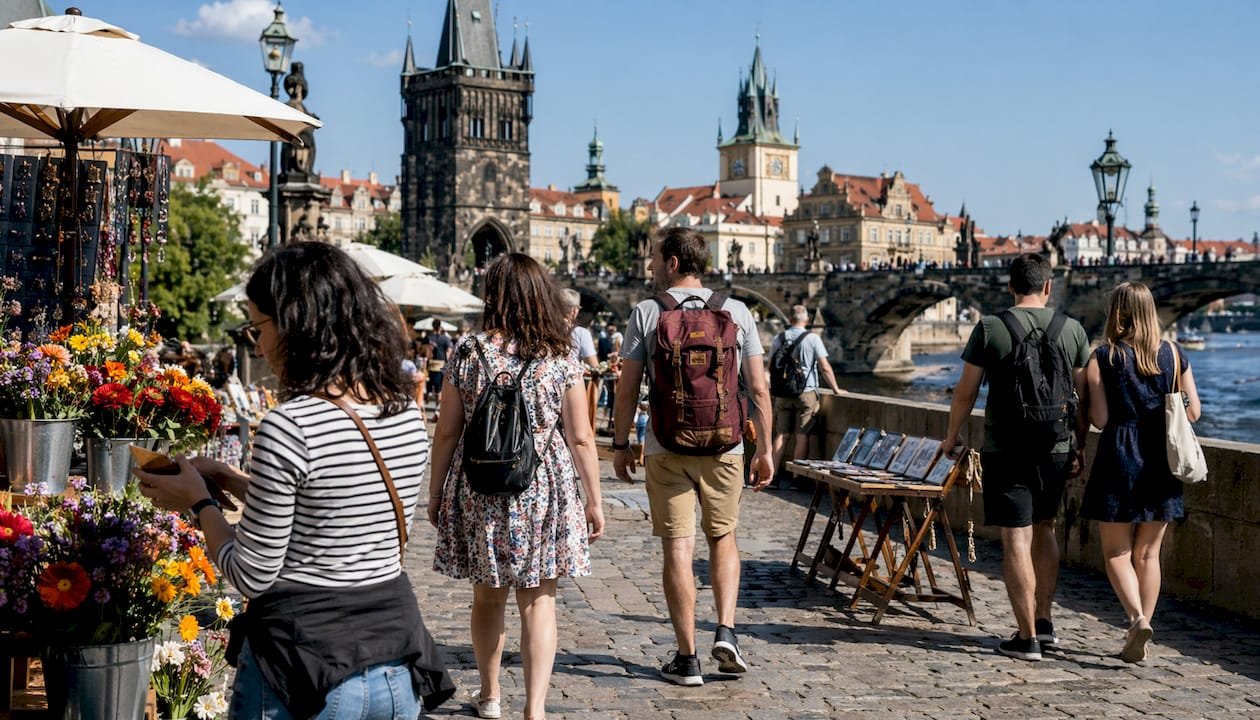
- Charles Bridge: A 14th-century stone bridge lined with 30 Baroque statues. Early morning visits before 8:00 AM give you the bridge almost to yourself. By midday, it becomes one of the most congested spots in the city.
- Jewish Quarter (Josefov): Six synagogues and the Old Jewish Cemetery, one of the oldest in Europe. The Pinkas Synagogue contains handwritten names of nearly 80,000 Czech Jewish Holocaust victims on its walls. This is one of the most moving sites in the entire city.
- Vyšehrad Fortress: Overlooking the Vltava River south of the center, Vyšehrad offers panoramic views and a cemetery containing the graves of Czech cultural figures including composer Antonín Dvořák. Almost no tour groups visit here.
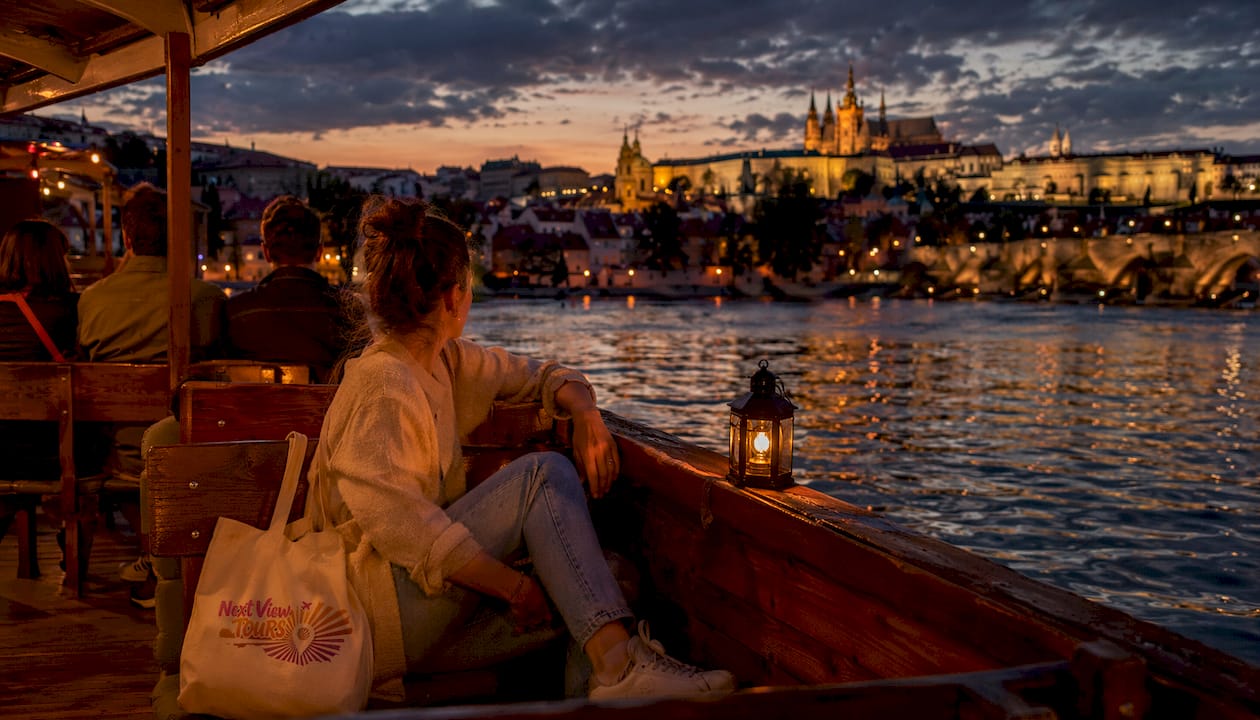
Beyond landmarks, Prague rewards sensory exploration. A Vltava River cruise at dusk gives you a completely different perspective on the city’s skyline. Classical music concerts are held nightly in historic churches and palaces throughout the center, with tickets available at the door for reasonable prices. Czech cuisine, built around dishes like svíčková (beef sirloin in cream sauce) and trdelník (a spiral pastry), is best experienced in restaurants one or two streets off the main tourist routes, where prices drop noticeably and quality often improves.
Pro Tip: Booking hotels and museum tickets well in advance is strongly recommended, especially for shoulder season visits in may and september. Prague’s popularity means that last-minute planning often results in limited accommodation choices and higher rates.
Which Prague neighborhoods offer the best atmosphere and value?
Prague has five central neighborhoods with distinct personalities, price points, and levels of tourist activity. Choosing the right base shapes your entire experience.
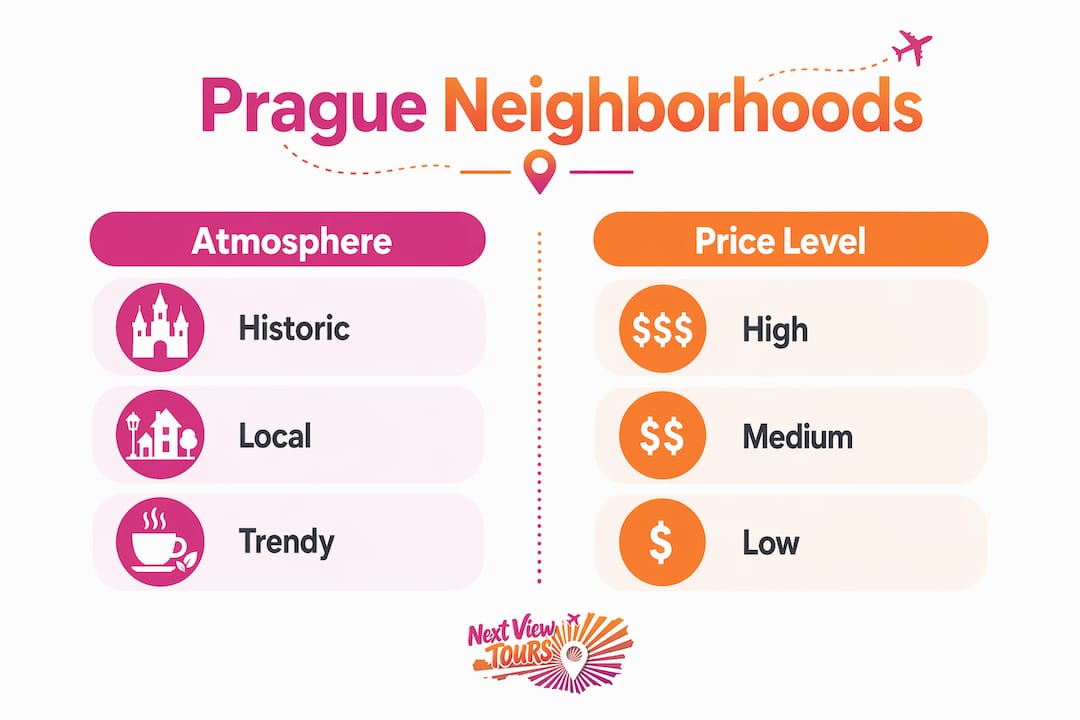
| Neighborhood | Atmosphere | Best for | Price level |
|---|---|---|---|
| Old Town (Staré Město) | Historic, lively, crowded | First-time visitors wanting central access | High |
| Malá Strana | Baroque, quiet evenings, charming | Couples, boutique hotel seekers | Medium-high |
| New Town (Nové Město) | Practical, family-friendly | Budget travelers, families | Medium |
| Vinohrady | Residential, café culture, local | Repeat visitors, longer stays | Medium-low |
| Žižkov | Edgy, authentic, less polished | Budget travelers, nightlife seekers | Low |
Old Town puts you steps from every major sight, but local neighborhoods like Vinohrady and Malá Strana offer authentic atmosphere and better pricing just 10–15 minutes away by tram. Malá Strana, on the castle side of the Vltava River, is particularly appealing for travelers who want Baroque streetscapes without the noise of the tourist core. Vinohrady and Žižkov remain largely free of intense tourist flow, which means you get a genuine sense of how Prague residents actually live.
Pro Tip: Tram line 22 connects Malá Strana, the castle district, and Vinohrady in a single route. It is one of the most scenic public transit rides in Europe and costs the same as any other tram ticket.
How do you navigate Prague efficiently?
Prague is highly walkable within the historic core, and most of the top sights sit within a 30-minute walk of each other. That walkability is one of Prague’s defining advantages over larger European capitals. For neighborhoods outside the center, the public transport network covers the entire city cheaply and reliably.
- Metro: Three lines (A, B, C) connect the center to outer districts. Clean, fast, and runs until midnight.
- Trams: The most useful option for tourists. Trams run through the historic center where the metro does not reach, and several lines pass directly by major sights.
- Tickets: A single 30-minute ticket covers all modes. The PID Lítačka app allows digital ticket purchase directly on your phone, which removes the need to find a ticket machine.
- Validation: Always validate your ticket before boarding. Inspectors check regularly, and fines for unvalidated tickets are issued on the spot.
- Walking routes: Combine Old Town, Charles Bridge, Malá Strana, and the castle into one logical loop. Start at the castle in the morning when crowds are lightest, cross Charles Bridge around midday, and finish in Old Town Square in the afternoon.
For Prague sightseeing tips that go beyond the basics, planning your route around crowd patterns makes a significant difference. The castle and Charles Bridge both see their heaviest traffic between 10:00 AM and 3:00 PM. Shifting your visit to early morning or late afternoon cuts waiting time and improves the experience considerably.
Pro Tip: Taxis hailed on the street in Prague carry a reputation for overcharging tourists. Use the Bolt or Uber apps instead for transparent, metered pricing on every ride.
Key Takeaways
Prague rewards travelers who plan around crowd patterns, choose neighborhoods wisely, and give themselves at least three full days to absorb the city’s depth.
| Point | Details |
|---|---|
| Ideal trip length | Three days covers essentials; four to five days adds regional day trips to Kutná Hora or Český Krumlov. |
| Best travel months | May, June, September, and October offer the best balance of weather, crowds, and price. |
| Top neighborhoods | Vinohrady and Malá Strana offer authentic atmosphere and better value than Old Town. |
| Timing iconic sights | Visit Charles Bridge before 8:00 AM and Prague Castle early morning to avoid peak crowds. |
| Budget advantage | Prague costs 30–40% less than Paris, Amsterdam, and London for food, lodging, and transport. |
What I’ve learned from planning Prague trips over and over
The most common mistake travelers make in Prague is spending all their time in Old Town. I understand the pull. The Astronomical Clock, the cobblestone lanes, the medieval skyline. It is genuinely beautiful. But Old Town at peak hours feels more like a theme park than a living city. The real Prague lives in Vinohrady’s wine bars, in Žižkov’s neighborhood pubs, and on the quiet streets of Malá Strana after 9:00 PM when the day-trippers have gone.
The Lonely Planet framework works because it pushes you past the obvious. The Jewish Quarter is not just a tourist stop. It is one of the most historically significant sites in Central Europe, and most visitors walk through it in 45 minutes without reading a single wall panel. Slow down there. The Pinkas Synagogue alone deserves an hour.
My strongest recommendation is to build your itinerary around the castle in the morning and Charles Bridge at dawn. Those two timing choices alone separate a good Prague trip from a great one. Pair that with a base in Malá Strana or Vinohrady, and you will experience a version of Prague that most visitors never find. For practical trip planning support, the Prague trip essentials guide covers the logistics in detail.
— Next
Nextviewtours can take your Prague experience further
Planning a Prague trip is one thing. Experiencing it with expert local guidance is another entirely.

Nextviewtours offers private and group tours built around Prague and the wider Central European region, including day trips to Kutná Hora, Český Krumlov, and beyond. Every itinerary is designed to balance iconic sights with the authentic neighborhood experiences that make Prague memorable. Whether you prefer a private tour tailored to your pace or a small group experience with fellow travelers, Nextviewtours builds the trip around you. Booking in advance secures the best availability, especially during the busy may through september season. Strong hospitality booking strategies confirm that early reservations consistently deliver better value and more options.
FAQ
How many days do you need in Prague?
A 3-day minimum covers the main sights, including Old Town, Prague Castle, and Charles Bridge. Four to five days is recommended if you plan regional day trips.
Is Prague expensive compared to other European cities?
Prague costs 30–40% less than Western European capitals like Paris and Amsterdam for food, accommodation, and transport. It is one of the best-value city break destinations in Europe.
What is the best time of year to visit Prague?
May, June, September, and October offer the best combination of mild weather and manageable crowds. August is peak season with higher prices and heavier tourist traffic.
Do you need to book Prague Castle tickets in advance?
The castle grounds are free, but internal attractions require a combined ticket. Online purchase is strongly recommended to avoid long queues, especially in summer.
What is the best neighborhood to stay in Prague?
Malá Strana suits travelers who want charm and quiet evenings close to the castle. Vinohrady offers a local residential feel with excellent cafés and tram connections to the center.


Comments are closed