 Uncategorized
TL;DR:
- Tour guides lead groups through interesting sites, managing safety, logistics, and engaging storytelling. They need certifications, language skills, stamina, and real-time adaptability to succeed. Their career growth is steady, driven by niche expertise and personalized, small-group experiences.
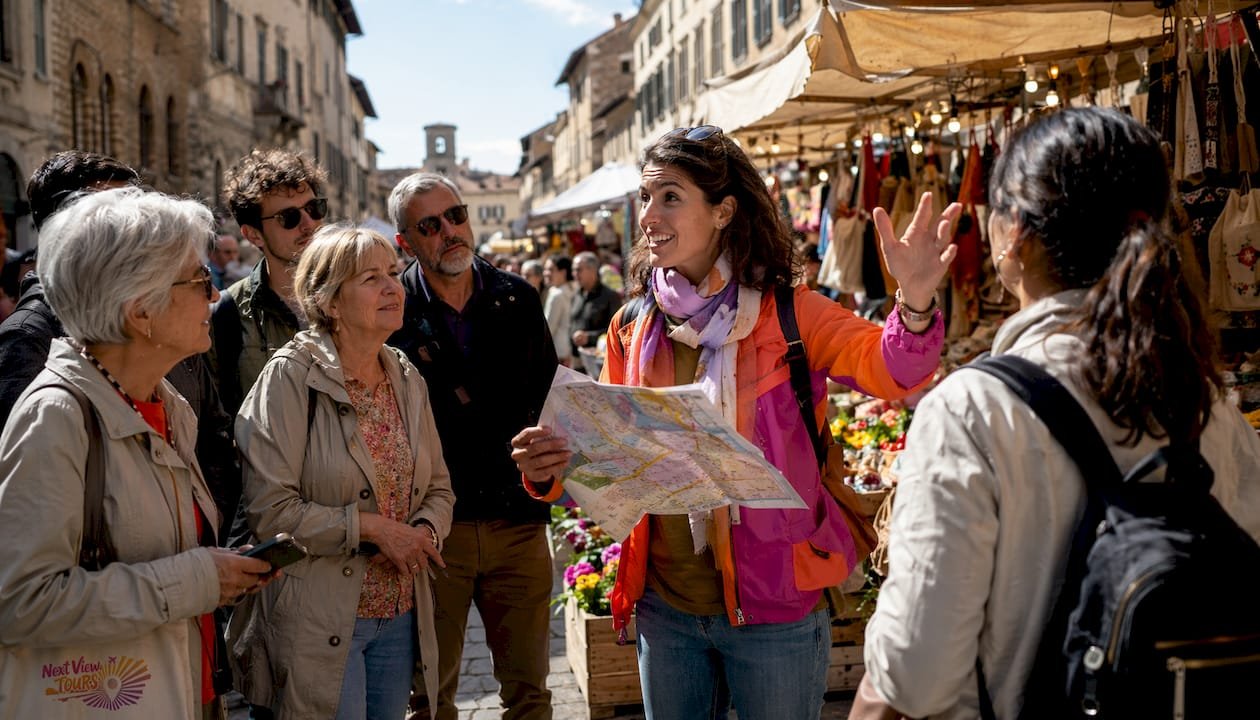
A tour guide is defined as a professional who leads individuals or groups through points of interest while delivering engaging narratives, managing group safety, and overseeing logistics from start to finish. The tour guide job role sits at the intersection of education, performance, and hospitality. It demands specialized knowledge, physical stamina, and the ability to read a crowd in real time. Whether you are considering a career in tour guiding or simply want to understand what the profession requires, this guide covers every dimension of the role with clarity and depth.
What are the essential responsibilities of a tour guide?
Tour and travel guides lead groups through points of interest, managing itineraries, delivering commentary, and overseeing group safety throughout each tour. The Bureau of Labor Statistics identifies research, itinerary management, storytelling, and safety oversight as the four core pillars of the job. Each pillar demands a distinct skill set, and the best guides master all four simultaneously.
The day-to-day tour guide duties include:
- Leading tours through historical, cultural, or natural sites while maintaining group cohesion and pace
- Delivering commentary that blends factual accuracy with storytelling to keep guests engaged
- Monitoring group safety at all times, including identifying hazards and responding to emergencies
- Managing logistics such as timing, route pinch points, and transitions between stops
- Adapting dynamically to weather changes, site closures, or unexpected guest needs
- Handling guest concerns professionally, from complaints to accessibility requirements
- Providing personalized experiences by adjusting content for families, international visitors, or special interest groups
Logistics often determine tour success more than facts alone. A guide who delivers brilliant content but loses half the group at a crowded intersection has failed at the job’s most basic requirement.
Pro Tip: Prepare a “flex segment” for every tour. This is a short, optional story or activity you can insert or skip depending on how your group’s energy and timing are tracking.

What skills and qualifications are needed to succeed as a tour guide?
The qualifications for tour guides vary by context, but a clear baseline exists across the industry. Most employers require at minimum a high school diploma, while roles at major cultural institutions or adventure operators often prefer a degree in history, tourism, cultural studies, or a related field. Beyond formal education, certifications and interpersonal skills carry equal weight.
The core qualifications and skills include:
- First Aid and CPR certification. First Aid and CPR credentials are standard requirements, especially for outdoor and adventure guides. Wilderness First Responder certification is the benchmark for remote or high-risk environments.
- Local guiding licenses. Many cities and UNESCO World Heritage sites require guides to hold a government-issued license. Vienna, Prague, and Budapest each have their own licensing frameworks.
- Public speaking and storytelling. The ability to hold an audience’s attention for two to four hours separates average guides from exceptional ones.
- Language skills. Multilingual guides command higher demand and broader employment opportunities across European destinations.
- Crowd management. Keeping a group of 20 people focused and safe in a busy square requires practiced technique, not just confidence.
- Physical stamina. Walking or standing 4–8 hours per tour is standard. Guides must manage their own energy to stay sharp and enthusiastic throughout.
- Continuous learning. Ongoing education is non-negotiable for guides who want to stay accurate and credible as site histories and research evolve.
Cultural sensitivity is a skill that rarely appears on job postings but consistently separates good guides from great ones. A guide working with international visitors must recognize that humor, personal space, and historical framing all carry different meanings across cultures.
Pro Tip: Record yourself delivering a five-minute segment of your tour. Most guides are surprised by how often they use filler words or rush through the most interesting parts. Self-review accelerates improvement faster than any training course.
How does a tour guide job differ from related tourism roles?
The responsibilities of a tour guide are distinct from those of tour operators and travel agents, even though all three roles serve travelers. Confusing these positions leads job seekers to apply for the wrong roles and develop the wrong skills.
| Role | Primary Function | Guest Contact | Tour Delivery |
|---|---|---|---|
| Tour guide | Leads live tours, delivers commentary, manages group safety | Direct, in-person, real-time | Yes, frontline |
| Tour operator | Handles bookings, marketing, and backend logistics | Indirect, pre-trip | No |
| Travel agent | Plans travel itineraries and makes reservations | Indirect, pre-trip | No |
Tour guides are the frontline experts delivering live experiences, while operators handle the business infrastructure behind those experiences. This distinction matters for career planning. A tour guide builds skills in performance, safety, and real-time problem-solving. A tour operator builds skills in marketing, vendor management, and operations.
Tour guides also feed valuable insight back into the business. A guide who notices that guests consistently ask about a particular neighborhood or historical event can influence how future tours are designed. That feedback loop makes the guide role central to product quality, not just delivery.
What are the common challenges tour guides face?
Every experienced guide will tell you the job looks easier from the outside than it feels on the inside. The practical challenges of tour guiding are real, and managing them well is what separates professionals from amateurs.
The most frequent challenges include:
- Difficult guests. Complaints, late arrivals, and disruptive behavior are part of the job. Top-tier guides adapt calmly to complaints and disruptions while keeping the rest of the group engaged and satisfied.
- Weather and site disruptions. Outdoor tours in Vienna or Salzburg can shift dramatically due to rain, crowds, or unexpected closures. A prepared guide always has an alternative route or indoor segment ready.
- Vocal and physical fatigue. Speaking loudly and clearly for hours in varying weather conditions taxes the voice and body. Guides who do not manage hydration, posture, and pacing burn out quickly.
- Balancing education with entertainment. Guests do not want a lecture. Effective guides act as bridges between history and guests, using narratives that create emotional connections rather than reciting facts.
- Group dynamics. A group of 15 people contains at least three different attention spans, two different walking speeds, and one person who wants to ask a question at every stop.
Reading the room is the single most underrated skill in tour guiding. Experienced guides pivot content delivery and pace based on group engagement rather than following a rigid script. A group of retired history professors needs a different approach than a family with young children, even on the same route. Managing guest experiences on guided tours in hospitality contexts follows the same principle: attentiveness to the group’s mood determines the quality of the experience.
Pro Tip: Build two versions of every major stop: a two-minute version and a five-minute version. When the group is energized, expand. When energy drops, compress and move.
What is the career outlook for tour guides?
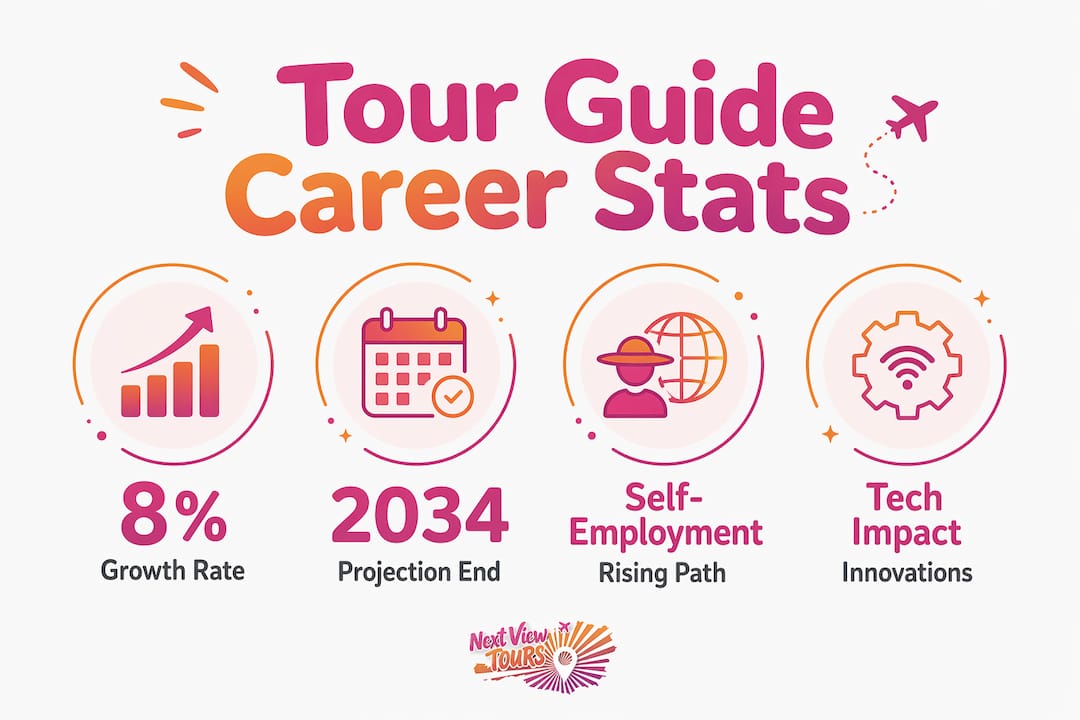
The career outlook for tour guiding is strong and improving. Employment of tour and travel guides is projected to grow 8% from 2024 to 2034, which is faster than the average for all occupations. That growth reflects rising global demand for experiential travel and high-quality guided experiences.
| Career Factor | Current Status |
|---|---|
| Employment growth | 8% projected growth through 2034 (faster than average) |
| Multilingual guides | Higher demand and broader opportunities across Europe |
| Technology impact | Audio apps and AR are shifting demand toward specialized, small-group guides |
| Self-employment | Growing opportunity for independent guides with niche expertise |
| Specialization | Deep expertise in history, food, architecture, or adventure commands premium rates |
Technology like audio apps and augmented reality is reshaping the field. Generic, large-group tours face pressure from self-guided digital alternatives. The guides who thrive are those who offer something technology cannot replicate: genuine human connection, spontaneous storytelling, and real-time adaptation. Niche expertise in areas like Habsburg history, Central European architecture, or alpine ecology positions guides for premium, small-group work that commands higher pay and stronger loyalty from repeat guests.
Self-employment is a growing path in this field. Guides who build a personal brand around a specific city or theme, such as guided tours across Europe, can operate independently and set their own rates. The barrier to entry is low, but the barrier to sustained success requires years of accumulated knowledge and a strong reputation.
Key Takeaways
A successful tour guide career requires mastering storytelling, safety, logistics, and adaptability in equal measure, with continuous learning as the foundation for long-term credibility.
| Point | Details |
|---|---|
| Core responsibilities | Tour guides lead groups, deliver commentary, manage safety, and handle logistics in real time. |
| Essential qualifications | First Aid, CPR, local licenses, and strong public speaking skills are the baseline requirements. |
| Role distinction | Tour guides deliver live experiences; tour operators and travel agents handle planning and bookings. |
| Career outlook | Employment is projected to grow 8% through 2034, with strongest demand for specialized and multilingual guides. |
| Key to longevity | Reading the room and adapting content to group needs separates exceptional guides from average ones. |
What I have learned from years of watching great guides work
The guides I respect most share one quality that no job description captures: they are genuinely curious about the people in front of them, not just the history behind them. They ask questions. They notice when someone’s eyes light up at a particular story and they follow that thread, even if it takes them slightly off script.
Most career guides focus on what you need to know. The real differentiator is how you listen. A guide who can sense that a group is tired, overwhelmed, or quietly fascinated by something unexpected will always outperform a guide who simply delivers more information. The expert insights that make tours memorable are rarely about facts. They are about timing, warmth, and the ability to make a stranger feel like they are seeing something for the first time alongside you.
Physical and emotional stamina matter more than most people expect. The job asks you to be “on” for hours, often in heat, rain, or crowds, while managing a dozen different personalities. The guides who last are the ones who genuinely love the work. Passion is not a soft skill here. It is the fuel that keeps performance high on the third tour of the day.
— Next
Nextviewtours: see the tour guide role in action
Watching a skilled guide work is the fastest way to understand what the role truly demands. Nextviewtours operates day trips, multi-day adventures, private tours, and group experiences across Vienna, Salzburg, Prague, Budapest, and destinations throughout Europe. Each format places different demands on a guide, from the focused intensity of a private tour to the crowd management required on a group adventure.
If you are building a career in tour guiding, experiencing these formats as a guest gives you a practical education in pacing, storytelling, and group dynamics that no classroom can replicate. Nextviewtours’ guides work across cultural, historical, and natural sites, demonstrating the full range of responsibilities a professional guide carries on every trip.
FAQ
What does a tour guide do on a typical day?
A tour guide leads groups through points of interest, delivers prepared commentary, manages group safety, and handles logistics such as timing and pacing. The Bureau of Labor Statistics identifies research, itinerary management, and storytelling as the core daily functions.
What qualifications do you need to become a tour guide?
Most positions require a high school diploma, First Aid and CPR certification, and strong public speaking skills. Roles at major cultural sites or in adventure tourism often require a local guiding license and may prefer a degree in history, tourism, or cultural studies.
How is a tour guide different from a tour operator?
A tour guide delivers live, in-person experiences directly to guests. A tour operator handles bookings, marketing, and logistics behind the scenes without leading tours themselves.
Is tour guiding a good career choice in 2026?
Tour guide employment is projected to grow 8% from 2024 to 2034, faster than the average for all occupations. Guides with niche expertise, multilingual skills, or a focus on small-group experiences are best positioned for strong, sustained demand.
What is the biggest challenge in the tour guide job role?
Adapting in real time to group dynamics, weather disruptions, and unexpected site changes is the most consistent challenge guides report. The ability to stay calm, flexible, and engaging under pressure defines long-term success in this career.


Comments are closed