
 Uncategorized
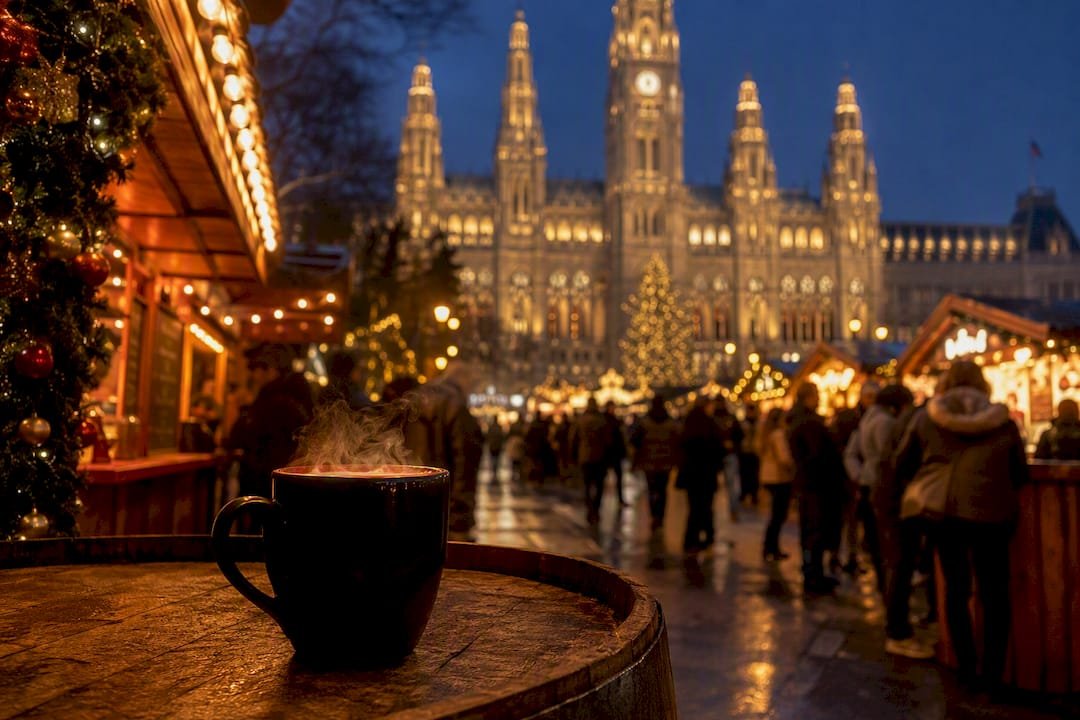
Go between mid-November and early December for the best mix of full atmosphere and manageable crowds, or push through to Dec 23 if you want the entire six-week season. Four markets deserve priority on a short trip: Rathausplatz for the spectacle, Spittelberg for artisan goods, Schönbrunn for the palace backdrop, and Karlsplatz Art Advent for curated crafts without the crush. Vienna runs more than 20 official Advent markets each winter, and trying to see them all in a three or four day trip is how you end up exhausted and cold instead of charmed.
Most markets open in mid-November and stay lit through Dec 23, with a few extending into early January. Budget roughly EUR 15 to 20 per market visit for punsch and a snack, and go on a weekday afternoon if crowds worry you.
Here’s the shortlist and why each earns a spot:
- Rathausplatz (Wiener Christkindlmarkt): the flagship, set before an illuminated City Hall with an ice rink and family activities.
- Spittelberg: cobblestone lanes lined with handmade goods, the market locals actually shop at.
- Schönbrunn Palace: imperial grounds turned into a warm, lantern-lit market scene.
- Karlsplatz Art Advent: smaller, design-forward stalls near the Secession building.
Key Takeaways
Visit Vienna’s Christmas markets between mid-November and December 23 for full atmosphere, prioritizing Rathausplatz, Spittelberg, Schönbrunn, and Karlsplatz Art Advent on a short trip.
| Point | Details |
|---|---|
| Best timing | Go mid-November through early December for lighter crowds, or stay through Dec 23 for the full season. |
| Budget per visit | Expect roughly EUR 15 to 20 per market for punsch and a snack, plus a small refundable cup deposit. |
| Confirmed 2026 dates | Rathausplatz, Spittelberg, Freyung, and Schönbrunn had locked dates by mid-2026; check smaller markets closer to fall. |
| Avoid the crowds | Visit Spittelberg, Freyung, and Am Hof on weekdays, and save Rathausplatz for an evening visit. |
| Simplify the logistics | Nextviewtours offers guided group and private Vienna market tours that handle routing and timing for short trips. |
Table of Contents
- Vienna Christmas Market Quick Facts: Dates, Hours, and Costs
- What Does a Viennese Christmas Market Actually Feel Like?
- Which Vienna Christmas Markets Should Be on Your List?
- Which Vienna Market Fits Your Travel Style?
- How Should You Plan a One-Day or Two-Day Market Trip?
- What Should You Know About Money, Crowds, and Weather?
- What Are the Must-Try Foods and Drinks?
- What Are the Confirmed 2026 Opening Dates So Far?
- Should You Book a Guided Vienna Christmas Market Tour?
- A Guide’s Take on What Makes Vienna’s Markets Worth the Cold
- Book a Vienna Christmas Market Experience With Nextviewtours
- Where to Verify Official Vienna Christmas Market Dates
- Frequently Asked Questions
- Sources
Vienna Christmas Market Quick Facts: Dates, Hours, and Costs
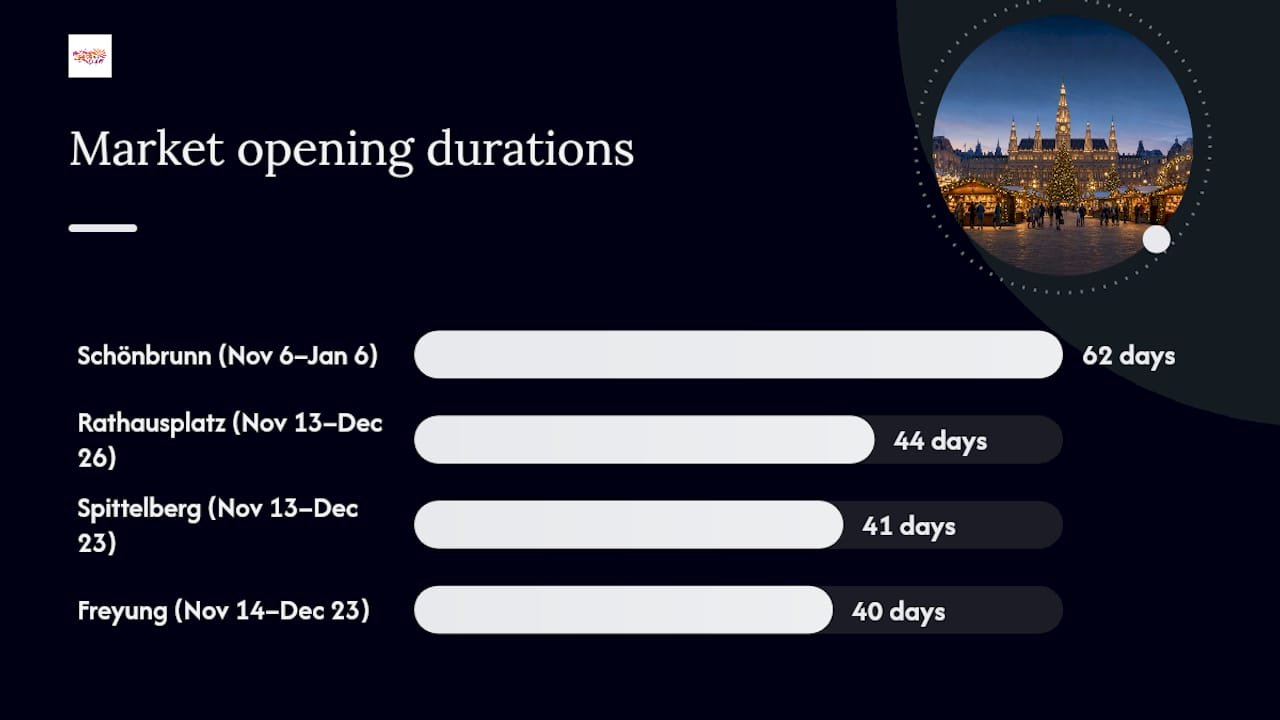
Most Vienna Christmas markets open in mid-November and run through Dec 23, though a handful extend past Christmas. Schönbrunn’s 2026 market, for example, runs November 6 through January 6, 2027, making it one of the longest-running options if your trip falls outside the typical Advent window.
Daily hours typically span late morning to 9 or 9:30 PM, with smaller markets closing earlier and Rathausplatz often running longest. Every punsch or Glühwein stand charges a cup deposit, usually a few euros, refunded when you return the mug. Skip the return and keep the cup as a souvenir. Most travelers report spending EUR 15 to 20 per market on drinks and a snack, which adds up fast if you’re hopping between three or four markets in one evening.
A few things worth knowing before you build your itinerary:
- Operator calendars for individual markets usually publish confirmed dates in September or October, later than general travel guides.
- As of mid-2026, four markets had locked-in dates: Rathausplatz (Nov 13 to Dec 26), Spittelberg (Nov 13 to Dec 23), Freyung (Nov 14 to Dec 23), and Schönbrunn.
- Smaller neighborhood markets like Am Hof and Altes AKH tend to confirm dates later in the year, so check their own pages rather than relying solely on aggregator sites.
- City-wide aggregator pages sometimes lag behind individual market announcements by a few weeks.
Pro Tip: Bookmark each market’s own website rather than a single roundup page. Aggregators are convenient but they don’t always catch a schedule change or an early closure announcement.
What Does a Viennese Christmas Market Actually Feel Like?
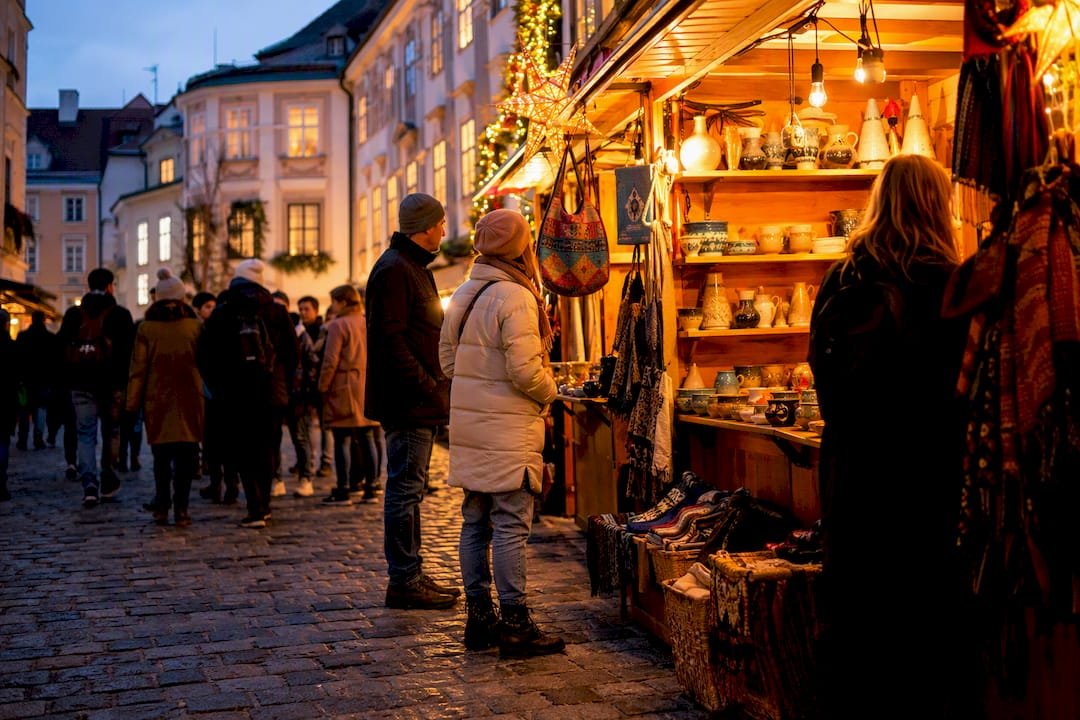
Picture strings of warm lights against baroque facades, the smell of roasted chestnuts drifting between wooden stalls, and a low hum of conversation punctuated by the occasional brass band. That’s the baseline. Vienna’s markets range from the theatrical (Rathausplatz, with its towering tree and choir performances) to the intimate (Spittelberg, tucked into a historic artists’ quarter), but nearly all of them share one unifying ritual: punsch.
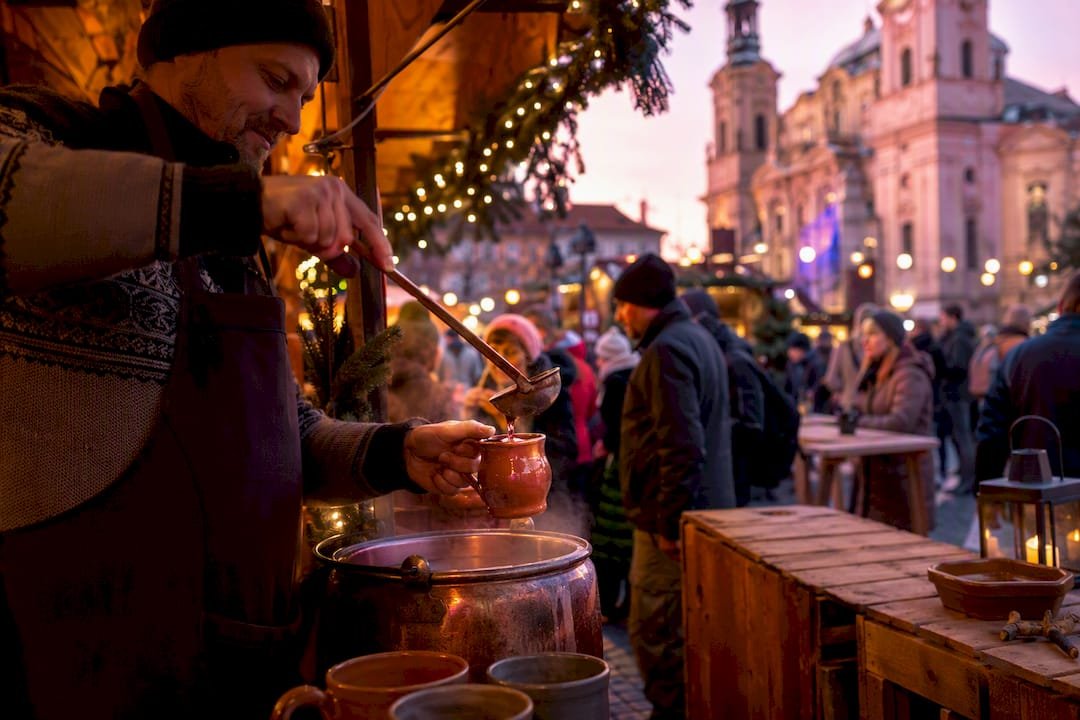
Punsch is stronger and more varied than the Glühwein most Americans picture when they think “mulled wine.” Stalls pour everything from classic rum punsch to seasonal variations with elderberry, chestnut, or even chili. Locals treat the standing tables around each punsch stand as informal meeting points. According to Wien, these barrel tables function as social hubs where people linger for a half hour or more, catching up with friends rather than drinking and moving on.
That’s the etiquette worth adopting: slow down. Grabbing a cup and speed-walking to the next stall is technically fine, but it misses the point of why these markets exist in the first place.
Beyond the drinks, expect:
- Handcrafted ornaments, often glass-blown or hand-painted, at noticeably higher quality in curated markets like Freyung and Karlsplatz.
- Wooden toys, nutcrackers, and nativity figures, some from small Austrian workshops.
- Food stalls selling everything from roasted chestnuts to raclette and chimney cake.
- Regional specialties like honey, schnapps, and hand-knit winter accessories.
Pro Tip: Order your punsch, then walk to the nearest standing table instead of drinking on the move. You’ll notice the difference in how the whole visit feels within about ten minutes.
Which Vienna Christmas Markets Should Be on Your List?
Vienna’s market scene spans more than 20 locations, but a handful carry the reputation, and the crowds, for good reason. Here’s what each one actually offers.
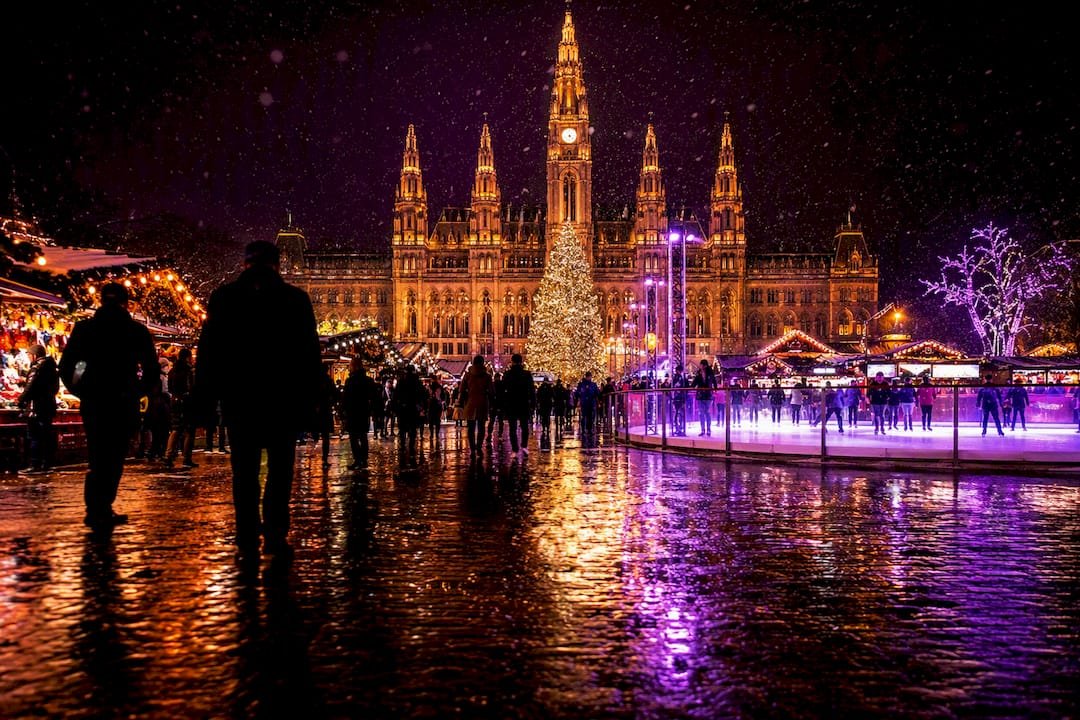
Wiener Christkindlmarkt at Rathausplatz is the one most visitors picture when they imagine Vienna at Christmas. Set directly in front of the illuminated City Hall, it’s one of Europe’s largest and most photographed markets, with roughly 150-plus stalls and an ice rink that draws families all winter. Go for the sheer scale and the tree lighting; go in the evening when the building’s lights hit their full effect. Nearest stop: U2 Rathaus. It’s the busiest market in the city, so weekday mornings or weeknight visits after 8 PM are your best bet for breathing room.
Schönbrunn Palace Christmas Market trades urban spectacle for imperial grandeur. Stalls line the courtyard in front of the UNESCO World Heritage palace, with a Nativity scene exhibit and a small Advent choir schedule adding cultural weight beyond the shopping. Families like it for the palace grounds themselves, which double as a sightseeing stop. U-Bahn U4 to Schönbrunn gets you there directly. This is one of the longest-running markets of the season, often stretching into early January.
Christmas Village at Belvedere Palace offers a quieter, more design-conscious alternative. The market sits on the grounds of the Belvedere, framed by baroque gardens, and leans toward higher-end crafts and gourmet food stalls rather than mass-market souvenirs. It suits travelers who want the palace backdrop without Schönbrunn’s crowds. Tram D or bus 13A gets you close to the entrance.
Spittelberg Christmas Market is the local favorite, and it shows. Spread across a cluster of cobblestone lanes in a historic artists’ district, it’s built almost entirely around independent makers selling ceramics, textiles, and small-batch goods you won’t find at the bigger markets. The scale is intimate, which makes it one of the least crowded major markets even during peak season. U3 to Volkstheater puts you within a five-minute walk.
Stephansplatz Christmas Market sits at the literal center of the city, right beside St. Stephen’s Cathedral. It’s smaller than Rathausplatz but benefits from unbeatable foot traffic and one of Vienna’s most recognizable backdrops. Good for a quick stop between sightseeing rather than a dedicated visit. U1 or U3 to Stephansplatz.
Maria-Theresien-Platz Christmas Village runs between the Natural History and Art History Museums, giving it a striking symmetrical setting. It leans slightly more toward gift-quality crafts than the tourist-trap end of the spectrum, and its location makes it easy to combine with a museum visit. Trams 1, 2, D, and 71 all stop nearby.
Karlsplatz Art Advent is the pick for anyone who wants curated over commercial. Set near the ornate Karlskirche and the Secession building, it focuses on artist-made goods and design objects rather than mass-produced ornaments. It draws a smaller, more design-focused crowd, and the reduced foot traffic makes browsing genuinely pleasant. U1, U2, or U4 to Karlsplatz.
Old Viennese Christmas Market at Freyung leans into tradition, with a focus on historical crafts, folk art, and old-world charm in one of Vienna’s oldest squares. It’s smaller and quieter than the major markets, which makes it a smart midweek stop. A five-minute walk from U3 Herrengasse.
Am Hof Christmas Market sits just steps from Freyung, making the two an easy pair on a single walking loop. Am Hof leans slightly more toward local food stalls and seasonal treats, with a laid-back, neighborhood feel. Same U3 Herrengasse access applies.
Weihnachtsdorf at Campus Universität Wien (Altes AKH) is one of the city’s better-kept secrets. Set in the courtyards of the former general hospital, it includes activities like ice stock shooting, a traditional Austrian curling variant, alongside the usual food and craft stalls. It’s a strong pick for families wanting something interactive beyond browsing. U6 to Alser Straße.
Winter Market at Riesenradplatz (Prater) combines holiday stalls with the backdrop of Vienna’s famous Ferris wheel and the Prater amusement park. It runs later into the season than most central markets, and its mix of rides and market stalls makes it a solid family choice if you’re traveling with kids who need more than window shopping. U1 or U2 to Praterstern.
Which Vienna Market Fits Your Travel Style?
Not every market suits every traveler, and matching your priorities to the right stop saves you from wasted time in the cold.
- Best for spectacle: Rathausplatz. Nothing else in the city matches its scale, lighting, or evening atmosphere.
- Best for artisan gifts: Spittelberg. Independent makers, higher-quality goods, and a browsing pace that doesn’t feel rushed.
- Best for photos: Schönbrunn and Belvedere. Palace architecture gives you a backdrop no city-square market can compete with.
- Best for low-crowd browsing: Freyung, Am Hof, and Karlsplatz Art Advent. Smaller footprints mean you’re not shoulder-to-shoulder with tourists.
- Best for families: Rathausplatz for the ice rink, Altes AKH for ice stock shooting, and Prater for the amusement park combination.
- Best for a quick stop between sightseeing: Stephansplatz and Maria-Theresien-Platz, both wedged between major landmarks.
If walking between markets matters to you, Freyung and Am Hof sit close enough for a single loop, and both connect easily to U3 Herrengasse. Rathausplatz, Karlsplatz, and Maria-Theresien-Platz form a wider triangle better suited to tram or U-Bahn hops rather than walking the whole route.
How Should You Plan a One-Day or Two-Day Market Trip?
A single day in Vienna is enough to hit the highlights if you sequence it right. Two days let you slow down and add a palace market to the mix.
One-day plan:
- Morning: Start at Freyung and Am Hof, both quiet enough to enjoy without crowds and an easy five-minute walk apart.
- Afternoon: Head to Schönbrunn for the palace grounds and market combined, giving you a sightseeing stop and a market visit in one trip.
- Evening: Finish at Rathausplatz after dark, when the lighting and the tree hit their full effect.
Two-day plan:
- Day one: Cover the historic core (Freyung, Am Hof, Stephansplatz) on foot, then Spittelberg in the late afternoon for artisan shopping.
- Day two: Dedicate the morning to Schönbrunn or Belvedere, then spend the evening at Karlsplatz Art Advent or Maria-Theresien-Platz before capping the night at Rathausplatz.
Evening visits generally beat daytime ones for atmosphere, but timing matters. According to Vienna travel guides, visiting smaller markets on weekdays and saving Rathausplatz for a weeknight evening is the most reliable way to dodge peak crowds, since the flagship market’s scale absorbs foot traffic better than the smaller squares do.
For transport, the U-Bahn connects nearly every major market directly, and central Vienna is compact enough that walking between clustered markets (Freyung to Am Hof, or Rathausplatz to Stephansplatz) often beats waiting for a tram. Save an offline map or download transit directions in advance since cell coverage in some historic squares can be spotty. If you’d rather skip the logistics entirely, Nextviewtours’ Vienna day trip guide walks through a similar route structure for first-time visitors.
What Should You Know About Money, Crowds, and Weather?
Cards are widely accepted at Vienna’s markets these days, though smaller stalls sometimes still prefer cash, so carry some euros as backup. Every punsch or mulled wine purchase includes a cup deposit, typically a few euros, refunded if you hand the mug back. A realistic evening budget for drinks and a snack runs EUR 15 to 20 per market, more if you’re sampling food at multiple stalls.
Crowds peak on weekends and around December 8, a national holiday in Austria that draws heavy local foot traffic to every major market. Weekday afternoons, particularly before 5 PM, are consistently quieter. Local guides recommend hitting smaller markets like Spittelberg and Freyung on weekdays and saving Rathausplatz for an evening visit.
Vienna in November and December runs cold and often wet. Layer up, bring a waterproof outer layer, and wear shoes with real tread since cobblestones get slick when damp.
A few more practical notes:
- Rathausplatz and Maria-Theresien-Platz have the flattest, most accessible layouts; Spittelberg’s cobblestones are trickier for wheelchairs or strollers.
- Family facilities like the Rathausplatz ice rink and the Altes AKH ice stock area require separate tickets or rentals.
- A little German goes a long way: “Ein Punsch, bitte” (one punsch, please) and “Danke” (thanks) cover most stall interactions.
Pro Tip: If you only remember one German phrase, make it “Zahlen, bitte” (“the bill, please”), useful anywhere you sit down for a hot meal between market stops.
What Are the Must-Try Foods and Drinks?
Punsch comes first, always. It’s stronger and more varied than Glühwein, with seasonal takes on rum, elderberry, and chestnut versions showing up at different stalls. Glühwein itself, the classic mulled red wine, remains the reliable standby if you want something familiar.
For food, roasted chestnuts (Maroni) are the street snack every visitor should try at least once, sold hot from carts throughout the markets. Kaiserschmarrn, a shredded caramelized pancake dusted with sugar, makes a solid sweet stop if you’re splitting a treat between two people. Raclette stalls, with melted cheese scraped over potatoes, show up at larger markets and run a bit pricier. Kiachl, a fried dough often topped with sauerkraut or jam, and chimney cake, a rolled pastry cooked over an open flame, round out the sweet options. Sausage stands are everywhere and remain the most reliable vegetarian-unfriendly staple, though most markets now carry at least one plant-based option.
If you’re hitting multiple stalls, start with a warm drink, move to a savory snack, and finish with something sweet. It’s the order that keeps you from filling up before you’ve tried everything worth trying.
What Are the Confirmed 2026 Opening Dates So Far?
As of mid-2026, four major markets had locked-in dates: Rathausplatz runs Nov 13 through Dec 26, Spittelberg Nov 13 through Dec 23, Freyung Nov 14 through Dec 23, and Schönbrunn Nov 6 through Jan 6, 2027. Smaller markets, including Am Hof, Karlsplatz, and Altes AKH, typically confirm their calendars later in the year, often not until September or October.
That gap explains why aggregator sites sometimes show outdated or placeholder dates for smaller markets well into the fall. The fix is simple: check each market’s own page directly rather than relying solely on a single roundup, and set a calendar reminder to recheck in early autumn if you’re booking flights before dates are locked.
Should You Book a Guided Vienna Christmas Market Tour?
A guided market tour solves the two biggest headaches of a short Vienna trip: figuring out which markets are worth your limited hours, and getting between them efficiently in the cold. A local guide also tends to know which stall pours the better punsch or has the shortest chestnut line, details you won’t find on any website.
Booking benefits worth considering:
- Skip the guesswork on routing between clustered markets like Freyung and Am Hof.
- Get food and drink recommendations beyond what’s posted at the stall.
- Choose between a small group experience or a fully private tour built around your schedule.
- Combine a palace day trip (Schönbrunn) with an evening market crawl in one organized outing.
A typical evening market crawl might cover Rathausplatz and Stephansplatz, while a full-day option pairs a Schönbrunn palace visit with a Spittelberg stop on the way back. Advent season books up fast, especially the two or three weekends before Christmas, so reserving two to three weeks ahead gives you the best shot at your preferred time slot.
A Guide’s Take on What Makes Vienna’s Markets Worth the Cold
The market that surprises most first-time visitors isn’t Rathausplatz, it’s Spittelberg. People expect the big spectacle to be the highlight, and it is impressive, but the smaller cobblestone market is where you actually talk to the person who made what you’re buying. One quiet bench tucked behind the main row of stalls at Karlsplatz Art Advent gives you a spot to sit with a punsch and just watch the square for ten minutes, something almost no one does at the bigger markets. That pause is usually what people remember most once they’re back home.
Book a Vienna Christmas Market Experience With Nextviewtours
Skipping the guesswork on routing, timing, and which markets are worth your limited hours is exactly what Nextviewtours built its Vienna offerings to solve. Instead of piecing together transit schedules and hoping you picked the right evening for Rathausplatz, a guided route handles the sequencing for you, so you spend your hours in the cold actually enjoying punsch rather than checking a map.

Nextviewtours offers both small-group and private tour options across Vienna and the wider region, suited to travelers who want a structured evening market crawl or a full day pairing a palace visit with market time. If you’re weighing group versus private, the trip types overview breaks down which format fits a short Vienna stay best. For anyone extending their trip beyond Vienna, the Christmas Markets Europe tour covers Austria, Germany, and Switzerland in one itinerary. Reserve your preferred date two to three weeks out during peak Advent weekends, since the best evening slots fill first.
Where to Verify Official Vienna Christmas Market Dates
Check Austria for a citywide overview and market-specific links, individual operator pages for confirmed hours, and wien.info for municipal updates. Bookmark each one before you travel, since operators typically finalize calendars in September or October.
Frequently Asked Questions
When do Vienna Christmas markets open in 2026?
Most open in mid-November. Rathausplatz runs November 13 through December 26, Spittelberg and Freyung run through December 23, and Schönbrunn opens November 6 and runs into early January 2027.
Which Vienna Christmas market is the biggest?
Rathausplatz, with roughly 150-plus stalls set before the illuminated City Hall, alongside an ice rink and choir performances.
Are Vienna Christmas markets free to enter?
Yes, entry is free at every major market. You only pay for food, drinks, and any purchases, plus a small refundable cup deposit on punsch or Glühwein.
How many days do you need for Vienna’s Christmas markets?
One full day covers the highlights if you sequence your route well; two days let you add a palace market and slow the pace down.
Is Vienna cold in November and December?
Yes, expect cold and often wet conditions. Layer clothing and wear shoes with good tread, since cobblestone squares get slippery when damp.
Do Vienna Christmas markets accept credit cards?
Most stalls accept cards, though smaller vendors sometimes prefer cash, so carrying some euros as backup is a smart move.
Sources
- Austria
- Vienna Christmas Markets 2026: Dates, Map & Local Tips · Vienna Travel Guides
- Vienna Christmas Markets 2026: Dates, Honest Picks & Where to Stay | MINT @Naschmarkt
- Christkindlmarkt – Wiener Christkindlmarkt am Rathausplatz


Comments are closed