
 Uncategorized
TL;DR:
- Cultural immersion involves active, intentional engagement with local language, customs, and daily life, enhancing personal growth. Research shows it offers measurable cognitive, emotional, and social benefits, even in short-term programs. Genuine immersion relies on participation and behavior, not just physical presence in a foreign country.
Cultural immersion is defined as the intentional, active engagement in the customs, language, social rituals, and daily life of another culture. It goes far beyond sightseeing or sampling local food at a tourist restaurant. Neuroscience research shows that active cultural engagement lowers cortisol and enhances hippocampal plasticity, meaning your brain physically changes when you immerse yourself in a new culture. Intercultural psychology frames this as one of the most powerful tools for personal growth available to any traveler. Whether you are spending three days on a structured study tour in Vienna or a month living with a family in rural Czech Republic, the depth of your engagement determines the depth of your transformation.
What is cultural immersion, and what does it actually involve?
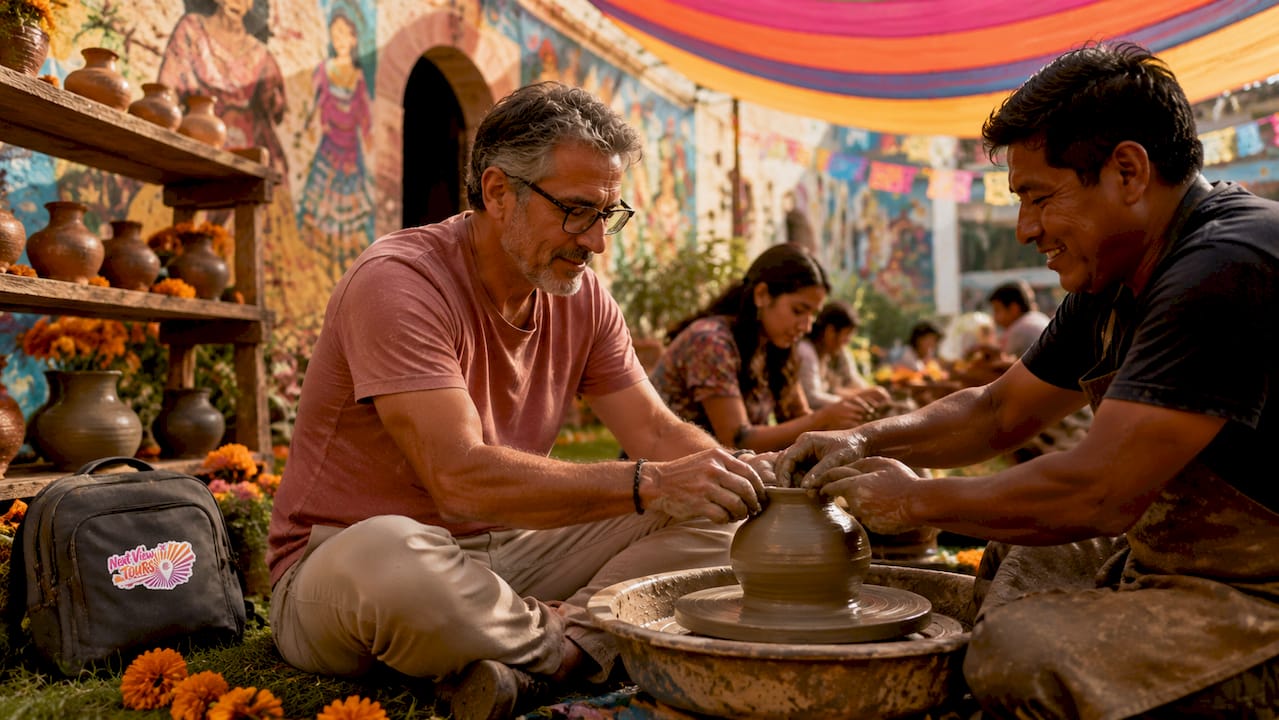
Cultural immersion is not a single activity. It is a spectrum of behaviors, attitudes, and choices that together create genuine contact with another way of life. The critical distinction, according to intercultural psychology, is intent of participation. Two travelers can stand in the same Budapest market. One photographs the paprika stalls and moves on. The other asks the vendor how the spice is used in their family’s cooking, tries a sample, and learns the Hungarian word for it. Only the second traveler is practicing cultural immersion.
Core components of genuine immersion
The following elements define what separates real immersion from passive tourism:
- Language engagement: Attempting to speak even basic phrases in the local language signals respect and opens doors to authentic interaction. Immersive travel that includes active language attempts builds neural pathways for empathy and perspective-taking.
- Social participation: Joining a local festival in Salzburg, attending a neighborhood market in Prague, or sharing a meal with a host family creates real human connection that no guided bus tour replicates.
- Daily life involvement: Using local transportation, shopping at neighborhood stores, and following local schedules places you inside the rhythm of a culture rather than observing it from the outside.
- Cultural rituals and customs: Participating in traditions, whether a Slovak folk dance or an Austrian Christmas market ritual, moves you from spectator to participant.
- Mindful curiosity: Approaching unfamiliar customs with openness rather than judgment is the psychological foundation of all genuine immersion.
A common misconception is that physical presence in a foreign country equals immersion. It does not. Immersion is a spectrum driven by intention and behavior, not geography alone.
Pro Tip: Before any trip, learn five to ten phrases in the local language. Locals in Vienna, Budapest, and Prague respond with warmth and openness when visitors make even a modest effort with their language.
What are the proven benefits of cultural immersion?
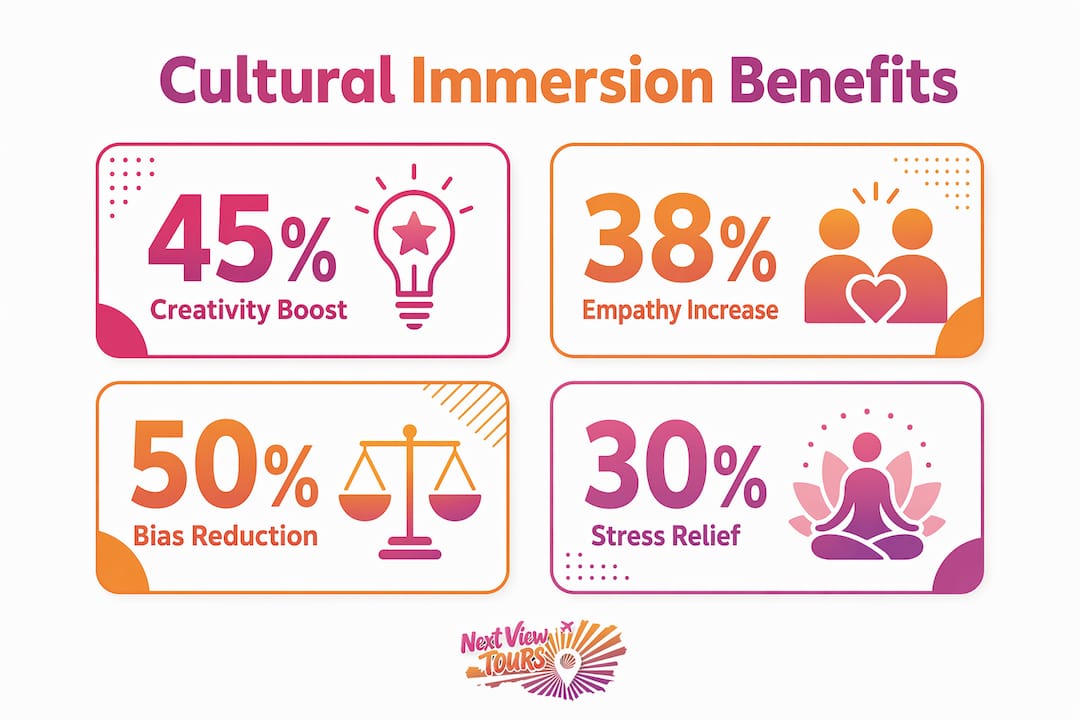
The benefits of cultural immersion extend well beyond pleasant memories. Research across neuroscience and intercultural psychology documents measurable cognitive, emotional, and social gains.
“Immersion is a cognitive workout that reshapes the brain physically through neuroplasticity.” (The Neuroscience of Travel)
Creativity and cognitive flexibility are among the most documented gains. Multicultural exposure enhances creative performance by improving insight learning and idea generation. The mechanism is straightforward: when your brain encounters unfamiliar cultural scripts, it retrieves knowledge from unexpected categories and combines ideas in new ways. This is not a soft benefit. It is a measurable shift in how your mind processes problems.
Reduced bias and greater empathy follow from real human connection. When you sit across from a person whose daily life differs fundamentally from yours, implicit assumptions erode. Experiencing culture firsthand lowers implicit bias and increases social intelligence, according to neuroscience research on immersive travel.
Frame switching is the term intercultural psychologists use for the ability to shift perspectives fluidly between cultural contexts. Frame switching expands mental flexibility and reduces cognitive rigidity, making you more adaptable in professional and personal settings long after you return home.
Stress reduction is another well-documented effect. Novel environments shift brain activity away from the Default Mode Network, which is associated with rumination and anxiety, toward present-moment awareness. This shift lowers cortisol and promotes the kind of mental reset that most travelers intuitively seek but rarely understand scientifically.
Emotional resilience also develops through immersion, particularly in nature-led settings. Culture-led environments support cognitive integration and identity reconstruction, while nature-led settings promote emotional stabilization and social bonding. Both are valuable, and they complement each other when combined in a single trip.
What are the different types of cultural immersion?
Not all immersion experiences are structured the same way. Understanding the main types helps you choose the approach that fits your goals and travel style.
| Immersion Type | Setting | Primary Benefit | Best For |
|---|---|---|---|
| Structured study tours | Guided, 3 to 5 days | Cross-cultural adaptation, empathy | First-time immersive travelers |
| Homestays | Residential, family-based | Language acquisition, daily life insight | Language learners, long-term travelers |
| Community engagement | Local events, markets, rituals | Social bonding, bias reduction | Culturally curious travelers |
| Nature-led immersion | Outdoor, wilderness settings | Emotional resilience, stress recovery | Travelers seeking mental reset |
| Urban local living | City neighborhoods, local transport | Cognitive flexibility, frame switching | Independent travelers, city explorers |
Short-term structured programs of three to five days provide embodied engagement that surpasses classroom learning for cross-cultural adaptation. This finding is significant for travelers who assume that only long-term stays produce meaningful immersion. A well-designed three-day tour through Hallstatt or Slovakia, led by a knowledgeable local guide, can deliver more genuine cultural contact than two weeks of resort-based travel.
The distinction between culture-led and nature-led settings matters because they produce complementary psychological benefits. A trip that combines a walking tour of Vienna’s Innere Stadt with a day in the Austrian Alps addresses both cognitive integration and emotional resilience. Nextviewtours designs experiences that draw on both settings, which is one reason their itineraries tend to feel more complete than single-format tours.
You can also explore immersive travel trends shaping European tourism in 2025 and 2026, which show a clear shift toward community-based and nature-integrated formats over traditional sightseeing.
How to experience cultural immersion effectively when traveling
Genuine immersion requires preparation, presence, and a willingness to step outside comfort zones. These steps make the difference between a trip you remember and one that changes how you see the world.
- Learn the basics of the local language. You do not need fluency. Ten phrases in Czech, Hungarian, or Slovak signal respect and invite reciprocity. Locals share more, recommend more, and connect more deeply when visitors make this effort.
- Choose accommodations that encourage cultural exchange. Homestays, locally owned guesthouses, and family-run hotels place you inside the community rather than beside it. Large international hotel chains insulate you from the culture you came to experience.
- Engage in community rituals and everyday activities. Attend a local market, join a cooking class focused on regional cuisine, or follow the route locals use to commute. These activities are where culture actually lives.
- Respect local norms and avoid projecting stereotypes. Every culture has protocols around greetings, dining, and public behavior. Researching these in advance prevents unintentional disrespect and opens more doors than any guidebook recommendation.
- Practice mindful presence. Put the phone down during conversations. Observe before you interpret. Ask questions with genuine curiosity rather than to confirm what you already think you know.
Pro Tip: Cultural immersion can be practiced without traveling abroad. Intentional local engagement through language practice, cultural events, and social observation produces similar cognitive flexibility. Use your home city as a training ground before your next trip.
Choosing the right tour format also shapes how deeply you can immerse. A group tour experience that prioritizes local guides, small group sizes, and community access delivers far more cultural depth than a large coach tour following a fixed script.
Key takeaways
Cultural immersion is active, intentional engagement with another culture’s language, customs, and daily life, and research confirms it produces measurable cognitive, emotional, and social benefits.
| Point | Details |
|---|---|
| Immersion requires active participation | Physical presence alone does not constitute immersion; intent and behavior define it. |
| Cognitive benefits are well-documented | Multicultural exposure increases creativity, reduces bias, and builds frame-switching ability. |
| Short-term programs deliver real results | Structured tours of three to five days produce genuine cross-cultural adaptation. |
| Setting type shapes the benefit | Culture-led environments build cognitive integration; nature-led settings build emotional resilience. |
| Practical steps matter | Language basics, local accommodations, and community engagement are the highest-leverage actions. |
Why cultural immersion is the most underrated form of travel
I have guided and organized travel experiences across Austria, the Czech Republic, Hungary, and Slovakia for years, and the pattern I see most often is this: travelers arrive hoping to see a place, and the best ones leave having understood a people. That shift does not happen by accident.
What surprises most first-time immersive travelers is how quickly the discomfort of unfamiliarity becomes the most memorable part of the trip. The moment you attempt a sentence in Hungarian and a local laughs with you, not at you, and then spends ten minutes teaching you the correct pronunciation, that is the moment the trip becomes something you carry with you. No photograph captures it.
The research on frame switching resonates deeply with what I observe in practice. Travelers who engage with local guides, ask questions beyond the script, and accept invitations to participate in everyday moments return home with a different mental posture. They are more patient, more curious, and more comfortable with ambiguity. These are not small gains.
My honest advice: resist the urge to optimize your itinerary for maximum sights covered. One afternoon spent in a local kitchen in Prague learning to make svíčková teaches you more about Czech identity, history, and values than three museum visits. Depth beats breadth every time. Cultural immersion is not a checkbox. It is a practice, and the more intentionally you approach it, the more it gives back.
— Next
Discover authentic cultural immersion with Nextviewtours
Nextviewtours designs European travel experiences built around genuine cultural contact, not just scenic stops. From day trips out of Vienna and Salzburg to multi-day adventures through Slovakia, the Czech Republic, and Hungary, every itinerary is crafted to place you inside the culture rather than in front of it. Local expert guides, small group formats, and community-centered activities are the foundation of every experience. Explore the full range of trip types available to find the format that matches your travel goals, whether you are looking for a short cultural day trip or a week-long immersive adventure across Central Europe.
FAQ
What is the cultural immersion definition?
Cultural immersion is defined as the active, intentional engagement with the language, customs, social rituals, and daily life of another culture. It differs from passive tourism in that it requires participation, not just observation.
How long does cultural immersion take to be effective?
Short-term structured programs of three to five days produce measurable cross-cultural adaptation and empathy gains. Longer stays deepen the effect, but meaningful immersion does not require months abroad.
What are the main benefits of cultural immersion?
The primary benefits include increased creativity, reduced implicit bias, greater empathy, improved cognitive flexibility through frame switching, and lower stress levels. These outcomes are supported by neuroscience and intercultural psychology research.
Can you practice cultural immersion without traveling abroad?
Yes. Intentional local engagement through language practice, attendance at cultural events, and mindful social observation produces similar cognitive flexibility to travel-based immersion.
What is the difference between cultural immersion and cultural experience?
A cultural experience is any encounter with a different culture, including passive ones like watching a film or visiting a museum. Cultural immersion requires active participation, sustained engagement, and the intent to understand rather than simply observe.


Comments are closed