
 Uncategorized
TL;DR:
- Tour guides lead visitors to points of interest, interpret local heritage, and ensure guest safety daily.
- They perform varied tasks such as planning routes, narrating stories, managing groups, and conducting safety checks.
A tour guide leads individuals or groups to points of interest, interprets cultural, historical, or natural heritage, and keeps guests safe throughout the experience — all at once. According to the U.S. Bureau of Labor Statistics, this role sits at the intersection of education, hospitality, and logistics. If you have strong communication skills, genuine stamina, and a talent for reading a crowd, guiding is one of the few careers where all three pay off every single day.
- Core function: Lead, interpret, protect, and entertain guests at cultural, historical, or natural sites
- Best fit for: People with strong storytelling ability, physical endurance, and customer-service instincts
- U.S. labor authority: The BLS classifies this under “Tour and Travel Guides” (SOC 39-7011)
- Salary snapshot: Market data indicates that U.S. tour guides’ annual earnings in the 25th percentile are near $30,000 and in the 75th percentile near $44,000, with additional income from tips often significant
- Where to learn more: Nextviewtours offers practitioner context on how guides shape travel experiences
Table of Contents
- What does a tour guide actually do, and how is the role different from related jobs?
- Day-to-day responsibilities every tour guide carries out
- What types of tour guides are there, and where do they work?
- Where do tour guides work, and what does the schedule actually look like?
- What skills and qualifications do employers look for in a tour guide?
- How do you become a tour guide? Steps, timeline, and costs
- What do tour guides earn, and what does the career outlook look like?
- Safety responsibilities, legal notes, and accessibility best practices
- What does a tour guide’s day actually look like? Two sample itineraries
- Key Takeaways
- What experienced guides say about the job
- See professional guiding in action with Nextviewtours
- Useful sources and further reading
What does a tour guide actually do, and how is the role different from related jobs?
A tour guide is a person who escorts visitors to sites of interest and interprets the cultural, natural, or historical significance of what they are seeing. The BLS Occupational Outlook Handbook defines the role around leading excursions, delivering commentary, and ensuring guest safety. Internationally, the term “tourist guide” is the recognized professional designation, established by standards including EN 13809:2003 and ISO 18513:2003, though “tour guide” is the common U.S. term.
The role is often confused with adjacent jobs. Here is how they differ:
- Tour guide: Leads groups or individuals at specific sites, delivers live interpretation, manages guest experience on-site
- Tour leader / tour manager: Oversees the logistics of a multi-day trip (transport, hotels, schedules) but may not deliver site commentary
- Docent: A volunteer or staff interpreter at a museum or gallery, typically without a guiding license
- Guide-instructor: Combines guiding with skills instruction, common in adventure or outdoor settings
- Travel agent: Plans and books travel itineraries remotely; does not accompany guests
The CARICOM regional code of practice for tour guides captures the professional standard well: a guide interprets heritage in the visitor’s language of choice while fulfilling clear safety obligations. That dual mandate — knowledge plus duty of care — is what separates a licensed professional guide from a casual narrator.
Day-to-day responsibilities every tour guide carries out
The daily work of a guide is more varied than most people expect. O*NET lists escorting groups, providing information at points of interest, and monitoring patron activities as core work activities. In practice, a typical day looks like this:
- Route and content planning: Researching talking points, confirming stop order, and timing commentary to fit the group’s schedule
- Guest greeting and orientation: Welcoming guests, confirming headcounts, distributing audio equipment, and delivering a safety briefing
- Live commentary: Narrating history, architecture, or natural features at each stop, adapting depth and pace to the group’s energy
- Group management: Keeping the group together, managing stragglers, and adjusting the pace when someone needs a break
- Logistics coordination: Communicating with drivers, venue staff, or ticket offices to keep transitions smooth
- Q&A and guest interaction: Fielding questions, handling special requests, and redirecting off-topic tangents gracefully
- Safety monitoring: Watching for hazards, enforcing site rules, and responding to first-aid situations
- Post-tour wrap-up: Collecting feedback, returning equipment, and logging any incidents
Here is a short example of how a professional guide might open a stop at a historic square:
“Welcome to the heart of the old city. The building directly in front of you was completed in 1741 — and if you look at the roofline, you will notice the original baroque stonework is still intact on the eastern wing. That detail survived two wars and a complete city renovation. I want to tell you why.”
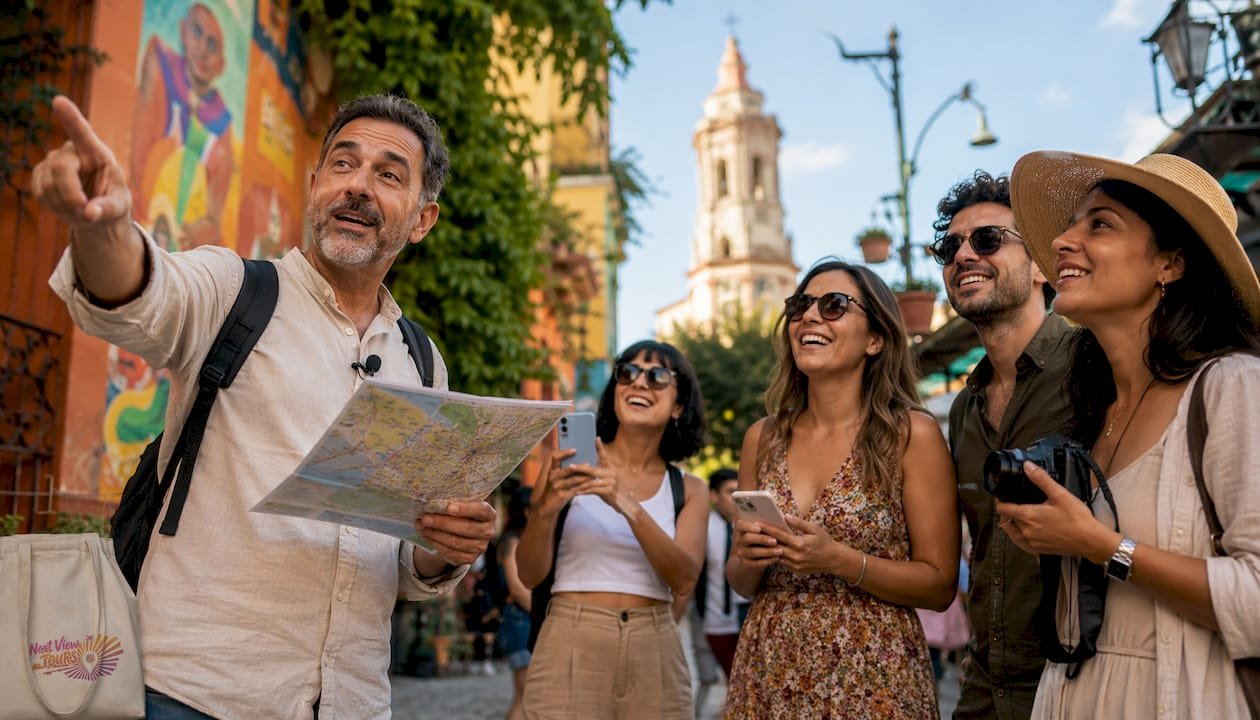
That opening does three things at once: it orients the group spatially, anchors a specific fact, and creates a narrative hook that makes people want to listen.
Pro Tip: Experienced guides monitor group energy constantly. If the group goes quiet and eyes start drifting, shorten the next commentary block by 30% and add a question. Engagement resets faster than you think.
Guides who handle memorable trip experiences consistently report that pacing and storytelling matter more than encyclopedic knowledge.
What types of tour guides are there, and where do they work?
The guiding profession covers a wide range of specialties. Indeed’s career overview notes that guides may work for museums, parks, tour operators, cruise lines, and visitor centers, or operate independently. The table below maps the most common guide types to their settings and core skills.
| Guide type | Typical setting | Main employer | Core skills emphasized |
|---|---|---|---|
| City / heritage guide | Urban streets, historic districts | Tour operators, city tourism boards | Local history, crowd management, navigation |
| Museum / gallery docent | Indoor galleries, cultural institutions | Museums, art galleries | Art or science knowledge, accessibility, quiet group control |
| Adventure / outdoor guide | Mountains, rivers, backcountry | Outfitters, national parks, resorts | Safety certification, physical fitness, risk assessment |
| Nature / wildlife guide | National parks, wildlife reserves | Parks services, eco-tour operators | Natural history, Leave No Trace principles, first aid |
| Private / concierge guide | Flexible, client-defined itineraries | Luxury hotels, private tour companies | Personalization, languages, discretion |
| Specialist guide | Food markets, religious sites, architecture | Niche operators, cultural organizations | Deep subject expertise, cultural sensitivity |
Adventure and nature guides often carry additional certifications — Wilderness First Responder (WFR) training is a common requirement for backcountry work. Specialist guides in food or architectural tours tend to build credibility through professional credentials in their subject area rather than a guiding license alone. For expedition-style roles, operators like Exotica Charters illustrate how naturalist guides combine scientific knowledge with on-board guest management.
Where do tour guides work, and what does the schedule actually look like?
The work environment shifts dramatically depending on the guide type. City guides spend most of their time outdoors on cobblestone streets and plazas; museum docents work in climate-controlled galleries; adventure guides may be on a river or a ridgeline for eight hours straight. What most settings share is physical demand and schedule variability.
- Indoor vs. outdoor: Museum and gallery roles are largely indoor; city, nature, and adventure guiding is predominantly outdoor and weather-dependent
- Shift lengths: A single tour can run under an hour (a focused gallery walk) or stretch past 12 hours on a full-day expedition
- Multi-tour days: In peak season, many guides run two or three tours back-to-back, with brief turnarounds between groups
- Seasonality: Demand peaks in summer and around major holidays; some guides work intensively from May through September and take on other roles in the off-season
- Record-keeping: Many employers require guides to log guest counts, incidents, and feedback after each tour
The physical demands are real. A city walking guide may cover 5–8 miles per day on hard surfaces, often while projecting their voice without amplification. Outdoor and adventure guides add elevation gain, weather exposure, and load-carrying to that picture. Comfortable, durable footwear and genuine cardiovascular fitness are not optional extras — they are baseline requirements.
What skills and qualifications do employers look for in a tour guide?
Communication is the foundational skill. Tourism training standards (Module-604.pdf) consistently position the ability to adapt commentary for different ages, cultures, and group energy levels as the single most transferable competency a guide can develop. Everything else builds on top of that.
Core skills checklist:
- Clear verbal communication and storytelling ability
- Active listening and real-time audience reading
- Bilingual or multilingual ability (a strong differentiator in most U.S. markets)
- Crowd management and conflict de-escalation
- First aid and CPR certification (required by most professional employers)
- Local and subject-matter knowledge (history, ecology, architecture, food culture)
- Familiarity with guiding technology: wireless audio systems (e.g., Whisper systems, Sennheiser tour guide sets), GPS navigation apps, and booking platforms
- Problem-solving under pressure and adaptability when plans change
Certifications that matter:
- First Aid / CPR: Red Cross or American Heart Association certification is a baseline for most employers
- Wilderness First Responder (WFR): Required for backcountry and adventure guiding
- State or local guiding licenses: Some U.S. cities (New York City, for example) have historically required licensed guides for certain contexts; always check local requirements
- National Park Service Concession permits: Needed for commercial guiding inside NPS-managed lands
- Language proficiency credentials: Formal certification (e.g., ACTFL ratings) strengthens applications for multilingual roles
On a résumé, employers respond to specifics: named sites you have guided, group sizes you have managed, and certifications with dates. Vague claims like “excellent communication skills” carry far less weight than “led 90-minute walking tours for groups of 20–30 at [named historic district].”
How do you become a tour guide? Steps, timeline, and costs
Most people enter guiding within three to six months of deciding to pursue it seriously. The formal path for a licensed professional guide takes longer, but the entry-level route is genuinely accessible.
- Build your knowledge base (weeks 1–4): Choose a specialty and location. Read deeply — local history books, park interpretive materials, architectural surveys. Free resources from the National Park Service and Smithsonian Institution are excellent starting points.
- Complete first aid and CPR training (weeks 2–6): A standard Red Cross First Aid/CPR course runs roughly $80–$150 and takes one to two days. This is non-negotiable for most employers.
- Research local permit requirements (weeks 3–5): Check with your city’s tourism office or parks department. Some jurisdictions require a guiding license or a permit to operate commercially on public land.
- Take a guiding course or shadow an experienced guide (weeks 4–12): Formal guiding courses through community colleges or tourism associations typically cost $200–$600. Shadowing an established guide for free is often more valuable than a classroom alone.
- Develop and rehearse a sample tour (weeks 8–14): Script and walk a 60–90 minute tour of your chosen area. Time it, record yourself, and refine the commentary. Deliver it to friends or a small volunteer group before your first paid audience.
- Apply and audition (weeks 10–16): Tour operators, museums, and parks services commonly require a short audition tour as part of hiring. Prepare a polished 15-minute segment.
- First paid gigs and networking (months 4–6): Join local tourism associations, attend industry meetups, and connect with other guides. Word-of-mouth referrals drive a significant share of freelance guiding work.
First 90-day checklist:
- Complete first aid certification
- Identify and contact three to five local operators or venues
- Shadow at least two experienced guides
- Deliver one full rehearsal tour to a test audience
- Create a one-page professional profile listing specialties, languages, and certifications
For a deeper look at career pathways in guiding, Nextviewtours has compiled practitioner-informed guidance worth reviewing.
What do tour guides earn, and what does the career outlook look like?
Pay in guiding varies more than in most service roles, because tips can represent a substantial share of total income. ZipRecruiter’s U.S. market data places the 25th percentile near $30,000 and the 75th percentile near $44,000 annually. The BLS classifies this occupation under Tour and Travel Guides (SOC 39-7011) and notes that part-time and seasonal arrangements are common.
| Earnings factor | How it affects pay |
|---|---|
| Employer type | Museum and park service roles tend to offer stable hourly wages; private and freelance guiding depends heavily on bookings and tips |
| Location | High-tourism cities (New York, San Francisco, New Orleans) support higher base rates and tip volumes |
| Specialty | Adventure and multilingual guides command premium rates |
| Language skills | Bilingual guides serving non-English-speaking visitors often earn 15–25% more per tour |
| Tipping culture | In the U.S., a $5–$20 per-person tip is common on well-received tours; on private tours, tips can exceed the base fee |
| Licensing | Guides holding recognized credentials or NPS permits can access higher-paying commercial contracts |
Career advancement paths:
- Senior guide / lead guide: Mentors junior staff, designs new tour content, handles VIP groups
- Tour operations manager: Oversees scheduling, guide training, and quality control for an operator
- Destination specialist: Focuses on a single region or theme, often working with luxury or specialist travel companies
- Guide trainer / curriculum developer: Creates training programs for new guides
The guided tours trends shaping European travel in 2025 offer useful context on where the profession is heading globally, including the growing demand for immersive, small-group experiences that reward skilled interpreters.
Safety responsibilities, legal notes, and accessibility best practices
Safety is not a background concern for guides — it is a primary professional obligation. O*NET task data includes monitoring patron activities and responding to emergencies as core work activities. Before any tour departs, a prepared guide runs through a structured checklist.
Pre-tour safety checklist:
- Confirm headcount and identify any guests with medical conditions or mobility needs
- Verify first-aid kit is stocked and accessible
- Check all equipment (audio systems, harnesses, boats, bikes) for function and safety
- Confirm transport arrangements and emergency contact numbers
- Brief guests on safety rules, meeting points, and what to do if separated
Legal and permit notes (U.S.-focused):
- Commercial guiding on National Park Service land requires an NPS Commercial Use Authorization (CUA); operating without one can result in fines and removal
- Some cities and historic districts require a local guiding license or permit; check with your municipality’s tourism or parks office before operating commercially
- Liability insurance is strongly advisable for independent guides; many operators require proof of coverage before contracting
This article provides general information only. Consult your local permitting authority or a qualified legal professional to confirm the specific requirements for your jurisdiction.
Accessibility best practices:
- Ask about mobility, hearing, and visual needs at booking and again at the tour start
- Offer written summaries or printed materials for guests with hearing impairments
- Plan accessible route alternatives for guests using wheelchairs or mobility aids
- Speak clearly and face the group when delivering commentary, especially when guests may be lip-reading
- Use audio loop systems or personal FM receivers where available
For a practical group tour preparation workflow, Nextviewtours outlines the operational steps guides use before departure.
What does a tour guide’s day actually look like? Two sample itineraries
Seeing the role in motion makes the abstract concrete. Here are two short scenarios that illustrate timing, pacing, and responsibilities across different guide types.
City walking tour (3 hours, 18 guests)
| Time | Activity |
|---|---|
| 8:30 AM | Arrive at meeting point; set up audio equipment; confirm headcount |
| — | Welcome guests, deliver safety and logistics briefing |
| — | Begin tour at Stop 1 (historic plaza); 12-minute commentary block |
| — | Walk to Stop 2; manage group pace, answer questions en route |
| — | Stop 3 (market hall); 15-minute commentary, free exploration time |
| — | Final stop (viewpoint); closing narrative and group photo |
| — | Tour ends; collect feedback forms, return audio equipment |
| — | Log guest count and any incidents; prepare for second tour |
Outdoor adventure half-day (4 hours, 10 guests)
| Time | Activity |
|---|---|
| — | Equipment check: first-aid kit, harnesses, GPS, weather assessment |
| 7:30 AM | Guest arrival; gear fitting, safety briefing, emergency protocol review |
| — | Depart trailhead; guide leads, monitors pace and group spacing |
| — | Rest stop; nature interpretation, hydration check |
| 10:30 AM | Summit or key destination; extended commentary and Q&A |
| — | Descent; guide sweeps from rear, monitors fatigue |
| — | Return to trailhead; debrief, equipment return, feedback collection |
Pre-tour checklist (applicable to both types):
- Confirm guest list and any special needs
- Check weather forecast and adjust route if needed
- Test all audio or technical equipment
- Brief any assistant guides or drivers
- Carry emergency contact list and first-aid kit
Guiding multiple tours in one day is common in peak season. The key is managing your own energy: eat between tours, rest your voice, and keep a mental reset between groups so the second audience gets the same quality as the first.
Key Takeaways
A tour guide’s core value lies in combining deep local knowledge with real-time people skills, safety awareness, and the storytelling ability to make a place come alive for any audience.
| Point | Details |
|---|---|
| Core role | Guides lead, interpret, protect, and entertain guests at cultural, historical, or natural sites. |
| Top skills | Communication adaptability, first aid certification, local knowledge, and crowd management are the most in-demand competencies. |
| U.S. pay range | Market data shows that pay for guides in the U.S. spans from approximately $30,000 at the 25th percentile to around $44,000 at the 75th percentile annually, with tips contributing meaningfully on top. |
| Path to entry | Most people can start guiding within three to six months by completing first aid training, researching local permits, and shadowing experienced guides. |
| Nextviewtours | Nextviewtours deploys professional guides across European destinations; their trip types show the range of settings where skilled guides work. |
What experienced guides say about the job
The gap between a competent guide and a truly memorable one is rarely about knowledge. It is about presence. Guides who have spent years in the field consistently describe the same turning point: the moment they stopped reciting facts and started telling stories with genuine investment in whether the audience was moved by them. That shift changes everything about how a group responds.
Handling complaints is where professional character shows most clearly. The instinct is to defend or deflect. What actually works is to acknowledge the concern immediately, offer a concrete remedy, and move on without letting the moment color the rest of the tour. Guests who see a guide handle a problem gracefully often leave more impressed than guests who had no problems at all. The importance of expert guides for travelers comes down precisely to this: a skilled guide does not just deliver information, they hold the emotional tone of the entire experience.
One practical note from long-time guides: protect your voice. Hydrate constantly, avoid shouting over ambient noise when a pause and repositioning will do the same job, and invest in a quality wireless audio system early in your career. Your voice is your primary instrument.
See professional guiding in action with Nextviewtours
Reading about what a tour guide does is one thing. Watching it happen on a well-crafted itinerary is another. Nextviewtours works with professional guides across Europe — from the baroque streets of Vienna and Salzburg to the dramatic landscapes of the Slovak countryside and the historic heart of Prague and Budapest. Every trip is built around guides who combine deep local knowledge with the kind of storytelling that makes a place feel personal, not just informative.

Whether you are curious about the craft of guiding or ready to experience what a skilled guide actually delivers, Nextviewtours offers private and group tours across a range of settings: city walks, nature excursions, adventure day trips, and fully customized multi-day itineraries. Browse the full range of trip types and find the experience that fits your travel style.
Useful sources and further reading
These primary sources are worth bookmarking if you are researching the guiding profession or planning to enter it.
- U.S. Bureau of Labor Statistics — Tour and Travel Guides: The authoritative U.S. source for job duties, work environment, and occupational classification (SOC 39-7011).
- O*NET Online — Tour Guides and Escorts (39-7011.00): Detailed task breakdowns, knowledge requirements, and skills ratings from the U.S. Department of Labor’s occupational database.
- CARICOM Regional Code of Practice: Tour Guides: A regional professional standard that defines guide obligations, safety duties, and service expectations — useful as a benchmark even outside the Caribbean.
- University of Uttarakhand — Tourist Guide Training Module-604.pdf): A structured training curriculum covering guide types, duties, communication skills, and earnings; useful for anyone designing a self-study program.
- ZipRecruiter — Tour Guides Salary Data: U.S. market salary snapshot with percentile breakdowns; pair with BLS data for a complete earnings picture.
- National Park Service (nps.gov): The primary source for Commercial Use Authorization requirements for guides operating on NPS-managed land. Check the specific park unit’s permit office for current requirements.
- Your local city or county tourism office: For jurisdiction-specific guiding licenses, permits, and insurance requirements — rules vary significantly by city and state.


Comments are closed