
 Uncategorized
TL;DR:
- Engaging in local experiences deepens cultural immersion, enhances satisfaction, and creates lasting memories beyond sightseeing.
- They benefit host communities economically by supporting small operators and preserving cultural traditions through community-led tourism.
Local experiences are defined as the deliberate participation in a community’s everyday life, culture, and traditions. They stand apart from conventional sightseeing because they place you inside a culture rather than in front of it. Research from Hello Mira and Visit Valdosta confirms that the role of local experiences extends well beyond personal enrichment. These encounters strengthen host communities, generate measurable economic returns, and create the kind of travel memories that outlast any postcard view. If you travel to Vienna, Salzburg, Prague, or Budapest and spend your time only in tourist corridors, you leave with images. Engage locally, and you leave changed.
How do local experiences enhance traveler satisfaction and cultural immersion?
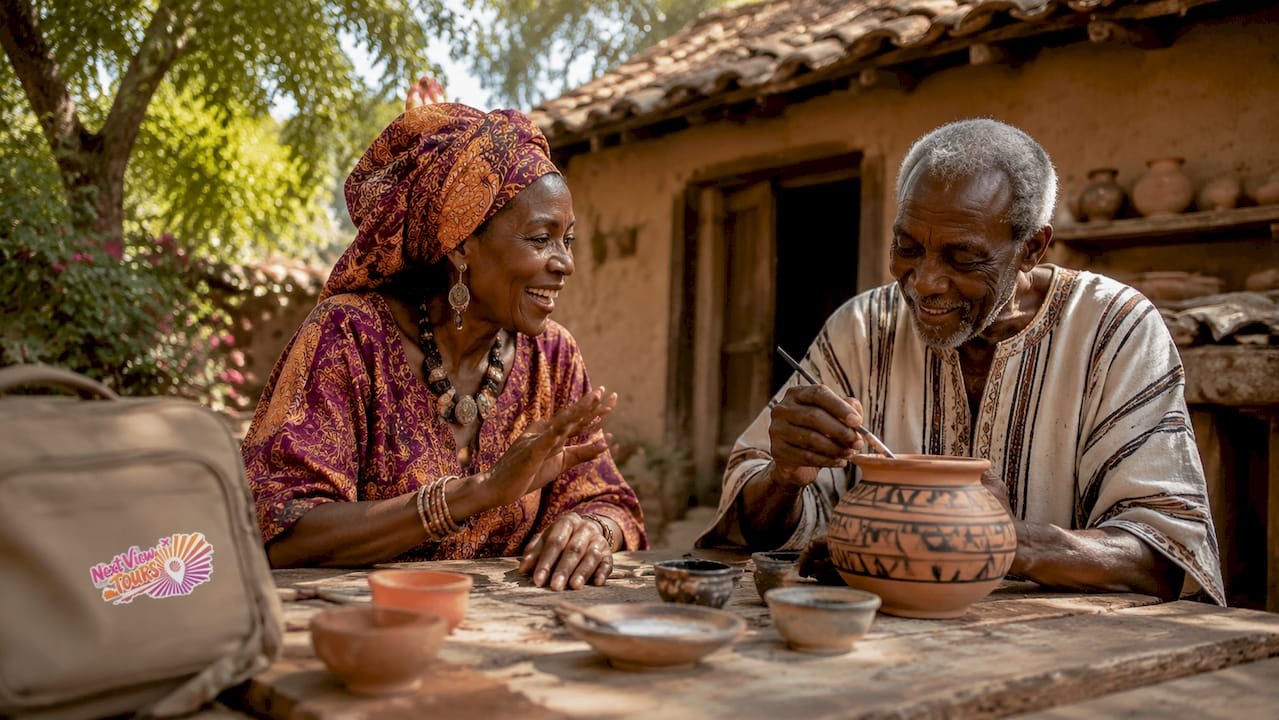
Authentic local experiences produce higher satisfaction because they generate emotional resonance and active participation rather than passive observation. A traveler who watches a folk performance from a theater seat learns something. A traveler who joins a village cooking class in the Czech countryside absorbs the same culture through smell, touch, conversation, and laughter. The difference in retention and meaning is not subtle.
The 2026 experiential tourism framework identifies five core dimensions that define rich travel: local, memorable, learning, participation, and feeling. Each dimension reinforces the others. When you participate in a local market in Budapest’s Rákóczi tér or join a guided walk through Vienna’s Naschmarkt with a resident vendor, all five dimensions activate simultaneously. That convergence is what separates a meaningful trip from a forgettable one.
Research by He and Timothy (2024) shows that interaction with locals fosters emotional identification with place, a psychological state that deepens long after the trip ends. This is not nostalgia. It is a genuine shift in how travelers understand the world and their place in it. Travelers who report the highest satisfaction consistently describe moments of genuine human exchange, not landmark photographs.
- Passive observation: You watch a cultural ritual, receive a surface-level explanation, and move on.
- Active participation: You join the ritual, ask questions, make mistakes, and are welcomed into the process.
- Outcome difference: Participatory travelers report higher enjoyment, stronger learning retention, and more meaningful memories.
The concept researchers call desirable authenticity describes the sweet spot between cultural comfort and genuine immersion. You do not need to abandon all familiarity. You need to lean into enough discomfort to grow.
Pro Tip: Before any trip, identify one local activity that makes you slightly uncomfortable, whether it is a language barrier, an unfamiliar food, or an unconventional social setting. That discomfort is usually where the most memorable experiences live.
What are the economic and social benefits of local experiences for host communities?
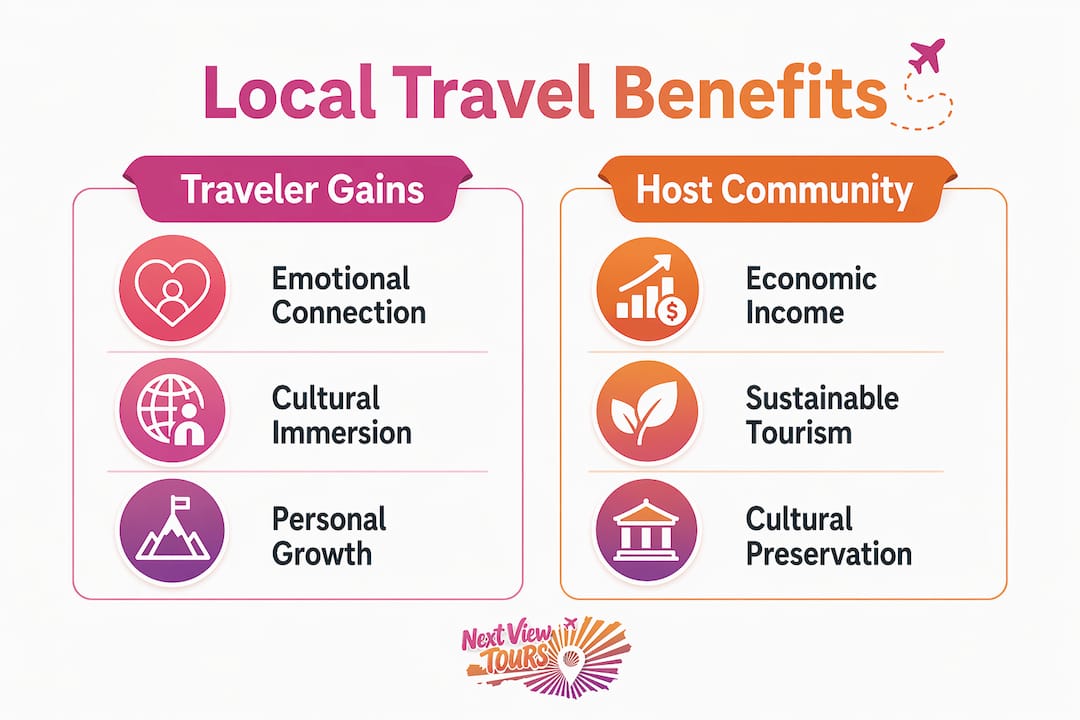
Community-Based Tourism (CBT) is the industry term for tourism that involves local residents in both the design and management of visitor experiences. According to Hello Mira, CBT improves local incomes and environmental protection significantly more than mass tourism. The reason is structural. When a traveler books a locally owned guesthouse in Slovakia or hires a resident guide in Hallstatt, the money stays in the community rather than flowing to a distant corporate operator.
The numbers from Valdosta, Georgia offer a concrete illustration of scale. Local tourism generated $38 million in visitor taxes, reducing average household municipal costs by approximately $850 annually. That figure represents real relief for real families. It also demonstrates that supporting local tourism is not a soft, feel-good choice. It is a financially significant one for the communities you visit.
| Economic benefit | What it means for host communities |
|---|---|
| Increased local income | Money spent with resident operators stays in the local economy rather than leaving the region |
| Reduced seasonality risk | Local tourism stabilizes economies by spreading visitors across time and geography |
| Cultural preservation | Revenue supports artisans, performers, and traditions that would otherwise lose funding |
| Tax revenue generation | Visitor spending funds public services, reducing the financial burden on local households |
Local tourism also flattens the boom-bust cycles that plague tourism-dependent regions. A small family-run boat operator on the Danube or a ceramic artisan in Prague’s Žižkov district cannot survive on two months of peak-season traffic. When travelers actively seek out these operators year-round, they create the consistent demand that keeps cultural practices alive.
Pro Tip: When booking in Europe, look for operators who are registered with local tourism boards or who explicitly describe community ownership. In Austria and the Czech Republic, regional tourism associations often maintain directories of verified local providers.
How do travelers’ mindsets and identities affect their engagement with local experiences?
A traveler’s underlying mindset determines how deeply they engage with local culture. Research published in ScienceDirect in 2026 shows that growth mindset travelers prioritize authentic experiences that promote learning and self-improvement, while fixed mindset travelers gravitate toward comfort and familiar cultural patterns. This distinction matters because it explains why two people on the same tour of Budapest can have entirely different experiences.
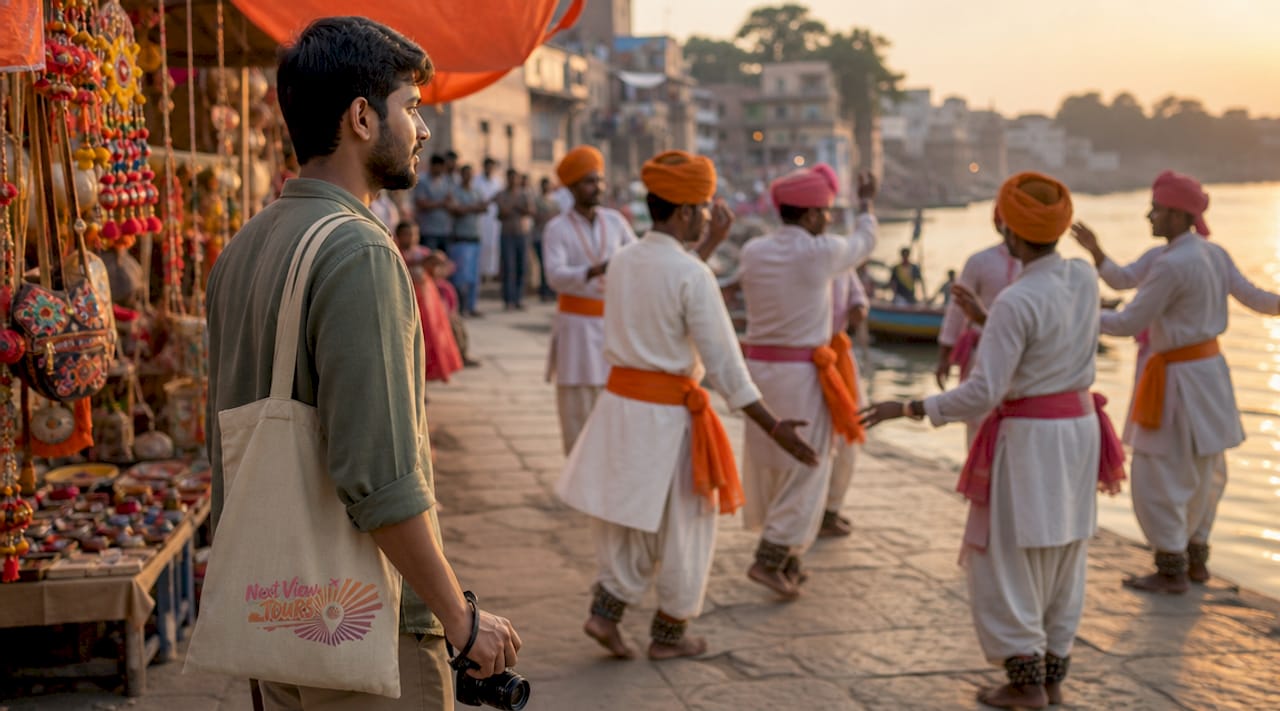
Global identity and local identity also shape travel behavior in measurable ways. Travelers who identify strongly with a global cosmopolitan self tend to be more open to unfamiliar cultural interactions. Those with a stronger attachment to their home culture often seek out the familiar abroad, choosing international chain hotels over local guesthouses or gravitating toward tourist menus rather than neighborhood restaurants. Neither identity is wrong, but awareness of your own tendencies allows you to make more deliberate choices.
The risks of unchecked self-focused travel are real. Researchers at MDPI describe a pattern called symbolic domination, where travelers treat local hosts as vehicles for personal transformation without recognizing the cultural labor involved. You arrive seeking “the real,” but the “real” is performed by a person who may be managing fatigue, language barriers, and economic pressure simultaneously. Recognizing that dynamic is the first step toward ethical engagement.
Consider the contrast between these two traveler profiles:
- The extractive traveler: Seeks authentic experiences primarily for personal stories and social media content. Engages superficially, tips minimally, and moves on without reflection.
- The reciprocal traveler: Approaches local interactions with curiosity and humility. Asks questions, listens actively, spends money with local operators, and acknowledges the effort hosts invest.
The reciprocal traveler creates better outcomes for everyone, including themselves. The experiences they describe are richer, more specific, and more lasting.
What challenges and ethical considerations shape local tourism?
Tourist-host interactions are shaped by historical legacies and power asymmetries that most travelers never see. Research published by MDPI on travel power dynamics shows that hosts frequently perform emotional and affective labor that remains invisible to visitors. A guide in Vienna who cheerfully answers the same question for the fortieth time that week, a craftsperson in Salzburg who smiles through a transaction where the buyer haggles aggressively, these are performances of hospitality that carry real psychological cost.
The commodification of culture is a related risk. When a traditional ceremony becomes a ticketed attraction managed by an outside operator, the community loses both economic benefit and narrative control. The experience becomes a product rather than a living practice. Travelers who genuinely value cultural significance should ask who controls the experience they are purchasing.
“True local immersion involves transferring narrative and economic control to the community itself, rather than allowing third-party commercial entities to commodify interactions.” — Hello Mira
Community governance is the most effective mechanism for protecting authentic local tourism. When residents control how their culture is presented, they set the terms of engagement. This protects both the integrity of the experience and the dignity of the hosts.
Here is how to identify genuinely community-led experiences before you book:
- The operator is based in the destination, not in a distant city or foreign country.
- Profits are explicitly described as returning to local residents or community funds.
- The experience involves real residents, not hired performers recreating a cultural script.
- Reviews mention specific local people by name, which signals genuine personal interaction.
Pro Tip: Ask your tour operator directly: “Who owns this experience, and where does the revenue go?” A community-led provider will answer that question with pride and specificity.
Key takeaways
Local experiences deliver the deepest travel satisfaction when travelers engage actively, spend with community-owned operators, and approach cultural differences with humility rather than expectation.
| Point | Details |
|---|---|
| Active participation drives satisfaction | Participatory travel across all five experiential dimensions produces stronger memories and higher enjoyment than passive sightseeing. |
| Local spending creates real economic impact | Visitor spending with community operators generates tax revenue and reduces financial burdens on local households. |
| Mindset shapes the quality of immersion | Growth mindset travelers engage more deeply with local culture and report more meaningful travel experiences. |
| Ethical engagement requires awareness | Recognizing hosts’ emotional labor and avoiding symbolic domination leads to more respectful and reciprocal interactions. |
| Community governance protects authenticity | Experiences controlled by local residents preserve cultural integrity and distribute economic benefits fairly. |
Why local immersion is the only travel worth defending
I have been designing and leading European experiences for years, and the most consistent pattern I observe is this: travelers who arrive with an agenda to consume culture leave disappointed. Travelers who arrive with a willingness to be surprised leave transformed. That is not a philosophical position. It is an observable outcome.
The discomfort of not speaking the language, of not knowing the social rules, of ordering something you cannot identify on a menu in a Prague side street, that discomfort is the actual experience. It is not an obstacle to the experience. Most travelers try to minimize friction. The travelers who remember their trips most vividly are the ones who leaned into it.
I also think the industry has a responsibility here. Operators who package “authentic” experiences without genuine community involvement are selling a simulation. The private tours approach that Nextviewtours takes, keeping groups small and guides local, is not a marketing choice. It is an ethical one. Sustainable tourism’s future depends on empowered local communities, not on polished performances designed for external consumption.
The travelers I respect most are the ones who ask their guide where they eat lunch. That question alone opens more doors than any guidebook.
— Next
Explore authentic local experiences across Europe with Nextviewtours

Nextviewtours designs European trips with genuine local immersion at their center. Whether you are joining a small group day trip from Vienna, exploring the villages around Hallstatt, or taking a private tour through Budapest’s historic districts, every itinerary is built around real community connections rather than tourist-circuit stops. The guides are local residents who bring personal knowledge, cultural context, and honest enthusiasm to every experience. Browse the full range of community-focused trip types to find the format that fits your travel style, from family tours and couple getaways to customized multi-day adventures across Austria, Slovakia, the Czech Republic, and beyond.
FAQ
What are local travel experiences?
Local travel experiences are participatory activities that place visitors inside a community’s everyday cultural, social, and culinary life. They differ from conventional tourism by prioritizing genuine human exchange over landmark observation.
Why do local experiences produce higher traveler satisfaction?
Authentic participation activates emotional resonance, active learning, and personal connection simultaneously, all of which are linked to stronger memories and higher reported enjoyment than passive sightseeing.
How do local experiences benefit host communities economically?
Community-Based Tourism keeps visitor spending within the local economy, supports small operators, and generates tax revenue. In Valdosta, local tourism produced $38 million in taxes and saved households roughly $850 per year in municipal costs.
How can I tell if a local experience is genuinely community-led?
Look for operators based in the destination, explicit descriptions of how revenue returns to residents, and reviews that mention specific local individuals by name. These signals indicate real community involvement rather than a commercially staged version of culture.
How does traveler mindset affect cultural immersion?
Research from ScienceDirect shows that growth mindset travelers seek authentic, learning-focused interactions, while fixed mindset travelers default to familiar patterns. Awareness of your own tendencies allows you to make more deliberate and rewarding choices abroad.


Comments are closed