 Uncategorized
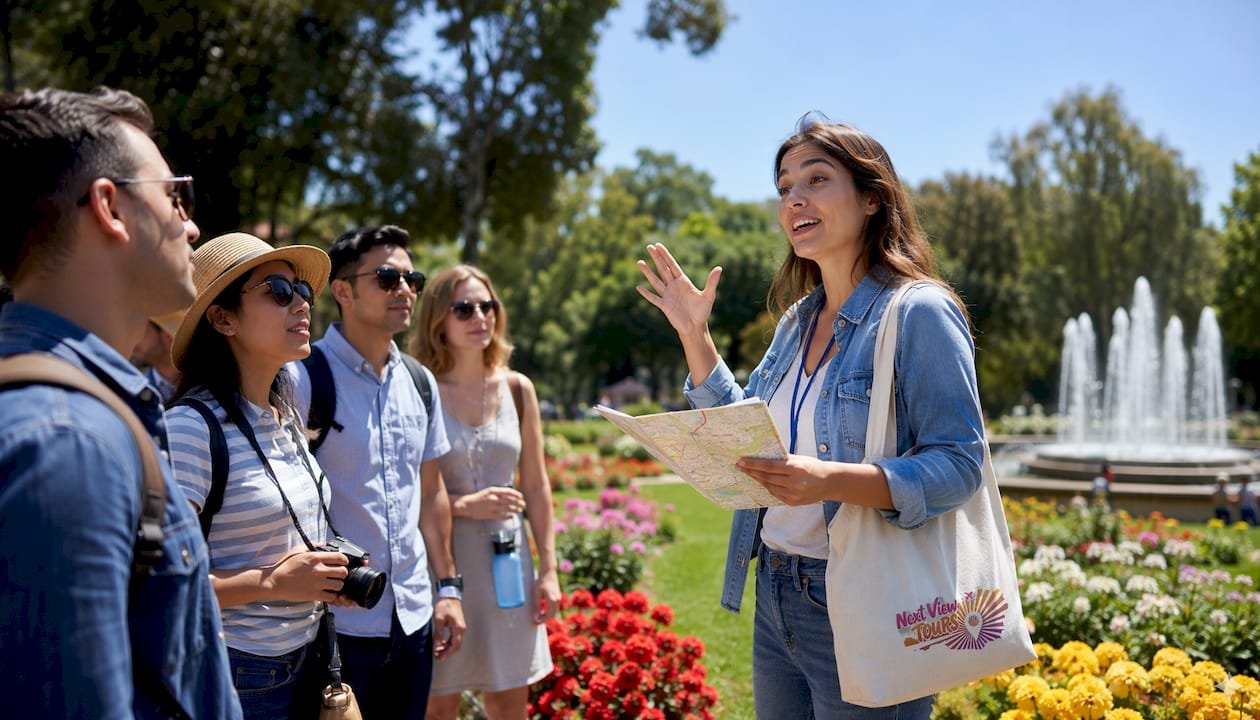
A tour guide is a professional who leads individuals or groups through places of cultural, historical, or natural significance, interpreting what they see and making it meaningful. The U.S. Bureau of Labor Statistics defines this role as escorting visitors through points of interest, including historical locations, museums, and monuments, while providing expert commentary. Internationally, the recognized professional designation is “tourist guide,” a term formalized by major standards bodies and supported by organizations like the World Federation of Tourist Guide Associations. In the United States, “tour guide” is the everyday term, though the two are often used interchangeably.
To clarify the terminology at a glance:
- Tour guide: The common American term for a professional who leads and interprets sites for visitors.
- Tourist guide: The internationally recognized professional designation, used in formal standards and most non-U.S. contexts.
- Travel guide: A broader role focused on logistics, managing multi-day itineraries, accommodations, and group movement across destinations.
- Local guide: A guide with deep, place-specific knowledge, often working within a single city or region.
- Escort: A term used in some official U.S. occupational classifications, covering guides who accompany groups on sightseeing tours or through public buildings.
What does a tour guide actually do each day?
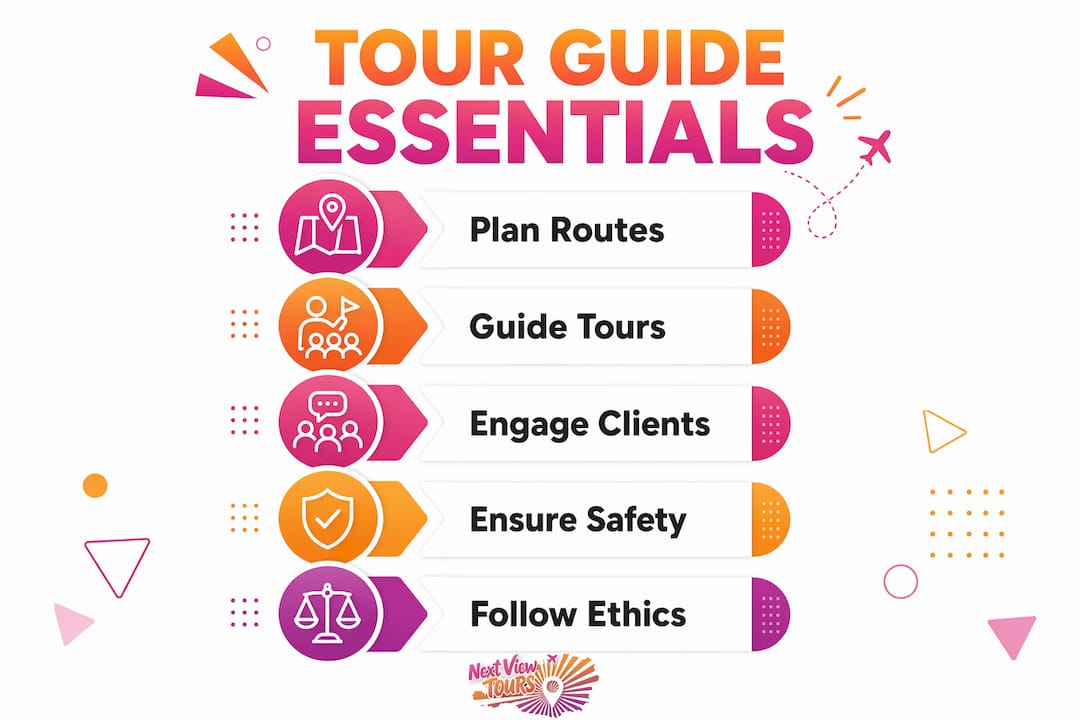
Tour guide responsibilities span a wider range than most people expect. At the core, guides plan routes, greet clients, collect fees, escort groups, answer questions, and ensure guest safety throughout the experience. A single workday can run anywhere from under an hour for a quick gallery walk to more than 12 hours on a full-day expedition, depending on the tour type and destination.
Beyond commentary, many guides take on specialized tasks. The BLS notes that U.S. guides frequently perform first aid, drive vehicles to remote sites, or teach practical skills like rock climbing, fishing, or wilderness navigation during outdoor tours. These added responsibilities require training well beyond public speaking.
The skills that separate a good guide from a great one include:
- Communication: Translating complex history or science into stories that resonate with diverse audiences.
- Adaptability: Adjusting commentary and pacing when weather shifts, a site closes unexpectedly, or a group’s energy changes. Guides adapt plans to suit group dynamics and visitor comprehension in real time.
- Group management: Keeping varied personalities moving together safely and engaged throughout the tour.
- Customer service: Reading what visitors need, whether that is more depth on a topic or a shorter stop, and responding without breaking the tour’s flow.
- Cultural and historical knowledge: Deep, site-specific expertise that goes beyond what any travel app can provide.
Pro Tip: The most underrated skill in guiding is knowing when to stop talking. Silence at the right moment, in front of a great painting or a sweeping landscape, lets the place speak for itself and creates the kind of memory no amount of narration can manufacture.
How international standards shape the profession
The tourist guide profession is governed by three key European standards that set a global benchmark for quality and consistency. EN 13809:2003 defines tourist guiding services and draws a clear line between tourist guides and other tourism professionals. The CEN definition is specific: a tourist guide is “a person who guides visitors in the language of their choice and interprets the cultural and natural heritage of an area,” and who normally holds an area-specific qualification issued or recognized by the appropriate authority.

EN 15565:2008 builds on that foundation by specifying training and qualification requirements, so that programs across different countries meet consistent quality standards and cover the same core competencies. ISO 18513:2003, published by the International Organization for Standardization, adds a global vocabulary layer, standardizing tourism terminology across markets.
Key points about how these standards work in practice:
- EN 13809:2003 establishes the fundamental distinction between tourist guides and tour managers or escorts.
- EN 15565:2008 sets minimum training requirements, covering heritage interpretation, group management, and safety protocols.
- In many countries outside the U.S., tourist guides must hold area-specific qualifications issued or recognized by a government authority before they can work professionally.
- The World Federation of Tourist Guide Associations works to professionalize the sector globally, connecting national guide associations and advocating for consistent standards.
Standard in focus: EN 15565:2008 is the benchmark training standard for professional tourist guides across Europe and many other markets, covering everything from heritage interpretation techniques to emergency response procedures.
How the profession works specifically in the United States
The U.S. approach to tour guiding differs from the international model in one significant way: there is no single national licensing requirement. The BLS classifies tour and travel guides under the personal care and service sector, and while the occupational definition is clear, formal certification is not federally mandated. Many employers provide on-the-job training, and requirements vary by state, city, and employer.
That said, the practical scope of the role in the U.S. is broad:
- Guides lead sightseeing tours, museum walks, architectural tours, and outdoor expeditions.
- Some work independently; others are employed by tour operators, national parks, museums, or cruise lines.
- Bilingual ability is often required or strongly preferred, particularly in high-tourism cities like New York, Washington D.C., and New Orleans.
- Specialized roles, such as whitewater rafting guides or backcountry ski guides, typically require certifications from relevant safety or outdoor recreation bodies.
- Career advancement often comes through specialization, building a reputation in a niche, or moving into tour management and logistics.
Washington D.C. is a notable exception to the general lack of licensing: the city previously required a license for tour guides, though that requirement was later struck down on First Amendment grounds. It remains one of the clearest examples of how local regulation can shape the profession at the city level.
For those exploring tour guide career pathways, the U.S. market rewards guides who combine deep subject-matter expertise with strong interpersonal skills and, increasingly, multilingual ability.
What are the main types of tour guides?
The profession covers a wide range of specializations, each requiring a distinct knowledge base and skill set. Tour guides may lead historical, adventure, museum, or outdoor tours, and the type of tour shapes everything from the guide’s preparation to the guest experience.
- Historical guides lead tours of heritage sites, monuments, and culturally significant buildings. Their commentary draws on deep knowledge of local and national history, architecture, and the stories of the people connected to a place.
- Museum guides work within art galleries, science museums, and cultural institutions. They translate curatorial content for general audiences, often tailoring depth and language to the group in front of them.
- Adventure guides lead outdoor experiences such as hiking, rock climbing, whitewater rafting, and backcountry skiing. Safety training and physical fitness are as important as storytelling for these roles.
- Local or city guides specialize in a specific urban area, covering neighborhoods, food culture, street art, and contemporary life alongside historical context. A Chichen Itza day tour guide, for example, combines archaeological expertise with logistical knowledge of the site.
- Nature and wildlife guides lead tours in national parks, nature reserves, and ecotourism destinations, often with formal training in ecology or environmental science.
- Specialized activity guides cover niche experiences: culinary tours, ghost tours, literary walks, cycling tours, and more. These roles blend subject passion with guiding craft.
The type of guide you work with shapes the entire character of your experience. A museum guide and an adventure guide both interpret their environment for you, but through entirely different lenses and with very different tools.
Tour guide vs. tourist guide vs. travel guide: what’s the difference?
The terminology around this profession creates genuine confusion, and the distinctions carry real professional weight. “Tourist guide” is the internationally recognized professional designation, used in formal standards like EN 13809:2003 and by professional associations worldwide. “Tour guide” is the colloquial American term, widely understood but not aligned with international professional standards.
The difference between a guide and a travel guide is more functional. Tour guides provide expert interpretation at specific sites, while travel guides manage the comprehensive logistics of multi-day tours: accommodations, transportation, dining, and group movement across multiple destinations. A travel guide might hand your group off to a local tourist guide at each stop.
Key distinctions at a glance:
- Tourist guide: Certified professional, area-specific qualification, interprets cultural and natural heritage, recognized by international standards.
- Tour guide: Common U.S. term, same core function, no universal certification requirement.
- Travel guide: Manages logistics for multi-day or long-distance travel, coordinates with local guides, handles all group arrangements.
- Casual guide: An informal role, often without formal training or certification, typically not recognized under professional standards.
The profession also distinguishes between certified tourist guides and casual guides, and that distinction matters for quality. Certified guides have met formal training requirements and are accountable to professional bodies, which directly affects the depth and accuracy of the interpretation you receive.
Ethical considerations and safety protocols every guide follows
Professional guides operate within a clear ethical framework, even when that framework is not written into law. Accuracy in historical and cultural interpretation is a core obligation. Presenting contested history as settled fact, or embellishing stories for entertainment at the expense of truth, undermines the trust that makes guiding valuable. The best guides acknowledge complexity and uncertainty where it exists.
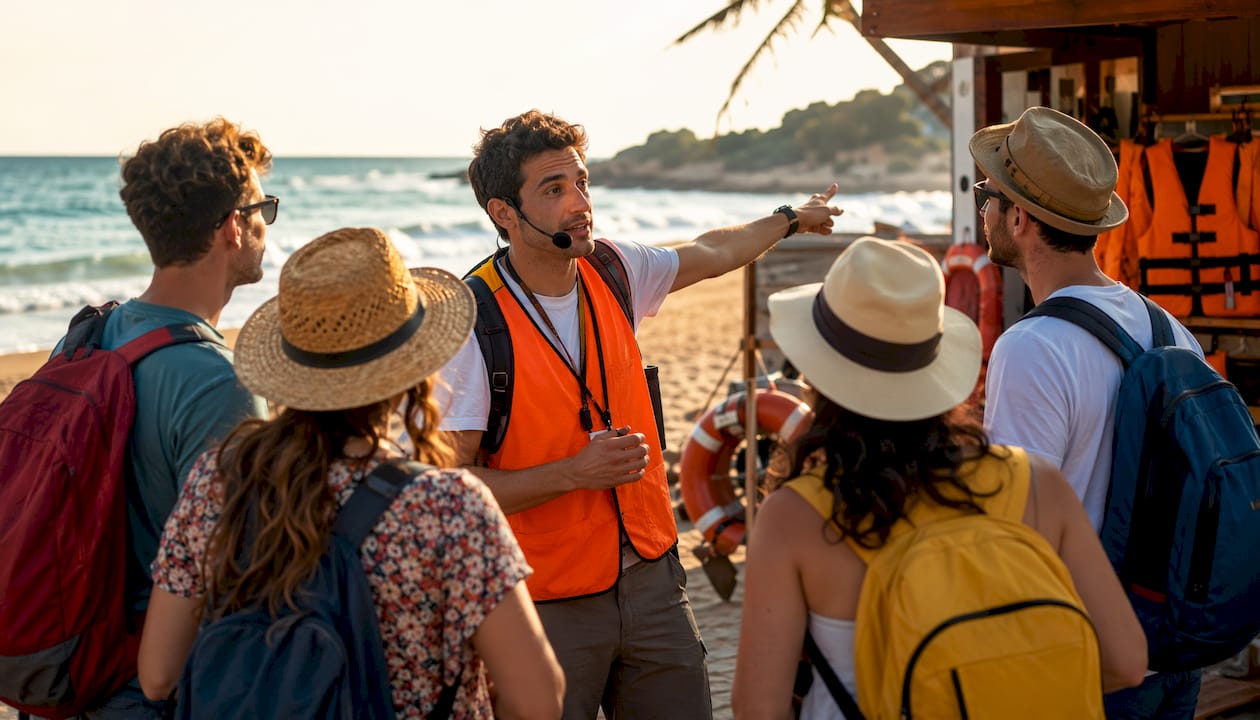
Safety is the other non-negotiable. Guides continuously monitor risk and conduct safety assessments throughout a tour, particularly in outdoor or physically demanding settings. This includes providing first aid when needed and managing emergency evacuations. For adventure guides leading cenote or cave tours, for instance, safety briefings and equipment checks are as much a part of the role as the storytelling.
Ethical guiding also means respecting the communities and environments being visited. Responsible guides do not encourage visitors to touch fragile artifacts, enter restricted areas, or behave in ways that damage cultural sites or local ecosystems. This stewardship role is increasingly recognized as central to sustainable tourism, not an add-on to the job.
Discover Europe with Nextviewtours

Nextviewtours brings the expertise of professional guides to some of Europe’s most extraordinary destinations. From day trips out of Vienna and Salzburg to multi-day adventures across Austria, the Czech Republic, Hungary, and Slovakia, every experience is led by guides who combine deep local knowledge with genuine enthusiasm for sharing it. Whether you are looking for private tours tailored to your interests or want to explore the full range of trip types on offer, Nextviewtours designs each journey around what makes travel genuinely memorable: the right guide, the right place, and the right story.
Key Takeaways
A tour guide’s core value lies in transforming a place into an experience through expert interpretation, safety management, and genuine human connection.
| Point | Details |
|---|---|
| Core definition | A tour guide leads and interprets cultural, historical, or natural sites for individuals or groups. |
| Tour duration range | Tours vary from under an hour to more than 12 hours depending on the destination and format. |
| International standard | EN 15565:2008 sets training requirements for professional tourist guides across consistent quality benchmarks. |
| U.S. vs. international | “Tour guide” is the common U.S. term; “tourist guide” is the internationally recognized professional designation. |
| Certification matters | Certified tourist guides hold area-specific qualifications and are accountable to professional bodies, unlike casual guides. |


Comments are closed