
 Uncategorized
Most travelers assume that meaningful travel requires weeks of planning, a packed suitcase, and at least a few nights away. That assumption is worth questioning. Mental health benefits of day trips show that short excursions can deliver stress reduction, sharper focus, and genuine energy boosts comparable to longer vacations. Europe’s compact geography and world-class rail network make this even more achievable. Whether you’re based in Vienna, Prague, or Budapest, a single day can take you somewhere that feels entirely new, without the weight of full trip commitment.
Table of Contents
- Why day trips are worth booking: The evidence
- Flexibility, spontaneity, and adventure: What sets day trips apart
- Day trips vs multi-day trips: Cost, planning, and commitment
- Maximizing local exploration: Day trips as a gateway to Europe’s hidden gems
- Are there downsides to booking day trips? Key cautions and expert solutions
- How to choose and book the right day trip for you
- Plan unforgettable day trips with expert support
- Frequently asked questions
Key Takeaways
| Point | Details |
|---|---|
| Day trips boost well-being | Short adventures offer the same mental health and energy benefits as longer holidays, especially when taken regularly. |
| Flexibility fits busy schedules | Day trips are easy to plan, reschedule, and enjoy around work or life commitments—no major time off needed. |
| Lower cost, less risk | Without hotel bills or long-term planning, day trips are budget-friendly and limit financial risk while maximizing experience. |
| Local gems, global appeal | Europe’s compact geography and train network mean even a single day offers authentic food, sights, and culture. |
| Mix guidance and spontaneity | Hybrid approaches—combining base cities, DIY plans, and guided tours—deliver the best experiences, safety, and unique access. |
Why day trips are worth booking: The evidence
The science behind short travel is more compelling than most people realize. Day trips provide mental health benefits equivalent to longer vacations, including stress reduction, novelty-induced brain boosts, improved focus, memory enhancement, and energy increases through nature exposure or new experiences. That’s not a small claim. It means a Saturday trip to Hallstatt or the Wachau Valley can genuinely reset your mental state.
Here’s what makes day trips particularly powerful for well-being:
- Novelty exposure: New environments stimulate dopamine release, sharpening attention and lifting mood.
- Low-stakes adventure: No hotel anxiety, no packing stress. Just the experience itself.
- Frequency advantage: Regular short breaks outperform infrequent long holidays for sustained mental health.
- Nature access: Even a few hours in a natural setting measurably reduces cortisol levels.
“The brain responds to novelty with a burst of dopamine, making even a short trip to a new place feel genuinely refreshing and memorable.”
The european tour benefits of this approach are especially clear in Central Europe, where destinations are close, trains are reliable, and cultural variety is extraordinary. You don’t need a two-week itinerary to feel the rewards of travel.
Flexibility, spontaneity, and adventure: What sets day trips apart
One of the most underrated qualities of a day trip is how easily it fits into real life. No PTO negotiations. No hotel cancellation policies. No complex logistics. You decide on a Thursday evening, and by Saturday morning you’re on a train to somewhere new.
Day trip flexibility tips confirm that short trips are easy to reschedule for weather, work conflicts, or personal needs, and that regular short breaks outperform infrequent long holidays for mental health. That adaptability is genuinely rare in travel.
What spontaneous day tripping looks like in practice:
- Spot a last-minute train deal to Salzburg and book it the same morning.
- Swap a rainy city walk for a guided cave tour in Slovakia without losing money on hotel deposits.
- Join a local harvest festival in the Austrian countryside that wasn’t on your radar a week ago.
- Explore types of tour experiences that match your mood, from nature hikes to historic town walks.
Pro Tip: Download real-time travel apps like Omio or Rail Planner before your trip. Flash deals on regional trains across Central Europe appear regularly, and same-day bookings are often surprisingly affordable.
“Spontaneity isn’t reckless. It’s a skill. And day trips are the best training ground for it.”
Day trips vs multi-day trips: Cost, planning, and commitment
Let’s talk money, because this is where day trips often surprise people. The total financial commitment of a day trip is dramatically lower than a multi-day journey, and the per-experience value can actually be higher.
Typical day trip expenses include:
- Transport: Train, bus, or shared transfer (often €15 to €50 round trip in Central Europe)
- Entry fees: Museums, castles, or nature parks (€10 to €30 on average)
- Meals: Local lunch and coffee (€15 to €25)
- Extras: Souvenirs, guided add-ons, or activity fees
Compare that to a multi-day trip, which adds hotel costs, travel insurance, checked luggage fees, and multiple dining budgets. Day trip and holiday cost statistics show that while day visits have a lower total spend, they carry significantly less financial risk and commitment than overnight travel.
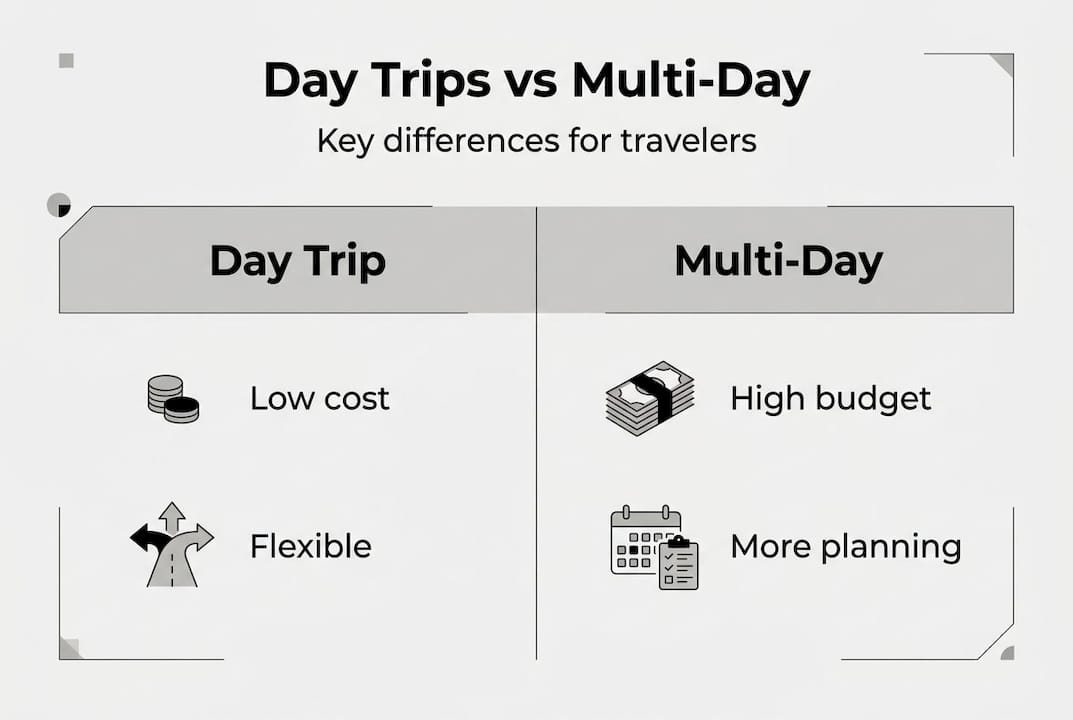
| Factor | Day trip | Multi-day trip |
|---|---|---|
| Accommodation | None | €80 to €200+ per night |
| Planning time | 1 to 2 hours | Several days to weeks |
| Flexibility | Very high | Low once booked |
| Financial risk | Minimal | Moderate to high |
| Luggage needed | Day bag only | Full suitcase |
| Cancellation impact | Low | Significant |
For travelers who want to customize private tours, day trips also offer a low-risk way to test a destination before committing to a longer stay. Think of it as a preview with full value.
Maximizing local exploration: Day trips as a gateway to Europe’s hidden gems
Europe’s greatest advantage for day trippers is its density. Remarkable places sit within one to two hours of almost every major city. European train day trip ideas show that efficient rail networks enable day trips from bases like Paris to Versailles or Barcelona to Montserrat, maximizing unique local experiences without overnight stays.
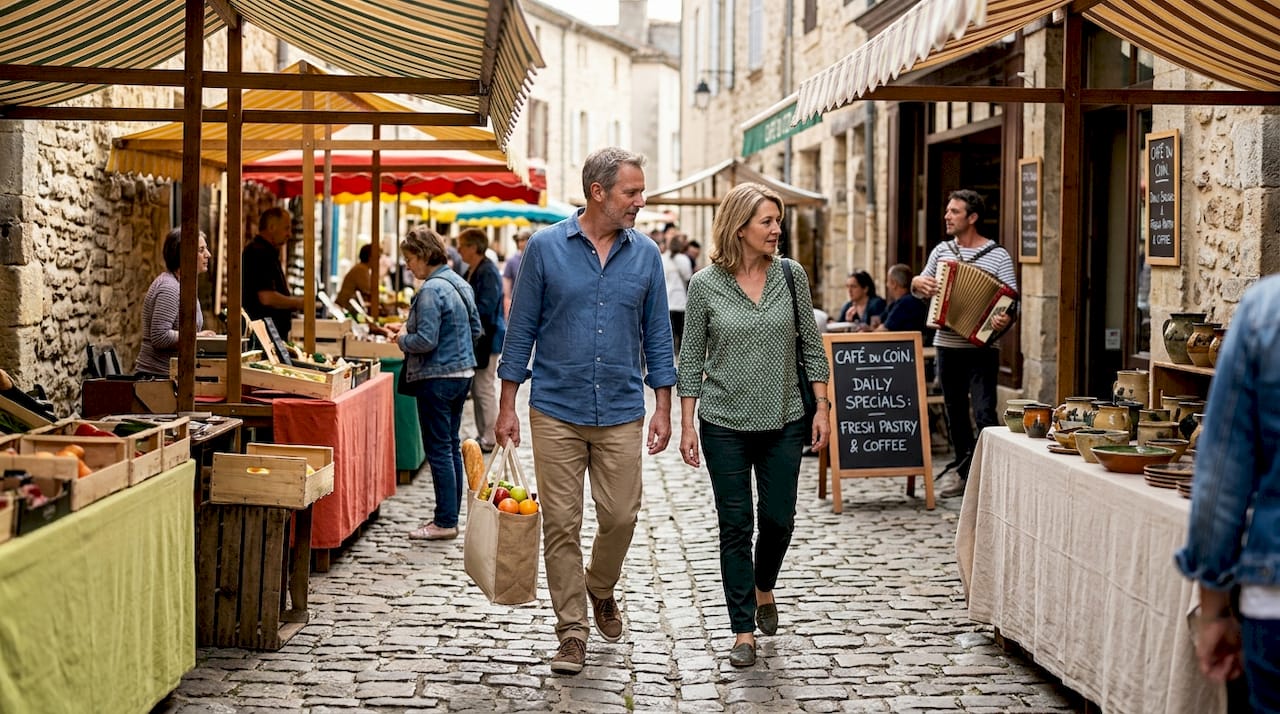
Here’s a sample of what’s possible from popular Central European bases:
| Base city | Day trip destination | Experience | Travel time |
|---|---|---|---|
| Vienna | Hallstatt | Alpine lake village | ~3 hours |
| Vienna | Wachau Valley | Wine, castles, Danube | ~1.5 hours |
| Prague | Český Krumlov | Medieval town, castle | ~3 hours |
| Budapest | Eger | Baroque town, wine caves | ~2 hours |
| Salzburg | Berchtesgaden | Eagle’s Nest, alpine scenery | ~1 hour |
How to plan a themed day trip in five steps:
- Choose your theme: Food and wine, history, nature, or adventure.
- Pick your base city and identify destinations within a two-hour radius.
- Research transport options and check train or bus schedules in advance.
- Book any timed entry tickets for popular sites to avoid queues.
- Leave one hour unplanned for spontaneous discoveries along the way.
Pro Tip: Use a central city like Vienna or Prague as your home base for several themed day excursions. You’ll experience remarkable customized tour ideas in Europe without the cost or effort of moving accommodations. Pair that with multi-day trip examples for longer stays to build a truly layered itinerary.
Are there downsides to booking day trips? Key cautions and expert solutions
Honesty matters here. Day trips are not without their challenges, and knowing the pitfalls helps you avoid them.
Common risks to watch for:
- Fatigue: Extreme day itineraries that pack in too much leave you exhausted rather than refreshed.
- Transit delays: Missed connections can derail a tight one-day schedule.
- Last-minute price spikes: Booking same-day on popular routes can cost significantly more.
- Over-tourism: Iconic spots like Hallstatt or Český Krumlov get crowded, especially in summer.
- Safety at night: Solo travelers, particularly women, face different risk profiles on late return journeys.
Extreme day trip risks include fatigue, higher short-haul emissions, and availability issues for spontaneous unbooked trips. Meanwhile, guided tour expertise suggests prioritizing half-day guided experiences over full-day marathons for first-timers, and using apps for real-time deals while booking guided access for unique sites unavailable independently.
For safety tips for women travelers, guided tours offer a structured, vetted environment that removes much of the uncertainty from solo night travel.
Pro Tip: If you’re new to day tripping, start with a half-day guided tour. You get expert access, a curated pace, and the freedom to explore independently afterward. It’s the best of both worlds.
“Regular, well-planned day trips offer more well-being benefits than overscheduling epic journeys.”
Knowing when to pre-book and when to stay flexible is the real skill. Book transport and timed entries in advance. Leave meals, detours, and afternoon plans open.
How to choose and book the right day trip for you
With so many options across Europe, narrowing down your choices is the first real challenge. Here’s a practical framework to make it simple.
- Set your interests and travel radius. Are you drawn to history, food, nature, or architecture? Identify destinations within one to two hours of your base.
- Compare DIY vs guided. DIY gives you freedom; guided gives you access, context, and safety.
- Check transport and tour reviews. Read recent traveler feedback on train reliability and tour quality before committing.
- Use booking apps for deals. Platforms like Omio, GetYourGuide, or Viator surface real-time availability and occasional flash discounts.
- Confirm safety and availability. Check opening hours, seasonal closures, and any local advisories before you go.
Booking strategies for day trips recommend booking flexible train day trips within a one to two hour radius or guided half-day tours for optimal novelty without overnight logistics. The hybrid approach works especially well: use a central hub for independent exploring, then book guided tours for harder-to-access places or special events.
Pro Tip: For unique destinations like family-run farms, historic wine estates, or private castle tours, local agencies and guided services provide insider access that no app can replicate. A booking agency for tours with regional expertise makes a real difference here.
Plan unforgettable day trips with expert support
You now have the evidence, the framework, and the practical tools to make day trips a genuine part of your travel life. The next step is finding the right partner to bring those plans to life.
At Next View Tours, we specialize in exactly this kind of travel. From guided day trips out of Vienna, Salzburg, Prague, and Budapest to fully customized tours guide built around your interests, we make it easy to explore Europe’s most remarkable places without the stress of planning everything yourself. Browse our full range of day trip types, including adventure, nature, history, and family options, and let us handle the details while you focus on the experience. Whether you want a spontaneous half-day or a carefully crafted private excursion, we’re here to make it happen.
Frequently asked questions
Do day trips offer the same benefits as longer vacations?
Yes, research shows day trips deliver comparable benefits to longer breaks, including stress reduction, improved focus, and energy boosts, especially when taken regularly rather than as rare events.
How do I decide between a DIY or guided day trip?
Choose DIY for maximum flexibility, but book guided when you want unique access, expert context, or added safety. Guided tours are especially valuable for first-timers and for sites that aren’t accessible independently.
Are day trips safe for solo and women travelers?
Day trips are generally very safe. Women travelers often prefer guided tours for evening or night returns, and guided options at night provide a structured, vetted environment that significantly reduces risk.
Will I see enough on a day trip to a new destination?
Absolutely. Europe’s compact cities and efficient train networks mean you can visit multiple sights and experience authentic local culture in a single well-planned day.
What are common pitfalls when booking day trips?
Fatigue from overloaded itineraries, last-minute cost spikes, and limited availability are the most common issues. Booking guided or half-day excursions in advance helps you avoid all three.
Recommended
- How to Choose Adventure Trips for Unforgettable Experiences – Next View Tours
- 7 Key Benefits of Group Tours for Adventure Travelers – Next View Tours
- dynamic-content-megamenu-menuitem1700 – Next View Tours
- dynamic-content-megamenu-menuitem9671 – Next View Tours
- Best Excursions in Morocco Marrakech for All Travelers
- 7 Inspiring Cultural Food Experience Examples to Try


Comments are closed