

 Uncategorized
Planning a winter trip to Europe sounds magical until you’re staring at a blank spreadsheet, unsure whether to book Vienna or Prague first, or whether the kids will survive a long train ride through the Alps. Families and couples alike feel this tension: the pull of Christmas markets, snowy mountain villages, and candlelit old towns on one side, and the tangle of logistics, weather uncertainty, and seasonal closures on the other. This guide walks you through every phase of the process, from clarifying what your group actually wants to troubleshooting last-minute winter surprises, so you can move from overwhelmed to genuinely excited.
Table of Contents
- Clarify your winter travel priorities and must-haves
- Gather trip ideas and shortlist European winter destinations
- Build a flexible itinerary: routes, timing, and logistics
- Handle bookings, budgeting, and seasonal quirks
- Final checks and expert troubleshooting before departure
- Plan your unforgettable winter adventure with expert help
- Frequently asked questions
Key Takeaways
| Point | Details |
|---|---|
| Prioritize interests | Start by defining what you and your group want from a winter trip for the best experience. |
| Smart destination choices | Alternate big cities with charming towns and match your route to ideal weather and festivals. |
| Itinerary flexibility | Keep your schedule adaptable to handle winter delays or closures without major stress. |
| Early booking pays off | Reserve trains, hotels, and special events 2-3 months in advance for top winter spots. |
| Pack for winter | Choose layered, waterproof gear and include backup essentials to handle any conditions. |
Clarify your winter travel priorities and must-haves
Before you open a single booking site, you need to know what kind of trip you’re actually building. A couple chasing romance in Budapest has very different needs than a family of five hunting for ski slopes and Christmas markets in Austria. Getting this wrong early means expensive course corrections later.
Winter trip planning should begin with defining interests such as skiing, hiking, or unique experiences like Christmas markets or the Northern Lights. That sounds simple, but most groups skip it and end up with a trip that pleases no one fully.
Here’s what to clarify before anything else:
- Travel goal: Adventure (skiing, hiking), culture (museums, markets), romance, or relaxation at a thermal spa
- Group composition: Young children need shorter travel days and kid-friendly accommodations; couples can be more spontaneous
- Non-negotiables: List your absolute must-dos, whether that’s a specific Christmas market, a sleigh ride, or a particular city
- Weather tolerance: Some travelers love deep snow; others prefer milder winter destinations like Portugal or southern Spain
- Daylight awareness: Northern Europe in December offers as few as 6-7 hours of daylight, which affects sightseeing pace
For family-friendly planning, it helps to involve everyone in this step, even the kids. You’ll be surprised how much smoother the trip runs when each person feels heard from the start.
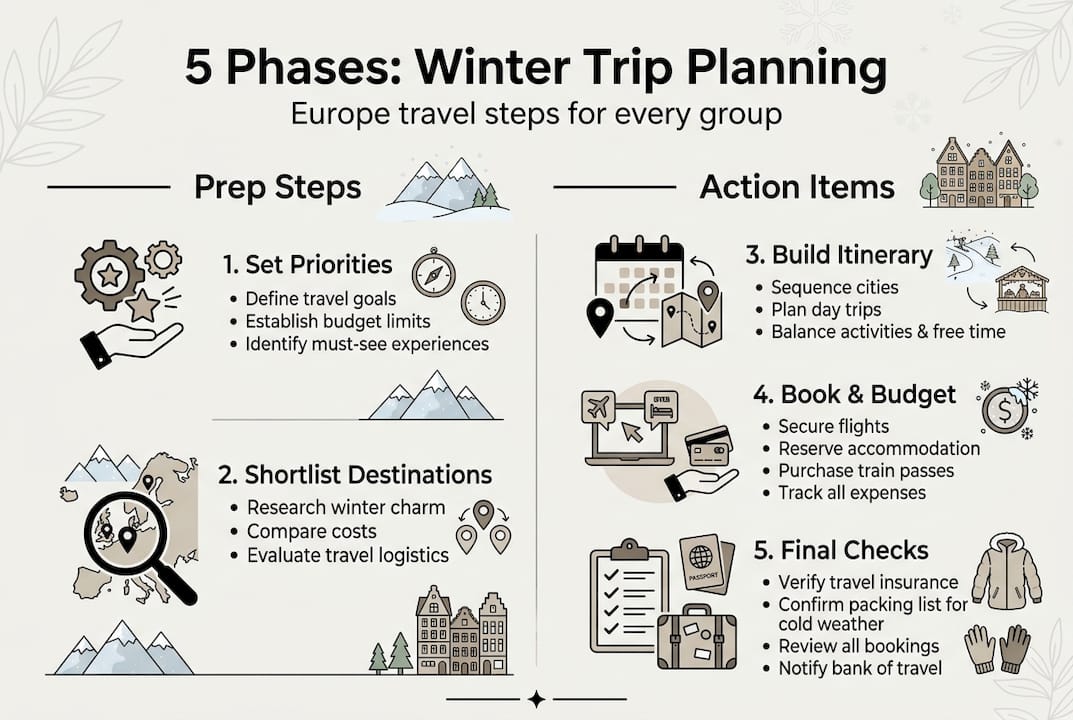
Pro Tip: Create a shared Google Doc or Notion page where every traveler adds their top three wishes before your first planning conversation. This prevents last-minute “but I really wanted to see…” moments.
Once you have a clear picture of your group’s priorities, browse top winter tour options to see which experiences align with what you’ve listed.
Gather trip ideas and shortlist European winter destinations
With your priorities locked in, you’re ready to research destinations and compare them honestly. Europe in winter is not one experience. It’s dozens of very different ones layered across geography, culture, and climate.

A smart approach is to alternate big cities with smaller towns, match weather by starting south and moving north, and plan around festivals like Christmas markets or skiing events. This structure keeps the trip varied and prevents fatigue.
Here’s a quick comparison of popular winter destination types to help you shortlist:
| Destination type | Best for | Signature winter experience | Kid-friendly | Accessibility |
|---|---|---|---|---|
| Alpine villages (Austria, Switzerland) | Families, couples | Skiing, sleigh rides, cozy chalets | High | Moderate (train or car) |
| Central European cities (Vienna, Prague, Budapest) | Couples, culture lovers | Christmas markets, thermal baths, architecture | High | Excellent (train) |
| Scandinavian north (Norway, Finland) | Adventure seekers | Northern Lights, dog sledding | Moderate | Requires planning |
| Mediterranean coast (Portugal, southern Spain) | Mild-weather seekers | Mild winters, fewer crowds, local festivals | High | Good (flights or train) |
For families, Central Europe consistently delivers the best balance of wonder and practicality. For couples wanting something truly rare, Europe’s top winter destinations include options like ice cave tours in Slovakia or thermal spa weekends in Budapest.
If sustainability matters to your group, consider destinations near eco-friendly winter parks that protect natural landscapes while offering memorable outdoor experiences. Explore unique winter adventure tours for ideas that go beyond the standard itinerary.
Aim to shortlist three to five destinations that genuinely fit your group’s priorities. More than five and the planning becomes unwieldy.
Build a flexible itinerary: routes, timing, and logistics
Now comes the part most travelers either rush or overthink. Building a day-by-day plan requires balancing ambition with realism, especially in winter when weather can rewrite your schedule overnight.
Follow these steps to build a solid framework:
- Assign nights per destination based on what you want to do there. Two nights is the minimum; one night rarely gives you enough time to settle in.
- Alternate destination types so you’re not doing five cities in a row. Mix a city with a mountain village or a spa town.
- Check train travel times between each stop. A four-hour train ride is manageable; eight hours in one day with kids is not.
- Identify festival or event dates and build around them, not the other way around.
- Add a buffer day in each country for weather delays, spontaneous discoveries, or simply resting.
Avoid “one-night stands” in your itinerary. Staying at least two nights per place lets you actually experience a destination rather than just pass through it. Alternating big cities with smaller towns keeps the energy fresh and prevents the blur of back-to-back urban sightseeing.
For train travel, prioritize flexibility over rigid schedules due to unpredictable winter weather and snow disruptions. Here’s a quick comparison of popular rail options:
| Pass | Best for | Coverage | Flexibility | Cost range |
|---|---|---|---|---|
| Eurail Global Pass | Couples, multi-country trips | 33 countries | High | $300-$700+ |
| Swiss Travel Pass | Alpine-focused trips | Switzerland | Very high | $250-$500 |
| Point-to-point tickets | Budget travelers, fixed routes | Specific routes | Low | Varies |
For essential itinerary tips and ready-made winter itineraries, we’ve put together resources that take the guesswork out of sequencing. You can also follow our step-by-step Europe trip guide for a more detailed walkthrough.
Pro Tip: Build at least one full buffer day per week of travel. Winter in Europe is beautiful but unpredictable, and a missed train connection can cascade into a stressful afternoon if you have no room to breathe.
Handle bookings, budgeting, and seasonal quirks
With your itinerary mapped, it’s time to move from planning to action. This phase is where many travelers lose momentum because the to-do list feels endless. Break it into a clear sequence.
- Book trains first. Rail seats sell out fast for peak winter dates, especially around Christmas and New Year’s.
- Reserve hotels. Look for properties with flexible cancellation policies given winter’s unpredictability.
- Buy event tickets in advance. Christmas markets are free to enter, but popular ice shows, concerts, and guided tours sell out weeks ahead.
- Arrange travel insurance. Winter travel without it is a genuine risk given snow delays and potential closures.
- Plan for short days. With limited daylight, front-load outdoor activities in the morning and save museums and restaurants for the afternoon and evening.
Book trains and hotels early, check for closures, and prepare for delays or limited daylight in winter. This is especially true for Alpine destinations and Christmas market cities like Salzburg, Vienna, and Prague.
On budget: a two-week winter trip costs about $3,000 to $3,500 per person, with overnight stays in the Alps accounting for up to 20% of total spend. Budget travelers can reduce this significantly by choosing smaller towns over major cities and traveling mid-week.
For detailed Europe travel budgeting strategies and a breakdown of winter tour benefits like lower crowds and off-peak pricing, we’ve covered both in depth.
Pro Tip: For Alps destinations and Christmas markets, book at least two to three months ahead. Popular chalets and boutique hotels in Hallstatt or Salzburg fill up by October for the December season.
Final checks and expert troubleshooting before departure
You’ve planned, booked, and budgeted. Now run one final check before you leave. This step catches the small things that cause big headaches on the road.
Pre-departure checklist:
- Passports and visas valid for the full trip duration plus six months beyond return
- Travel insurance documents downloaded and accessible offline
- All hotel and train confirmations saved to your phone and printed as backup
- Emergency contacts for each destination (local embassy, tour operator, accommodation)
- Backup payment method in case your primary card is blocked abroad
- Offline maps downloaded for each city on your itinerary
Check for weather-related delays, closures, and revisit the itinerary for flexibility just before departure. A quick scan of local news and weather forecasts 48 hours before you fly can save you from arriving at a closed attraction or a snow-blocked mountain road.
Troubleshooting scenarios to think through in advance: What happens if a train is canceled due to snow? Which hotel can you reach by bus instead? Is there a backup activity if the outdoor market is closed? Having answers ready means you stay calm when things shift.
For family travel tips specific to winter conditions, including how to keep kids comfortable during long travel days, we’ve gathered practical advice from experienced guides.
Pro Tip: Join a WhatsApp or Signal group for your destination region. Local expat and traveler communities often share real-time updates on closures, weather, and hidden gems that no travel app will tell you.
Plan your unforgettable winter adventure with expert help
Building a winter trip from scratch takes real effort, and even the most organized travelers sometimes wish they had a knowledgeable partner handling the details. That’s exactly where Next View Tours comes in.
We specialize in multi-day winter trip inspiration across Austria, the Czech Republic, Slovakia, Hungary, and beyond, crafting experiences that fit your group’s pace, interests, and budget. Whether you’re curious about what an adventure tour actually involves or want to browse all available European trip types, our team is ready to help you move from planning mode to pure enjoyment. From private family tours to romantic couple getaways, we handle the routes, bookings, and surprises so you can focus on the moments that matter.
Frequently asked questions
What are the best destinations for winter trips in Europe with kids?
Central and Western Europe, particularly Austria, Switzerland, and Bavaria, offer the best mix of kid-friendly winter activities, accessible transport, and manageable weather. Avoid Scandinavia’s extremes for young children and focus on Central Europe for a more comfortable family experience.
How far in advance should I book winter trains and hotels?
Book at least two to three months ahead for peak winter events like Christmas markets or Alpine ski resorts. Early booking is critical for popular destinations like Hallstatt, Salzburg, and Vienna during the December season.
What should I pack for a Europe winter trip?
Pack in layers, including a waterproof outer shell, insulated boots, and thermal base layers. Pack layers and waterproof gear along with backup chargers and snacks, since winter delays can leave you waiting in cold stations longer than expected.
Is train travel better than flying for winter trips in Europe?
In most cases, yes. Use trains over flights in winter for efficiency and scenery, and to avoid the cascading delays that winter storms cause at major European airports. Passes like Eurail offer great flexibility across multiple countries.
How much should I budget for a two-week winter trip in Europe?
Plan for roughly $3,000 to $3,500 per person for a two-week Europe winter trip, covering trains, hotels, food, and activities. Traveling mid-week and choosing smaller towns over capital cities can bring that number down meaningfully.
Recommended
- Europe Adventure Trip Workflow: Plan Your Ultimate Journey – Next View Tours
- How to Plan Europe Tour: Step-by-Step Trip Guide – Next View Tours
- 7 Essential Winter Travel Tips for Europe Adventures – Next View Tours
- Ultimate Multi-Day Trip Organization Guide for Europe – Next View Tours
- How to optimize trip planning for stress-free travel


Comments are closed