 Uncategorized
Planning a European adventure across multiple countries can feel overwhelming. Between coordinating trains, booking hotels in different cities, and navigating language barriers, the logistics alone can drain your excitement before you even pack. Multi-day tours provide logistical convenience by handling everything from transport to accommodations, making complex European trips easier. This article explores how multi-day tours transform stress into seamless exploration, covering cost savings, social connections, expert guidance, and who benefits most from this travel style.
Table of Contents
- Why consider multi-day tours for European travel?
- Top logistical benefits: Stress-free planning, maximum efficiency
- Cost-effectiveness: Saving money without sacrificing quality
- Social and experiential value: Group bonds and expert guidance
- Who benefits most from multi-day tours?
- Ready to experience more with a multi-day tour?
- Frequently asked questions
Key Takeaways
| Point | Details |
|---|---|
| Streamlined logistics | Multi-day tours reduce planning stress by handling accommodations, transit, and sightseeing in one package. |
| Smart value | Group discounts and all-inclusive pricing often make tours more affordable than traveling independently. |
| Deeper experiences | Expert guides and group camaraderie create immersive memories and enhance cultural understanding. |
| Time efficiency | Structured itineraries let you see more destinations in less time with less hassle. |
Why consider multi-day tours for European travel?
Independent European travel sounds romantic until you’re juggling train schedules in Prague, searching for accommodations in Vienna at midnight, or missing a museum’s closing time because you underestimated transit. Common struggles include transit complexity across borders, language barriers when booking locally, and limited insider knowledge about hidden gems or optimal timing.
An ideal European adventure balances ease, cultural immersion, and cost effectiveness. Multi-day tours offer logistical convenience, reduce stress, and prove especially valuable for complex multi-destination trips. Well-structured tours can cover up to five countries in seven days, a feat that challenges even experienced independent travelers.
Multi-day tours efficiently cover many countries in limited time, outperforming most self-planned itineraries. They address pain points directly by bundling logistics, providing local expertise, and creating social frameworks that enhance safety and enjoyment. For travelers seeking to maximize their European experience without the planning headaches, understanding tour trends in Europe reveals why this approach continues gaining popularity. Exploring multi-day tours from Vienna shows practical examples of how these itineraries work in practice.
Key advantages at a glance:
- Pre-arranged transportation eliminates missed connections
- Group bookings secure better rates than individual reservations
- Expert guides provide historical context and skip-the-line access
- Built-in social structure reduces solo travel anxiety
- Optimized routing maximizes sightseeing time
Top logistical benefits: Stress-free planning, maximum efficiency
The difference between DIY planning and tour booking becomes clear when you compare the processes side by side. Multi-day tours streamline every detail, making Europe accessible even for first-time travelers.
Independent travel planning steps:
- Research destinations and create rough itinerary
- Book flights between cities or train passes
- Reserve hotels in each location separately
- Purchase individual attraction tickets
- Plan daily routes and backup options
- Arrange airport transfers and local transport
- Research restaurants and make reservations
- Create contingency plans for delays or closures
Multi-day tour booking steps:
- Select tour matching your interests and dates
- Complete single booking transaction
- Receive comprehensive itinerary
- Pack and show up
All-in-one booking covers transit between cities, accommodations, many meals, entrance fees, and often optional excursions. You eliminate the need to juggle schedules across multiple languages, decipher complex train networks, or worry about sold-out attractions. Tours maximize sightseeing time through pre-planned routes that account for traffic patterns, opening hours, and seasonal crowds.
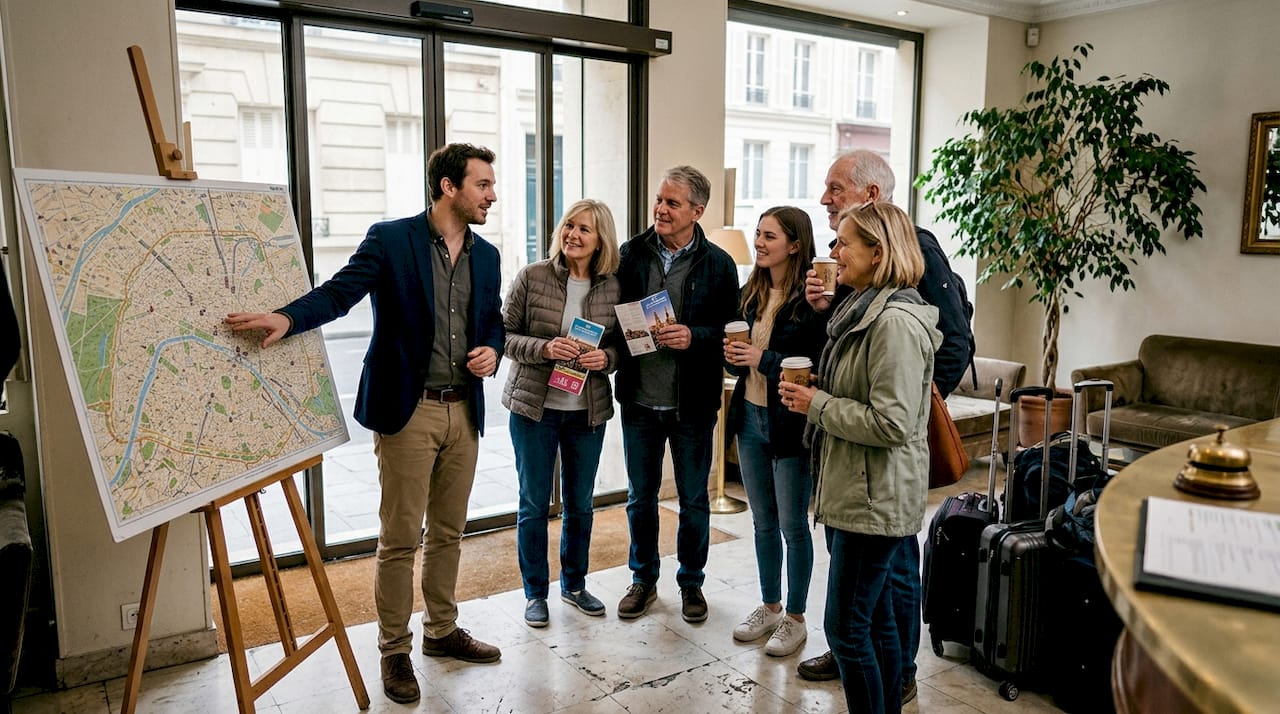
Understanding transportation logistics in tours reveals how operators optimize routes, while learning about the role of tour operators shows the behind-the-scenes coordination that makes seamless travel possible.
| Factor | Multi-Day Tours | Independent Travel |
|---|---|---|
| Booking steps | 1-2 transactions | 15-30+ separate bookings |
| Flexibility | Fixed itinerary with some free time | Complete control over schedule |
| Risk of missed connections | Minimal (operator handles) | Moderate to high |
| Time spent planning | 2-5 hours research | 20-40+ hours planning |
| Overall stress level | Low | Moderate to high |
Pro Tip: Consider hybrid trip models that combine a multi-day tour core with a few private days before or after. This approach delivers structured exploration for major destinations while preserving flexibility for personal interests or spontaneous discoveries.
Cost-effectiveness: Saving money without sacrificing quality
The financial advantages of multi-day tours extend beyond convenience. Bulk discounts yield average rates of $250 to $400 per person per day in mid-range Western Europe tours, often beating independent travel costs when you account for all components.
| Cost Component | Multi-Day Tour (per day) | Independent Travel (per day) |
|---|---|---|
| Accommodation | Included ($80-120 value) | $80-150 |
| Inter-city transport | Included ($40-80 value) | $40-100 |
| Attraction entries | Included ($30-50 value) | $30-60 |
| Select meals | Included ($25-40 value) | $40-70 |
| Local transport | Included ($10-20 value) | $15-30 |
| Guide expertise | Included (invaluable) | $0 or $150+ for private |
| Total | $250-400 | $355-560 |
What’s typically included in tour pricing:
- Hotel accommodations (usually 3-4 star properties)
- All transportation between destinations
- Entrance fees to major attractions
- Breakfast daily, plus select lunches or dinners
- Professional guide services throughout
- Airport or station transfers
- Travel insurance options
Tours reduce risk of last-minute price surges that plague independent travelers during peak seasons or special events. When a festival drives hotel rates up 300% overnight, tour participants pay the locked-in group rate negotiated months earlier. This price protection alone can justify the tour investment.
For deeper insights into pricing structures, explore Europe tour costs explained and practical tour budgeting tips that help you maximize value.
Pro Tip: Booking during shoulder seasons (April to May or September to October) or traveling with a group of friends can unlock even better per-person rates while avoiding summer crowds.
Social and experiential value: Group bonds and expert guidance
Beyond logistics and finances, multi-day tours elevate the quality of your European experience through community and expertise. Tours offer built-in companionship and foster shared memories, especially valuable for solo or first-time travelers.
Group travel facilitates new friendships naturally. Shared experiences like watching sunrise over the Alps or navigating Prague’s cobblestones together create bonds that often last beyond the trip. You gain safety in numbers, peer support when challenges arise, and diverse perspectives that enrich your understanding of each destination.
Expert guides transform sightseeing into genuine cultural immersion. They provide historical context that brings ancient ruins to life, share local legends that guidebooks miss, and secure skip-the-line access that saves hours at popular attractions. A knowledgeable guide can explain architectural symbolism, recommend authentic restaurants, and adjust plans when unexpected opportunities arise.
“Structured tours significantly boost psychological wellbeing (Δ=12.73, p<0.001), particularly for travelers managing the stress of unfamiliar environments. The combination of social support and reduced decision fatigue creates measurably more positive travel experiences.”
Social advantages by traveler type:
- Solo travelers: Instant community eliminates loneliness, shared costs reduce single supplements, built-in safety network
- Couples: Shared experiences with other couples, no arguments over navigation or planning, romantic moments without logistics stress
- Families: Kid-friendly pacing, activities suitable for multiple ages, other families for children to connect with
- Friend groups: Coordinated schedules without individual planning burden, shared memories, group discounts
Discover how group travel workflow optimizes social dynamics, and explore guided tour trends shaping the future of European exploration.
Who benefits most from multi-day tours?
Multi-day tours prove especially valuable for Europe newcomers or busy itineraries across several countries. Understanding whether this travel style matches your preferences helps you make informed decisions.
Ideal candidates for multi-day tours:
- First-time European visitors wanting comprehensive introductions
- Travelers with limited vacation time (one to two weeks)
- Solo adventurers seeking social connections and safety
- Those prioritizing relaxation over constant decision-making
- Visitors interested in multiple countries without planning complexity
- Travelers uncomfortable navigating foreign languages or transit systems
Who might prefer DIY or hybrid approaches:
- Ultra-flexible planners who thrive on spontaneity and last-minute changes
- Return visitors focusing on specific regions or niche interests
- Long-term travelers with months to explore at leisurely pace
- Budget backpackers willing to sacrifice comfort for minimal costs
- Language enthusiasts who enjoy navigating local systems independently
| Travel Scenario | Recommended Approach | Key Reasoning |
|---|---|---|
| First Europe trip, 10 days | Multi-day tour | Maximizes coverage, minimizes stress |
| Return visit, specific city focus | Independent or hybrid | Allows deep exploration of known interests |
| Solo traveler, safety concerns | Multi-day tour | Built-in community and support |
| Couple, 3-week honeymoon | Hybrid (tour + independent) | Structure plus romantic flexibility |
| Family with young children | Multi-day tour | Kid-friendly pacing, coordinated activities |
| Adventure seekers, flexible schedule | Independent with tour add-ons | Freedom plus expert-led experiences |
Hybrid travel combines the best of both worlds. Start with a seven-day tour covering major highlights, then add three to five independent days for personal exploration. This approach delivers structured discovery for complex logistics while preserving freedom for spontaneous moments. Many operators offer pre-tour or post-tour extension options specifically for this purpose.
Learn more about understanding multi-day tour benefits to determine if this approach aligns with your travel philosophy and practical needs.
Ready to experience more with a multi-day tour?
If you’re inspired to simplify your next European adventure while maximizing what you see and experience, specialized tours make it happen. Next View Tours offers expertly crafted multi-day itineraries across Europe, from the alpine beauty of Austria to the historic charm of Prague and Budapest. Our tours handle every detail so you can focus on creating memories rather than managing logistics.
Whether you’re drawn to cultural immersion, natural landscapes, or architectural wonders, our range of options ensures you’ll find the perfect fit. Explore Europe multi-day adventure examples showcasing real itineraries and traveler experiences, or browse our complete selection of types of multi-day trips to discover which style matches your interests. From summer tours through blooming countryside to winter adventures in snowy alpine villages, we create experiences that transform European travel from overwhelming to unforgettable.
Frequently asked questions
Are multi-day tours worth the cost in Europe?
Yes, multi-day tours often provide bundled rates of $250 to $400 per day including accommodations, transport, attractions, and meals, typically more cost-effective than booking components separately. Group pricing and advance reservations protect against peak-season price surges.
How much flexibility do I have on a multi-day tour?
Multi-day tours follow set itineraries but typically include free time for personal exploration and optional excursions. Tours trade flexibility for convenience, though hybrid approaches combining structured tours with independent days are increasingly popular for travelers wanting both.
Can solo travelers join multi-day tours safely?
Absolutely. Tours create built-in companionship and boost social wellbeing, making them ideal for solo travelers seeking secure, social experiences. Group dynamics provide safety in numbers while facilitating friendships with like-minded adventurers.
Are guided tours better for first-time visitors to Europe?
Yes, expert guides and pre-arranged logistics especially benefit newcomers by simplifying complex transit systems, providing cultural context, and ensuring efficient use of limited vacation time. Guides transform sightseeing into deeper cultural understanding through historical insights and local knowledge.
What’s included in typical multi-day tour packages?
Most packages include accommodations, inter-city transportation, major attraction entries, daily breakfast plus select meals, professional guide services, and airport transfers. Specific inclusions vary by operator and tour level, so review detailed itineraries before booking to understand exactly what’s covered.
Recommended
- Benefits of European Tours: Complete Guide for 2024 – Next View Tours
- Multi-Day Europe Tours from Vienna 2026 | NextView Tours
- Ultimate Multi-Day Trip Organization Guide for Europe – Next View Tours
- Top multi-day trip examples in Europe for adventure – Next View Tours
- Entspannende Wochenendausflüge in Berlin | Rübezahl Müggelsee


Comments are closed