
 Uncategorized
TL;DR:
- Authentic local experiences foster deeper satisfaction and support sustainable livelihoods by involving genuine community participation. Engaging directly with community members through hands-on activities enhances cultural understanding and creates memorable travel moments beyond superficial sightseeing. Choosing well-partnered, meaningful experiences benefits both travelers and communities, emphasizing shared cultural preservation and economic diversification.
Most travelers return home with photos they never print and memories that fade within weeks. That happens when you stay on the surface of a destination. Understanding why join local experiences matters starts with recognizing that authentic travel, the kind the tourism industry calls community-based or immersive travel, offers something fundamentally different from a bus tour past famous landmarks. You step inside a culture rather than observe it from behind a window. This article breaks down what that actually means, why it creates deeper satisfaction, and how you can find experiences that enrich both you and the communities you visit.
Key takeaways
| Point | Details |
|---|---|
| Authenticity drives satisfaction | Hands-on, community-rooted experiences produce measurably higher perceived value and traveler satisfaction than passive sightseeing. |
| Communities benefit directly | Participation in local tourism supports sustainable livelihoods through employment, cultural preservation, and economic diversification. |
| Existential value is real | Joining local experiences can deepen your sense of self, not just your knowledge of a place. |
| Not all “local” is equal | True local experiences involve genuine community involvement; staged attractions often do not. |
| Choosing well makes a difference | Selecting experiences with real community partnerships, sensory participation, and cultural meaning maximizes your impact and enjoyment. |
Why join local experiences instead of standard tours
The phrase “local experience” gets used loosely in travel marketing, so it is worth being precise. In the tourism industry, the recognized framework is community-based tourism (CBT): travel activities that are planned, managed, and meaningfully benefited by local communities, rather than outside operators who simply use a destination as a backdrop. A local experience, in practical terms, is any activity that puts you in direct, participatory contact with the people, traditions, food, crafts, or land of a place.
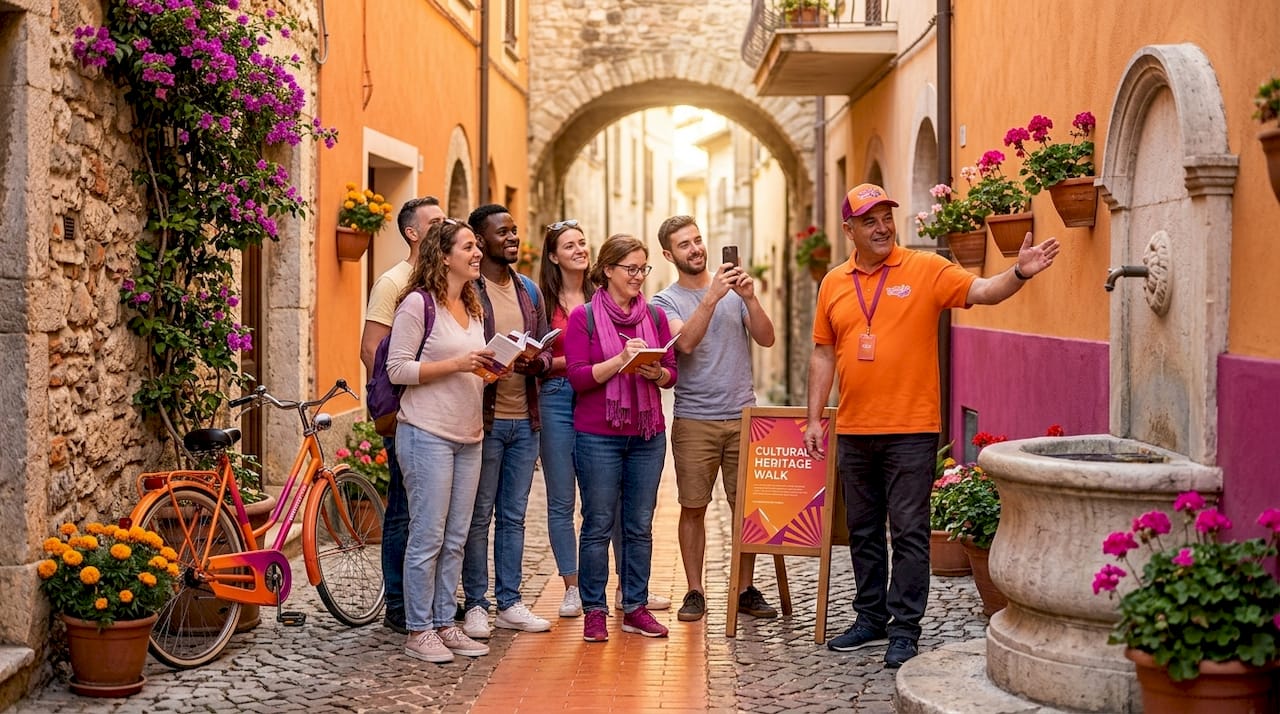
Here is what that looks like in contrast to conventional tourism:
| Activity type | Community connection | Cultural depth | Traveler role |
|---|---|---|---|
| Guided city bus tour | Low | Surface level | Passive observer |
| Hotel-organized “cultural show” | Minimal | Often staged | Spectator |
| Local market visit with a resident guide | High | Direct and personal | Active participant |
| Cooking class with a local family | High | Deeply immersive | Hands-on learner |
| Village festival or community event | Very high | Organic and living | Cultural guest |
| Farm or agritourism experience | High | Educational and sensory | Working participant |
The difference is not just atmosphere. Staged cultural performances are designed to meet tourist expectations, which means they are often shaped by what visitors assume a culture looks like rather than what it actually is. Authentic local participation, whether that means joining community events, exploring local traditions with a knowledgeable resident, or learning a craft from the person who practices it daily, delivers contact with living culture instead of a curated copy of it.
A few markers that distinguish genuine from commercialized experiences:
- The guide or host is a community member with a personal stake in the activity
- The location is a real working space, home, or community gathering place
- The activity has meaning outside of tourism (a festival, a harvest, a craft tradition)
- Revenue circulates within the local economy rather than flowing to an outside operator
How local experiences shape satisfaction and cultural understanding
The research on this is striking. A study of 398 visitors to agritourism sites in Taiwan found a strong mediating effect of perceived value on satisfaction (β = 0.768, p < 0.01), meaning that the more visitors felt a hands-on experience was genuinely meaningful, the more satisfied they were overall. That is a much stronger effect than you see in passive sightseeing contexts.
Why does active participation produce that kind of response? Tourism researchers draw a useful distinction between two types of authenticity. Objective authenticity is factual: is this artifact real, is this tradition historically accurate? Existential authenticity is personal: does this experience make me feel more alive, more grounded, more connected to something meaningful? A 2026 research review on experiential travel found that the felt self-realization travelers experience through immersive activities contributes to meaningful tourism beyond factual cultural accuracy. In other words, you can gain profound value from an experience even when you are not a scholar of the culture. What matters is genuine engagement.
There is also a lasting dimension to this. Higher perceived cultural authenticity results in stronger long-term visitor engagement and cultural transmission intentions, with a total indirect effect of 0.4247 in research modeling. Travelers who feel a real connection to a place are more likely to continue learning about its culture, recommend it authentically, and return.
“The most memorable travel moments are rarely at the famous monuments. They happen at the table, at the market, in the workshop — wherever you are treated as a guest rather than a ticket number.”
Pro Tip: Before booking any experience, ask one question: “Does the person leading this activity live and work in this community?” If the answer is yes, you are almost certainly in good hands.
Benefits of local experiences for communities and sustainable tourism
The advantages of participating in locally grounded tourism extend well beyond your personal satisfaction. Community participation and tourism-related employment directly support sustainable livelihoods, with survey data from 320 residents in Vietnamese community-based tourism settings showing significant positive effects (β = 0.454 for participation, β = 0.352 for employment, both p < 0.001).
That matters enormously. Here is how your choice to join community events and seek out authentic activities creates a positive ripple:
- Direct income generation. When you pay a local guide, eat at a family-run restaurant, or buy from a craft producer, money enters local households rather than multinational accounts.
- Cultural heritage preservation. Communities that can earn income from their traditions have a practical reason to maintain them. Festivals, languages, craft techniques, and culinary knowledge survive when they have economic as well as sentimental value.
- Diversified rural economies. Research on agritourism from North Carolina State University shows that farm-based tourism diversifies income, preserves agricultural heritage, and promotes educational engagement for both visitors and host communities.
- Governance and community agency. When tourism is managed by local stakeholders, communities maintain more control over how their culture is presented and how resources are distributed.
| Tourism type | Local employment | Cultural preservation | Community agency |
|---|---|---|---|
| Mass tourism resort | Low to moderate | Low | Very low |
| Independently operated local tour | High | High | High |
| Community-based experience program | Very high | Very high | Very high |
Sustainable tourism requires more than just booking local activities, though. Meaningful community involvement depends on institutional support, skills development, and access to financial tools that allow community members to actually build livelihoods from their participation. As a traveler, you support that ecosystem when you choose operators who are genuinely embedded in the places they work.
Pro Tip: Look for tour operators who can name the specific communities and individuals they partner with. Vague claims about “supporting locals” are a red flag. Specific partnerships are a green one.
Choosing and joining rewarding local experiences
Knowing the value of authentic engagement is one thing. Finding it consistently is another. These markers will help you identify experiences worth your time and money, wherever you travel in Europe or beyond.
- Sense of place is immediate. You feel the specific character of this location, not a generic “cultural experience” that could happen anywhere. The food, the pace, the materials, the stories are distinctly local.
- Community members lead or are visibly involved. Guides explain things from personal experience, not a script. Hosts share their own family history or craft practice.
- Participation is physical and sensory. You knead dough, pour wine, harvest something, make something. Direct engagement with hands-on activities raises perceived value and satisfaction in ways that observation simply does not.
- The experience exists independently of tourism. A harvest festival that happens every year with or without visitors is authentic. A “traditional dance show” performed twice daily for tour groups is not.
- Language is not a barrier to meaning. Good local experiences use skilled bilingual guides or interpreters who translate not just words but context, humor, and nuance.
When exploring local traditions in places like Vienna, Salzburg, Prague, or Budapest, the difference between a meaningful morning and a forgettable one often comes down to small group travel. Smaller groups allow for genuine conversation, flexible pacing, and the kind of spontaneous moments that no itinerary can manufacture.
Agritourism offers one of the clearest models for what good local participation looks like: physical contact with the land, direct interaction with the people who work it, and products or skills you carry home. Apply that same framework to urban cultural experiences and you will consistently choose well.
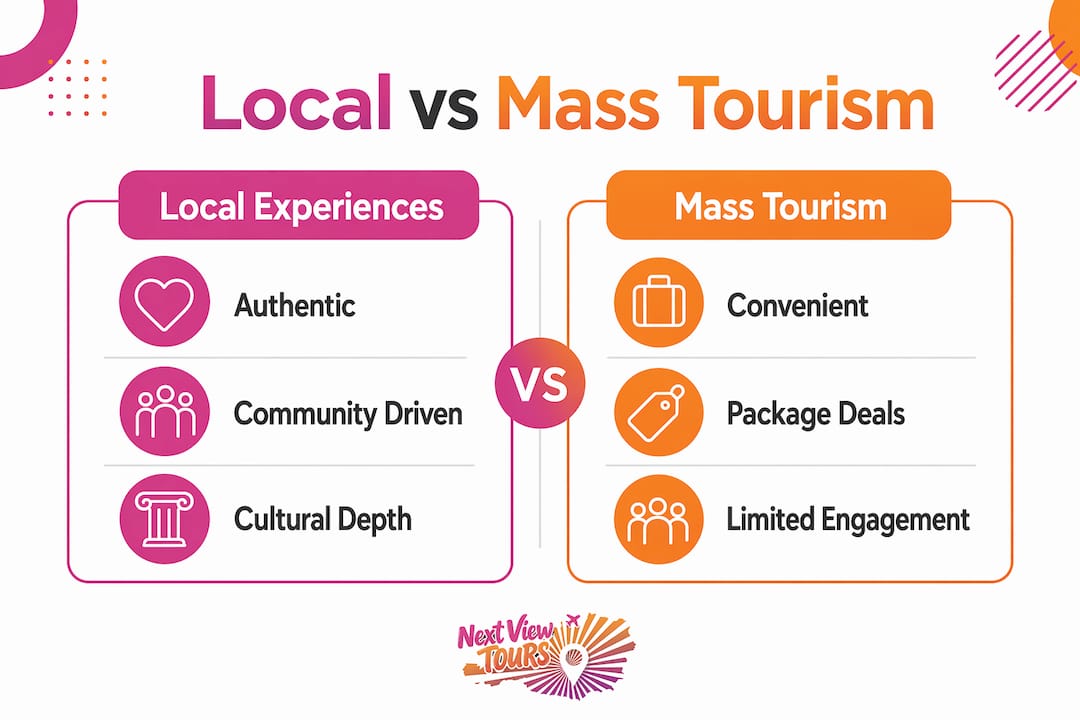
Local experiences vs. mass tourism: a realistic comparison
It would be dishonest to frame this as a completely simple choice. Local experiences do involve trade-offs, and acknowledging them honestly makes the case for them more credible.
| Factor | Local experience | Mass tourism |
|---|---|---|
| Convenience | Requires more planning | Highly packaged |
| Language access | Varies, guide quality matters | Often multilingual by design |
| Cost | Moderate, often comparable | Ranges from cheap to very expensive |
| Cultural depth | Very high | Low to moderate |
| Economic impact locally | High | Often low |
| Personal satisfaction | Consistently high | Variable |
| Memorability | Exceptionally high | Low |
The inconveniences are real but manageable. Language barriers dissolve with a skilled guide. Extra planning time pays off in experiences you will still describe clearly ten years from now. The benefits of group tours with a locally knowledgeable leader often eliminate the logistical friction entirely, giving you the depth of local engagement without the organizational burden. What the data and the traveler testimonials consistently confirm is that the trade-offs are worth it. Mass tourism is convenient. Local engagement is memorable.
My take on why this matters more than ever
I have watched travelers return from identical itineraries with wildly different experiences. The ones who book the local cooking class, say yes to the village market, or choose the small-group tour led by someone who actually grew up in the city they are showing you, those are the travelers who come back changed. Not dramatically, not in a clichéd way. Just genuinely expanded.
What I have learned from years of working across European destinations is that the instinct to stay comfortable, to stick with the big attraction and the tour bus, is understandable but almost always leaves people feeling like they missed something. And they did. The richest version of any destination lives in its ordinary rhythms, its local pride, its people.
The thing most travel advice gets wrong is treating local experiences as an upgrade for adventurous travelers. They are not a premium option. They are simply the more honest way to travel. When authenticity fosters a sense of place, emotional connection, and cultural meaning, it enhances long-term benefits for visitor and community alike. That is not a niche travel philosophy. It is just good judgment.
Start small if you need to. One market visit. One meal with a local family. One guided walk with someone who can tell you what a street actually meant to the people who built it. You will not go back.
— Next
Discover local experiences across Europe with Nextviewtours

Nextviewtours builds its tours around exactly the kind of authentic, community-rooted participation this article describes. Whether you are drawn to the cultural layers of Vienna, the medieval streets of Prague, the thermal culture of Budapest, or the alpine villages near Salzburg, every itinerary is designed to put you inside the experience, not outside looking in. From private and customized tours shaped around your personal interests to small-group day trips led by local experts, Nextviewtours connects you to the people and traditions that make each destination genuinely distinct. Explore the full range of trip types available and find the experience that matches how you want to travel.
FAQ
What makes a local experience different from a regular tour?
A local experience involves direct participation with community members, living traditions, and real places, rather than passive observation of staged attractions. The key distinction is genuine community involvement and hands-on engagement.
Why do local experiences produce higher traveler satisfaction?
Research shows that perceived value strongly mediates satisfaction in authentic, hands-on settings (β = 0.768, p < 0.01). When travelers feel an experience is genuinely meaningful, their overall satisfaction increases significantly.
How do local experiences benefit host communities?
Community participation and employment in tourism create sustainable livelihoods, preserve cultural heritage, and support local economic diversification. Communities with genuine involvement in tourism maintain more agency over how their culture is shared.
Are local experiences suitable for first-time travelers to Europe?
Yes. Well-curated local experiences, especially those led by bilingual local guides in small groups, are accessible to any traveler regardless of experience level. The depth they offer actually makes orientation to a new culture easier, not harder.
How do I identify an authentic local experience before booking?
Look for experiences led by community members with a personal connection to the activity, taking place in real working environments, and offering sensory or hands-on participation. Operators who name specific community partnerships are consistently more credible than those using generic language about supporting locals.


Comments are closed