
 Uncategorized
TL;DR:
- A comprehensive winter travel checklist emphasizes layering, safety gear, and efficient packing to stay warm, dry, and prepared across European destinations. Essential items include moisture-wicking base layers, waterproof outer shells, insulated waterproof boots, and emergency kits with blankets and power banks; prioritize staying dry over just warmth. Packing efficiently involves wearing bulky items during travel, using compression cubes, limiting footwear, and customizing gear for specific activities like skiing or city tours.
A winter travel checklist is a structured packing and safety system that keeps you warm, dry, and prepared across every cold-weather destination, from the snowy Alps to the frost-dusted streets of Prague. The difference between a miserable trip and a memorable one often comes down to three things: your layering system, your safety kit, and how efficiently you pack. Uniqlo Heattech base layers, Nuun electrolyte tablets, and waterproof Sorel boots are not luxury additions. They are the cold-weather travel essentials that experienced winter travelers never leave behind. Whether you are building a ski trip checklist or a holiday travel checklist for a city break in Vienna or Budapest, this guide covers everything you need to know before you zip up that bag.
1. Essential clothing and layering for cold weather travel
The foundation of any winter packing list is a three-layer system: moisture-wicking base, insulating mid-layer, and waterproof outer shell. Each layer has a specific job, and skipping one creates a gap that cold air and moisture will find immediately.
Base layer: Moisture-wicking fabrics like Uniqlo Heattech, Smartwool merino wool, or Patagonia Capilene pull sweat away from your skin. Cotton fails completely here. Wet clothing drastically increases heat loss, even in mild cold, which means a cotton t-shirt soaked in sweat becomes a liability, not a comfort layer.
Mid-layer: A fleece jacket or down vest traps body heat. Down compresses smaller than fleece, making it the smarter choice for carry-on travelers. Brands like Arc’teryx, Patagonia, and The North Face offer packable down jackets that fold into their own pocket.
Outer layer: Wind and moisture strip heat faster than cold air alone, so your shell must be both waterproof and windproof. A Gore-Tex jacket from Columbia or Marmot handles rain, sleet, and wind without adding excessive bulk.
Accessories for extremities: Hats, gloves, and waterproof boots are not optional comfort items. Cold-weather safety guidance classifies them as essential protection against frostbite. Pack wool socks from Darn Tough or Smartwool, thermal gloves with a waterproof shell, and a merino wool beanie that covers your ears.
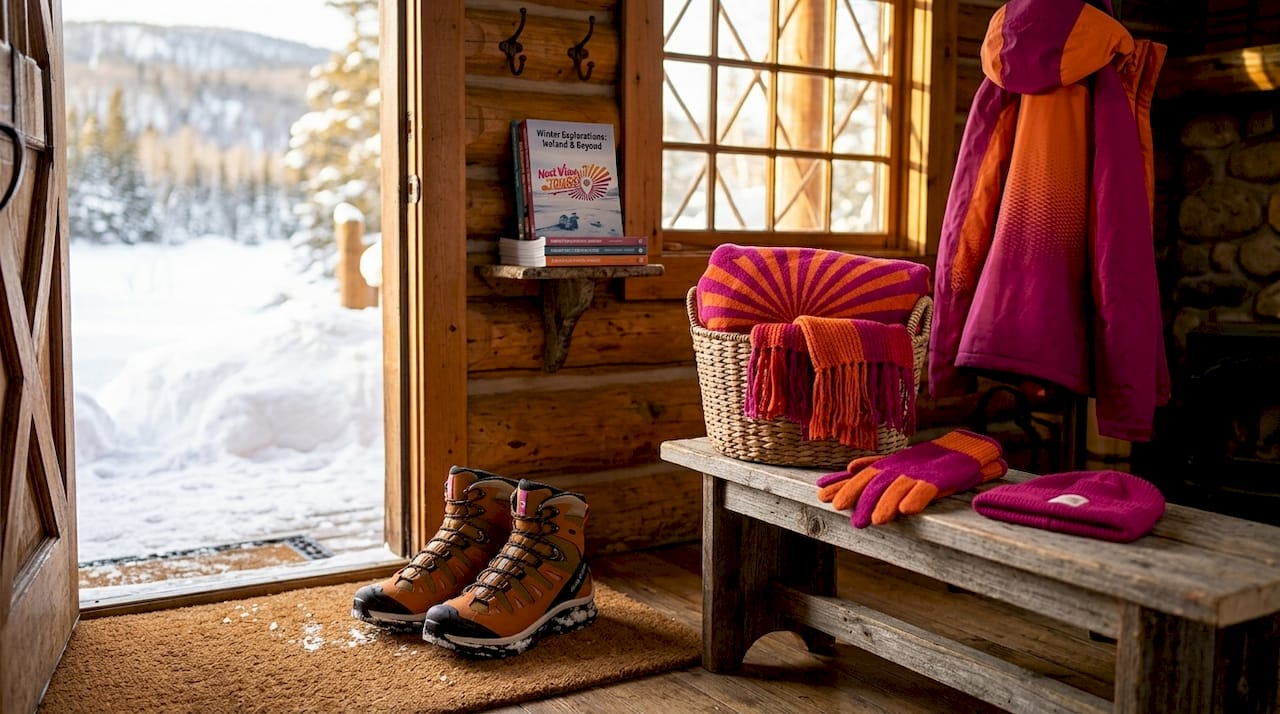
Footwear: Insulated, waterproof boots with traction soles are non-negotiable. Sorel Caribou and Kamik Nation boots handle temperatures well below freezing. For city walking on icy cobblestones in Salzburg or Hallstatt, Yaktrax slip-on traction cleats add grip without replacing your boots.
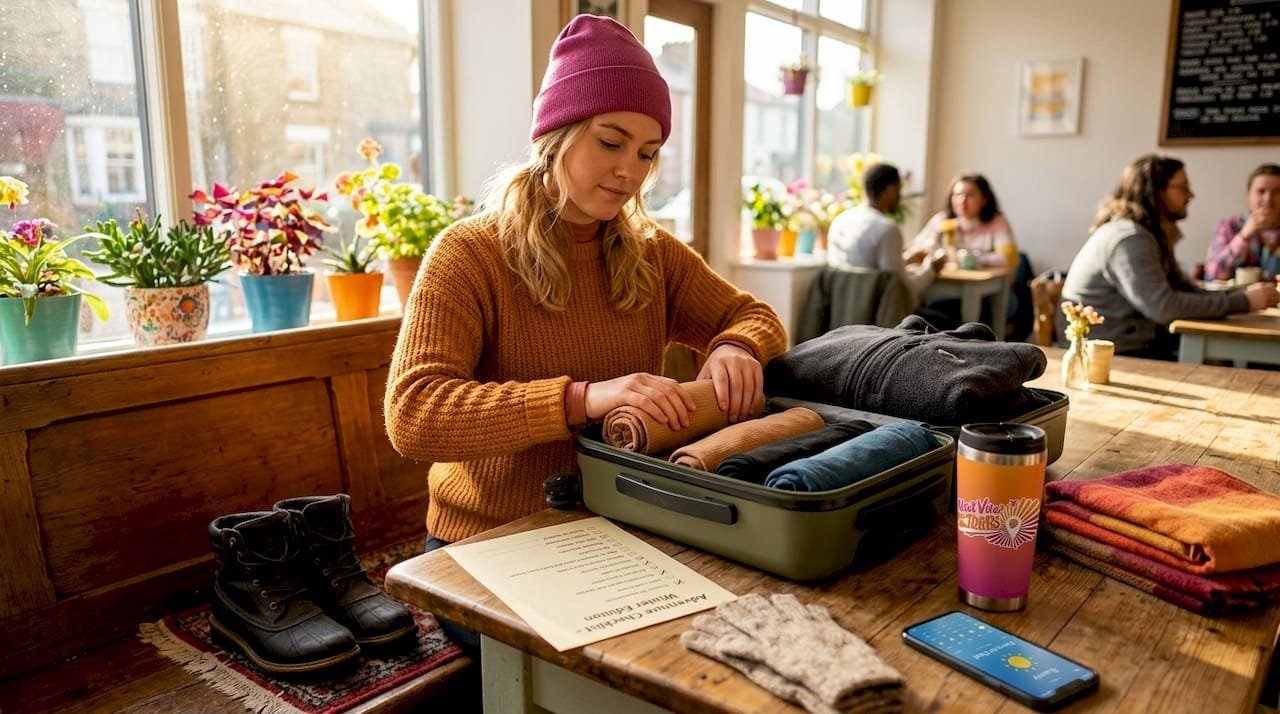
Pro Tip: Wear your bulkiest items, your boots and heaviest jacket, on the plane. This frees up significant luggage space and keeps your checked bag under weight limits.
2. Safety and emergency items every winter traveler needs
Winter travel safety is not just about staying warm. It is about being prepared for conditions that can change fast and hard.
Hypothermia can begin above 40°F when rain, sweat, or submersion chills the body, with core temperature dropping below 95°F (35°C). Shivering, confusion, and slurred speech are the warning signs. Recognizing them early is the difference between a manageable situation and a medical emergency.
Your winter safety kit should include:
- Emergency blankets: Mylar space blankets from brands like SOL fold to the size of a deck of cards and reflect 90% of body heat.
- Traction aids: Yaktrax or Kahtoola MICROspikes for icy paths and sidewalks.
- Power bank: A 20,000mAh Anker PowerCore keeps your phone charged when outlets are unavailable.
- First aid kit: Include hand warmers, blister pads, and any personal medications.
- Spare dry layers: Quick-dry base layers and spare socks replace wet garments immediately, which significantly cuts hypothermia risk.
If you are driving in winter conditions, your vehicle kit matters just as much as your personal gear. A winter road emergency kit should include blankets, a folding shovel, kitty litter for traction, jumper cables, road flares, and an ice scraper. Do not rely on your car’s heater as your only warmth source. Vehicles should not be your sole heat source during winter travel, since breakdowns and delays can leave you exposed for hours.
Winter storms can disrupt power grids and close roads for multiple days. Carrying several days’ worth of food, water, and medications is the preparation standard recommended by the U.S. Department of Commerce. That level of disruption is rare on a guided tour, but it is not impossible in remote winter destinations.
Pro Tip: Store spare batteries and hand warmers inside your inner jacket pocket during outdoor excursions. Cold temperatures drain battery power fast, and warm batteries last significantly longer.
3. How to pack efficiently for a winter trip
Packing for cold weather without overstuffing your bag is a skill. The key is choosing gear that does multiple jobs and compresses well.
- Wear your bulkiest items on travel day. Your heaviest boots, thickest jacket, and densest sweater go on your body, not in your bag. This alone can save three to four pounds of checked luggage weight.
- Use compression packing cubes. Eagle Creek and Osprey make compression cubes that reduce clothing volume by up to 60%. Pack your mid-layers and base layers in these first.
- Choose down over fleece for mid-layers. A packable down jacket compresses to the size of a water bottle. A fleece of equivalent warmth takes three times the space.
- Limit footwear to two pairs. One pair of insulated waterproof boots for outdoor use, and one pair of lightweight shoes or slippers for indoor and evening wear. More than two pairs of shoes is the single biggest space waster in winter luggage.
- Pack versatile clothing. A merino wool sweater works as a mid-layer under your jacket and as a dinner outfit in a Prague restaurant. Neutral colors like navy, charcoal, and black mix and match across every outfit.
- Follow TSA rules for toiletries. All liquids in carry-on bags must be 3.4 oz (100ml) or less and fit in a single quart-sized bag. Brands like Muji and Cadence make refillable travel containers that keep your kit organized and compliant.
- Pack a universal travel adapter. European outlets differ from American ones, and a universal adapter from Ceptics or BESTEK handles Austria, Czech Republic, Slovakia, and Hungary in a single device.
4. Travel tech and communication essentials for winter trips
Cold weather creates specific challenges for electronics. Batteries drain faster, touchscreens stop responding through gloves, and moisture can damage devices that are not protected.
Cold temperatures shorten battery life and can cause device failures during outdoor activities. The practical fix is simple: keep your phone and any spare batteries in an inner jacket pocket, close to your body heat, rather than in an outer bag pocket.
Your tech checklist for winter travel should cover:
- Power bank: A high-capacity model like the Anker PowerCore 26800 handles two to three full phone charges.
- Waterproof phone case: Brands like Lifeproof and Catalyst protect against snow, slush, and rain without removing your phone from its case.
- Universal adapter: One adapter for all European plug types, with USB-A and USB-C ports built in.
- Dual-voltage hair tools: Tools like the BaByliss Pro Nano Titanium work on both 110V and 220V, so you do not need a voltage converter.
- Weather apps: Dark Sky and Weather Underground provide hyperlocal forecasts. The European weather service yr.no is particularly accurate for Alpine and Central European destinations.
Saving local emergency numbers before you travel is a step most travelers skip until they need it. In Austria, the emergency number is 112. In the Czech Republic and Slovakia, it is also 112. Save these contacts before you land, not after an incident.
Pro Tip: Download offline maps through Google Maps or Maps.me before your trip. Winter storms can knock out mobile data in remote areas, and an offline map of Hallstatt or the Slovak countryside could be the most useful thing on your phone.
5. How to customize your checklist by activity and destination
A ski trip checklist looks very different from a packing list for a city tour of Vienna or Budapest. The activity determines the gear, and the destination determines the severity of layering required.
| Activity / Destination | Key additions | Footwear priority | Layer intensity |
|---|---|---|---|
| Ski trip (Alps, Dolomites) | Ski gloves, balaclava, insulated snow pants, goggles | Ski boots plus après-ski boots | Maximum: all three layers |
| City tour (Vienna, Prague, Budapest) | Stylish waterproof coat, dress shoes with grip soles | Insulated ankle boots | Moderate: base plus outer shell |
| Winter hiking or nature tour | Trekking poles, gaiters, Yaktrax, headlamp | Waterproof hiking boots | Full three-layer system |
| Holiday markets and evening events | Smart-casual layer, compact umbrella | Dressy waterproof ankle boots | Base plus warm mid-layer |
For ski trips specifically, standard winter gloves are not enough. Ski-specific gloves from Black Diamond or Hestra are waterproof, wrist-gauntlet length, and insulated for extended exposure. A balaclava from Outdoor Research covers your neck, chin, and lower face, which a standard beanie cannot do on a chairlift at speed.
For city exploration in destinations like Vienna or Salzburg, you want gear that looks good and performs well. A tailored wool coat over a Uniqlo Heattech base layer handles most Central European winter days without looking like you just stepped off a ski slope. Check out the Vienna winter guide from Nextviewtours for destination-specific advice on what to wear and when.
Take frequent rewarming breaks during outdoor winter activities, especially on ski days or winter hikes. Physical exertion in cold air creates a false sense of warmth, and stopping to hydrate and rest prevents overexertion and cold injuries.
Key takeaways
A winter travel checklist works because it forces you to address warmth, safety, and packing efficiency together rather than treating them as separate concerns.
| Point | Details |
|---|---|
| Layer in three stages | Base, mid, and outer layers each serve a specific function. Skipping one creates a gap cold and moisture will exploit. |
| Staying dry beats staying warm | Wet clothing accelerates heat loss faster than cold air alone. Prioritize quick-dry fabrics and carry spare dry layers. |
| Safety kit is non-negotiable | Emergency blankets, traction aids, a power bank, and local emergency numbers belong in every winter travel bag. |
| Pack for the activity, not just the weather | Ski trips, city tours, and winter hikes each require different gear. Customize your list by destination and activity type. |
| Compress and wear to save space | Compression cubes and wearing bulky items on travel day are the two most effective ways to manage winter luggage volume. |
What I have learned from building winter travel checklists
After years of helping travelers prepare for winter trips across Europe, from the Christmas markets of Vienna to the mountain trails above Salzburg, the single most common mistake I see is packing too many layers of the wrong material. Travelers load up on cotton hoodies and denim jeans because they feel warm at home. In wet, windy Central European winter conditions, those same items become cold, heavy, and miserable within an hour.
The second mistake is underestimating accessories. A good waterproof jacket means nothing if your hands are numb inside thin gloves and your feet are soaked through fashion boots. Quality wool socks, proper waterproof gloves, and boots with real traction soles are where the real warmth lives.
My personal go-to combination for a city-focused winter trip is a Uniqlo Heattech base layer, a Patagonia Nano Puff jacket as a mid-layer, and a Gore-Tex shell on top. That system handles everything from a snowy morning in Hallstatt to a warm restaurant in Budapest without requiring a bag change. For anyone heading into the mountains or planning active winter tours in Europe, I would add ski-specific gloves and a balaclava without hesitation.
One thing most packing guides skip: bring a small dry bag or waterproof stuff sack for your electronics and documents. A sudden snowfall or a slush puddle can ruin a passport or a phone in seconds. A $10 Sea to Summit dry bag prevents a very expensive problem.
— Next
Plan your winter trip with Nextviewtours

Nextviewtours takes the guesswork out of winter vacation planning across Europe. Whether you want a private day trip from Vienna to Hallstatt in the snow, a multi-day adventure through the Czech Republic and Slovakia, or a guided winter experience through the Christmas markets of Salzburg and Budapest, the team at Nextviewtours builds itineraries around your pace, your group, and your interests. You arrive prepared. They handle the rest. Explore the full range of winter trip options available across Europe, or dive into multi-day adventure tours designed for travelers who want more than a standard itinerary. Cold weather is not a reason to stay home. With the right preparation and the right guide, it is the best time to travel.
FAQ
What are the most important items on a winter travel checklist?
The most critical items are moisture-wicking base layers, a waterproof outer shell, insulated waterproof boots with traction soles, and an emergency kit that includes space blankets and a power bank. Staying dry is more important than staying warm, since wet clothing accelerates heat loss even in mild temperatures.
How do I pack winter clothes without overfilling my luggage?
Wear your bulkiest items, including boots and your heaviest jacket, on travel day, and use compression packing cubes for remaining layers. Choosing packable down over fleece and limiting footwear to two pairs are the two most effective ways to reduce winter luggage volume.
What should I include in a ski trip checklist?
A ski trip checklist requires ski-specific waterproof gloves, a balaclava, insulated snow pants, ski goggles, and après-ski boots in addition to standard winter layers. Traction aids like Yaktrax are useful for icy resort paths outside of ski boots.
How do I protect my electronics during winter travel?
Store devices close to your body in an inner jacket pocket to prevent battery drain from cold temperatures. A waterproof phone case from Lifeproof or Catalyst protects against snow and slush during outdoor activities.
What emergency items should I carry for winter travel in Europe?
Carry a Mylar emergency blanket, a high-capacity power bank, local emergency numbers (112 across most of Europe), spare dry layers, and any personal medications. If you are driving, add a folding shovel, traction aids, and jumper cables to your vehicle kit.


Comments are closed