
 Uncategorized
TL;DR:
- The Vienna countryside surrounds Austria’s capital within 60 kilometers, offering diverse natural and cultural attractions. Protected parks, historic estates, and wine regions reveal layers of imperial history and landscape management. Guided tours and careful planning enhance visits to iconic sites while respecting wildlife and local traditions.
The Vienna countryside is defined as the ring of forests, wine regions, imperial parks, and river valleys that surround Austria’s capital within roughly 60 kilometers. This area, often called the Viennese rural hinterland by local tourism authorities, packs extraordinary variety into a compact geography. You get diverse microclimates shaped by the intersection of warm, cold, and fresh air zones near the Danube and the Vienna Woods. The result is a destination where beech forests, vineyard terraces, and baroque garden estates sit within a single afternoon’s reach of the city center.
What are the top natural attractions in the Vienna countryside?
The Vienna countryside holds some of Central Europe’s most accessible wild spaces, and the variety is genuinely surprising. Three sites stand out as anchors for any nature-focused visit.
-
Vienna Woods (Wienerwald): The Vienna Woods span 51 municipalities and 7 Vienna districts, protected as a UNESCO biosphere reserve. That designation means the ecosystem is actively managed for biodiversity, not just preserved passively. Beech and oak forests cover the ridgelines, and the trail network connects villages, viewpoints, and wine taverns across the hills west of the city.
-
Lainzer Tiergarten: This 24.5 km² preserve once served as the Habsburg imperial hunting ground. Today it is open to the public, and over 800 wild boars and hundreds of red deer roam freely inside its walls. Public walking trails remain free of charge, making it one of the best-value nature retreats near Vienna.
-
Sparbach Nature Park: Sparbach charges €9.50 for adult admission and €6.00 for children. That fee covers access to free-roaming deer, wild boar enclosures, and forest trails that feel genuinely remote despite being close to the city.
-
Steinwandklamm Gorge: This narrow limestone gorge cuts through the Triestingtal valley south of Vienna. The gorge’s rock walls create a natural cooling effect, dropping temperatures noticeably even on hot summer days. Trails run along wooden walkways and iron bridges bolted directly into the cliff face.
Pro Tip: Visit Lainzer Tiergarten on a weekday morning in spring or fall. The wild boar herds are most active near the forest edges at dawn, and you will rarely share the trail with more than a handful of other visitors.
The best seasons for exploring Vienna’s outskirts on foot are april through june and september through october. Summer works well for gorge hikes like Steinwandklamm, where the cool air is a genuine relief. Winter visits to the Vienna Woods offer snow-dusted beech forests and almost no crowds.
Which historical and cultural sites enrich the Vienna countryside experience?
The Vienna countryside is best understood as a historical landscape garden where imperial leisure culture shaped the terrain over centuries. The Habsburgs did not simply build palaces. They redesigned entire valleys, planted forests, and created artificial lakes to frame their summer retreats. That legacy gives the countryside a depth that pure wilderness areas cannot match.
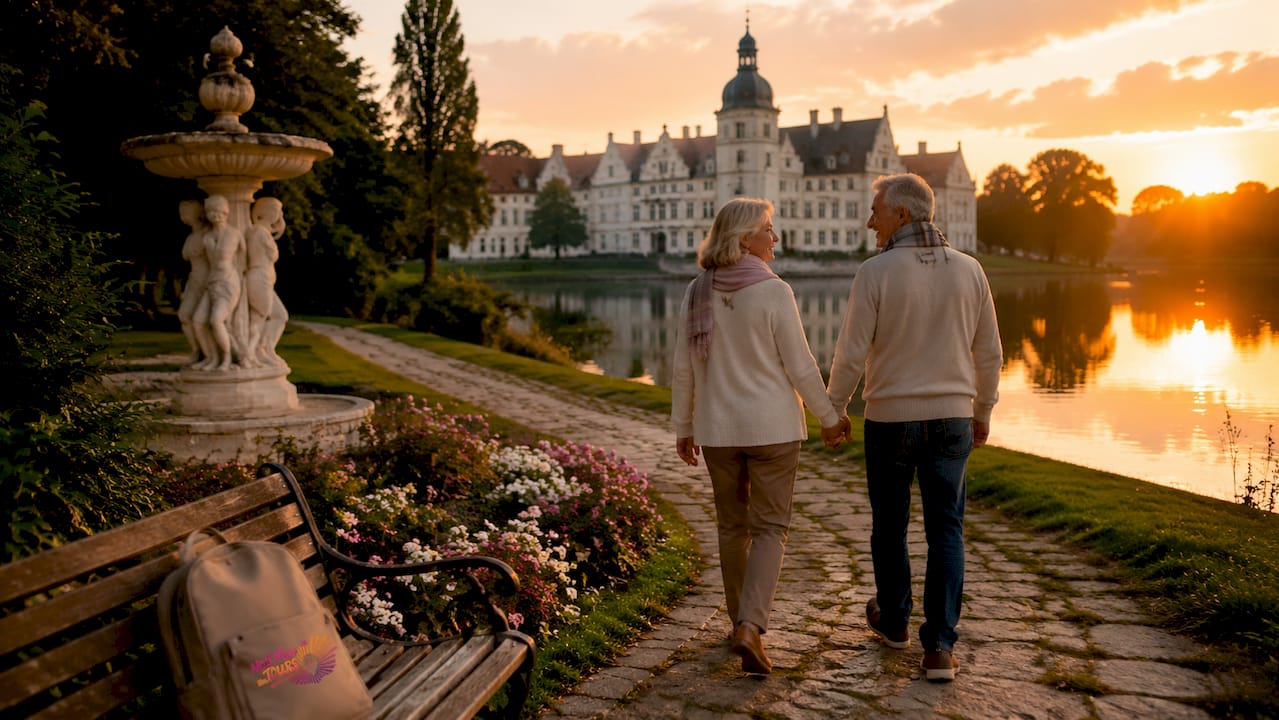
Laxenburg Castle Park is the clearest example of this philosophy. Located about 15 kilometers south of Vienna, the park surrounds a moated Gothic Revival castle set on an artificial island. The grounds include English-style gardens, baroque fountains, and walking paths that wind through meadows and woodland. The site functioned as a Habsburg summer residence for generations, and the atmosphere of quiet imperial grandeur remains intact.
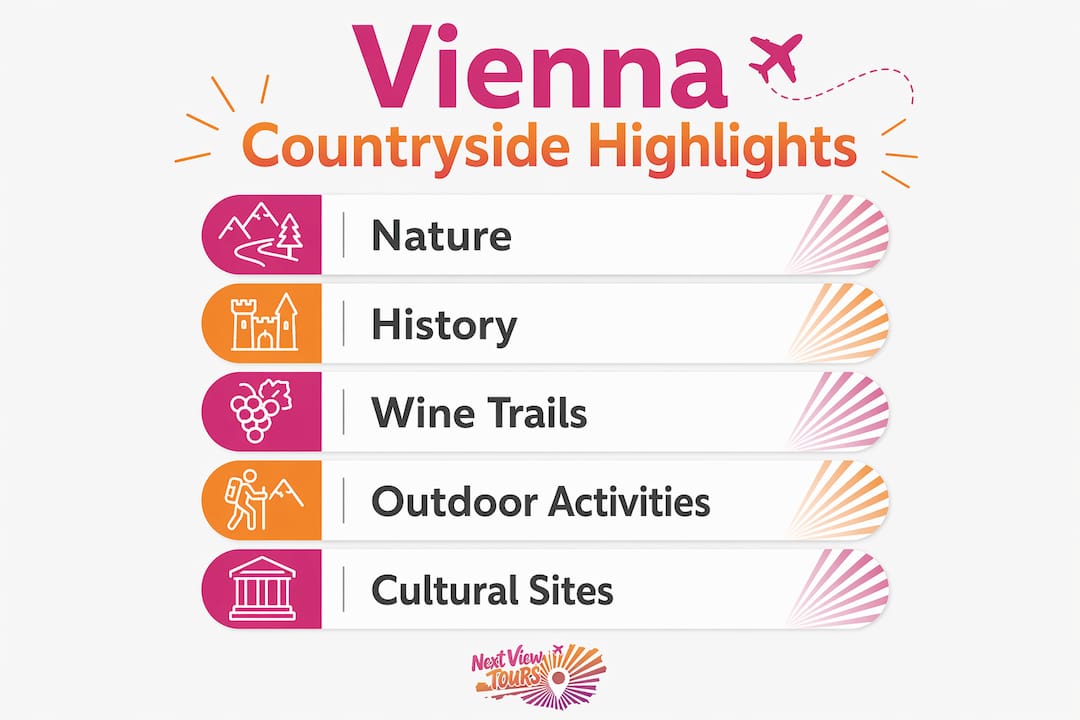
Baden bei Wien sits 26 kilometers south of the city and served as the summer capital of the Habsburg court during the 19th century. The town’s thermal baths, Biedermeier architecture, and rose garden make it a natural complement to a countryside day trip. Beethoven spent 15 summers in Baden, and the house where he worked on his Ninth Symphony is open to visitors.
Pro Tip: Combine Laxenburg and Baden into a single day. Laxenburg opens early and the park is quiet before 10 a.m. Drive or take the train to Baden for lunch and the afternoon. The two sites share a similar imperial character but feel completely different in scale and mood.
History and nature intertwine throughout the region in ways that reward slow, attentive travel. The imperial leisure culture that shaped Laxenburg also produced the trail networks and managed forests of the Vienna Woods. Understanding that connection changes how you read the landscape.
What are the best countryside day trips and wine tours near Vienna?
The Vienna countryside contains two major wine-growing regions, and each suits a different pace of travel.
-
Weinviertel (Wine Quarter): This region sits about 30 minutes north of Vienna and produces Grüner Veltliner and Welschriesling on rolling loess hills. A half-day trip covers the distance comfortably and leaves time for two or three winery visits.
-
Wachau Valley: The Wachau requires a full day for the best experience. The valley runs along the Danube between Krems and Melk, and the combination of terraced vineyards, medieval villages, and the river itself makes it one of Austria’s most photographed landscapes. The Wachau is a UNESCO World Heritage Site, and its Riesling and Grüner Veltliner wines carry a protected designation of origin.
A typical half-day wine tour lasts about 4 hours and includes transport, visits to 2–3 wineries, and 8–12 wine tastings paired with traditional Austrian food. That format suits travelers who want a genuine tasting experience without committing a full day.
| Region | Distance from Vienna | Trip Length | Key Wine Varieties |
|---|---|---|---|
| Weinviertel | ~30 minutes | Half day (4 hours) | Grüner Veltliner, Welschriesling |
| Wachau Valley | ~90 minutes | Full day | Riesling, Grüner Veltliner |
Heurigen are a defining feature of the wine culture here. These are seasonal wine taverns unique to the Vienna countryside, where local producers open their courtyards and serve their own wines alongside buffet-style Austrian food. A pine branch hung above the door signals that the Heurigen is open. The atmosphere is informal, communal, and genuinely local. You can book a Wachau Valley wine tasting through Nextviewtours to experience both the valley scenery and the Heurigen culture in a single guided day.
Pro Tip: The mixed climate zones near Vienna create distinct terroirs across short distances. Ask winery staff to compare wines from north-facing and south-facing slopes. The difference in the same grape variety is often dramatic and tells you more about the region than any guidebook.
How to plan outdoor adventures and activities in the Vienna countryside
Outdoor recreation near Vienna covers a wide range of difficulty levels, and matching the activity to the season makes a significant difference in enjoyment.
-
Hiking: The Vienna Woods trail network connects dozens of marked routes from gentle forest walks to full-day ridge hikes. The Lainzer Tiergarten loop trails suit families with children. Steinwandklamm gorge suits fit adults comfortable with exposed walkways and iron rungs.
-
Cycling: The Danube Cycle Path runs through the Wachau Valley and is one of Europe’s most popular long-distance bike routes. Shorter loops through the Weinviertel vineyards work well for casual riders.
-
Wildlife viewing: Lainzer Tiergarten and Sparbach Nature Park both offer reliable sightings of red deer and wild boar. Early morning visits in spring and fall produce the best encounters.
-
Safety in natural areas: Steinwandklamm trails require caution around falling rocks, and some sections close seasonally. Always check local trail alerts before visiting. Respect all signage in protected areas, particularly around wild boar, which can be unpredictable when approached.
Shoulder seasons offer the most comfortable conditions for Vienna rural adventures. April through june brings wildflowers and mild temperatures. September and october deliver harvest colors in the vineyards and cooler air in the forests. Summer works for gorge hikes and wine tours but draws larger crowds at popular sites.
Pro Tip: Pack layers even in summer. The Vienna Woods ridges and the Steinwandklamm gorge can be 5–8 degrees cooler than the city. A light jacket and solid walking shoes cover most situations.
Family-friendly options are plentiful. Sparbach Nature Park works well for children because the animals are visible at close range within a safe, enclosed setting. The Laxenburg Castle Park grounds are flat and stroller-accessible. Baden’s rose garden and thermal pools appeal to a wide age range.
Key takeaways
The Vienna countryside rewards visitors who combine natural exploration with cultural depth, and the best experiences come from pairing a nature reserve with a wine region or a historical estate on the same day.
| Point | Details |
|---|---|
| Natural variety is exceptional | The Vienna Woods, Lainzer Tiergarten, and Steinwandklamm each offer a distinct outdoor experience within 60 km of the city. |
| Imperial history shapes the landscape | Sites like Laxenburg and Baden were designed as leisure retreats, giving the countryside a cultural layer that pure wilderness areas lack. |
| Wine regions suit different schedules | Weinviertel fits a half-day trip; Wachau Valley deserves a full day for vineyards, villages, and Heurigen culture. |
| Shoulder seasons are the best choice | April through june and september through october deliver comfortable temperatures, fewer crowds, and vivid seasonal scenery. |
| Safety awareness matters | Check trail closures at Steinwandklamm, respect wildlife signage, and pack layers for forest and gorge hikes year-round. |
What I have learned from years of guiding in Vienna’s rural outskirts
Most visitors treat the Vienna countryside as a single-day checkbox. They pick one famous site, see it quickly, and return to the city by evening. That approach misses the point entirely.
The countryside around Vienna works best when you let the layers reveal themselves slowly. The Vienna Woods are not just a forest. They are a managed biosphere where imperial hunting culture, 19th-century Romantic hiking traditions, and modern conservation policy all overlap. Walking a trail there without knowing that history is like visiting a cathedral without looking up.
The spots that stay with me longest are not the famous ones. The Sparbach Nature Park on a gray november morning, with red deer moving through mist between the oaks, is more memorable than any crowded viewpoint. A Heurigen in a village north of Vienna, where the owner pours wine from an unlabeled bottle and explains the vintage in broken English, teaches you more about Austrian wine culture than any formal tasting.
Guided tours have real value here, particularly for wine regions where logistics and language can create barriers. But the best guided experiences leave room for unplanned stops. A good guide knows when to skip the schedule and follow what the day offers. Independent travelers who do their research and respect local customs often find the quieter gems that group itineraries bypass.
Respect for wildlife is not optional in these areas. Wild boar in Lainzer Tiergarten are genuinely wild. Keeping distance and following posted rules protects both you and the animals. The same applies to trail regulations in Steinwandklamm. The countryside gives generously to visitors who approach it with care.
— Next
Nextviewtours can take you there
Planning a countryside visit from Vienna involves more logistics than most travelers expect. Transport, timing, local knowledge, and language all add friction. Nextviewtours removes that friction with a range of day trip and nature tour options built specifically for the Vienna region.

Whether you want a private wine tasting in the Wachau Valley, a guided hike through the Vienna Woods, or a full-day cultural circuit combining Laxenburg and Baden, Nextviewtours offers both private and group formats to match your pace and group size. Expert local guides handle transport, entry fees, and insider access so you spend your time experiencing the countryside rather than managing it. Browse the full range of trip formats and find the one that fits your schedule.
FAQ
What is the Vienna countryside?
The Vienna countryside refers to the forests, wine regions, river valleys, and imperial parks within roughly 60 kilometers of Austria’s capital. The area includes the UNESCO-protected Vienna Woods, the Wachau Valley, and historic estates like Laxenburg Castle Park.
How far are the best countryside spots from Vienna?
Most top natural and cultural sites are 15–90 minutes from Vienna by car or public transit. Lainzer Tiergarten sits within the city boundary, while the Wachau Valley requires about 90 minutes of travel each way.
What is a Heurigen?
A Heurigen is a seasonal wine tavern unique to the Vienna countryside where local producers serve their own wines and traditional Austrian food in an informal courtyard setting. A pine branch above the door signals the tavern is open.
When is the best time to visit the Vienna countryside?
Shoulder seasons from april through june and september through october offer the most comfortable temperatures and fewer crowds. Summer works well for gorge hikes, while fall brings harvest color to the vineyards.
Is Lainzer Tiergarten free to enter?
Public walking trails in Lainzer Tiergarten are free of charge. The preserve covers 24.5 km² and is home to over 800 wild boars and hundreds of red deer within its walled boundaries.


Comments are closed