

 Uncategorized
Europe in 2026 offers an extraordinary range of experiences for American travelers, from Renaissance masterpieces to volcanic hot springs, medieval old towns to fjord-carved coastlines. Whether you’re building your first Europe travel bucket list or returning to dig deeper, these are the destinations that genuinely earn their place on every serious itinerary:
- Florence, Italy — Renaissance art and architecture at its most concentrated
- Venice, Italy — a city built on water, unlike anywhere else on earth
- Paris, France — the Eiffel Tower, the Louvre, and a café culture that rewards slow mornings
- Seville, Spain — flamenco, the Alhambra’s Moorish legacy, and Andalusian warmth
- Edinburgh, Scotland — a dramatic castle, whisky culture, and one of Europe’s most atmospheric old towns
- Prague, Czech Republic — a UNESCO Creative City of Literature with Gothic spires and jazz-filled cellars
- Dublin, Ireland — literary pubs, Georgian squares, and the wild Atlantic coast within reach
- Ljubljana, Slovenia — a compact, walkable capital with a castle, a river, and almost no crowds
- Marseille, France — France’s oldest city, with a raw Mediterranean energy and world-class contemporary culture
- Oslo, Norway — Viking history, world-class museums, and a gateway to the fjords
- Porto, Portugal — azulejo-tiled facades, port wine cellars, and the Douro River at golden hour
- Lake Garda, Italy — the largest lake in Italy, ringed by medieval villages and Alpine scenery
- Pamukkale, Turkey — surreal white travertine terraces and ancient Roman thermal pools
- The Greek Islands — from Santorini’s caldera views to Rhodes’ medieval fortress city
Each of these destinations rewards time and attention. The sections below give you the cultural context, the practical timing, and the travel logic to turn this list into a real trip.
Table of Contents
- 1. Florence: where the Renaissance comes alive
- 2. Venice: a city that defies logic
- 3. Paris: still the standard everything else is measured against
- 4. Seville: Andalusia’s most passionate city
- 5. Edinburgh: drama built into every stone
- 6. Prague: a literary city with Gothic bones
- 7. Dublin: where history and hospitality overlap
- 8. Ljubljana: Europe’s most underrated capital
- 9. Marseille: France’s oldest city, still misunderstood
- 10. Oslo: where Viking history meets modern design
- 11. Porto: Portugal’s most soulful city
- 12. Lake Garda: Italy’s most dramatic lake
- 13. Pamukkale: Turkey’s surreal thermal landscape
- 14. The Greek Islands: a different island for every traveler
- How to plan your Europe trip without burning out
- What Nextviewtours knows that most travel guides miss
- Sample itineraries connecting Europe’s best destinations
- Getting between Europe’s top destinations: what actually works
- Key Takeaways
- Why the “see everything” approach is the wrong goal
- See Europe the way it deserves to be seen with Nextviewtours
1. Florence: where the Renaissance comes alive
Florence is the city that changed Western art forever, and walking through it still feels like that. The Uffizi Gallery holds Botticelli’s Birth of Venus and da Vinci’s Annunciation in the same building. Brunelleschi’s dome over the Florence Cathedral remains an engineering marvel more than 600 years after its completion. The city is compact enough to cover on foot, which means you can move from the Ponte Vecchio to the Piazzale Michelangelo in an afternoon.
Best time to visit: April through June, or September through October. July and August bring intense heat and peak crowds.
Key experiences:
- Book Uffizi tickets at least two weeks in advance
- Climb the dome for panoramic views over the terracotta rooftops
- Cross the Arno to the Oltrarno neighborhood for local trattorias away from the tourist center
2. Venice: a city that defies logic
Venice has no cars, no roads in the conventional sense, and no real equivalent anywhere in the world. The city spreads across 118 small islands connected by 400 bridges, and getting genuinely lost in the calli (narrow lanes) away from St. Mark’s Square is one of travel’s great pleasures. The Doge’s Palace, the Rialto Market at dawn, and a vaporetto ride down the Grand Canal are non-negotiable.
Best time to visit: March through May, or October through November. Summer is beautiful but extremely crowded; February brings the famous Carnival.
Key experiences:
- Stay at least two nights to experience the city after day-trippers leave
- Visit the islands of Murano (glass-blowing) and Burano (colorful fishermen’s houses)
- Take the vaporetto Line 1 down the Grand Canal rather than a gondola for an affordable, equally scenic ride
3. Paris: still the standard everything else is measured against
Paris rewards both first-timers and repeat visitors differently. The Eiffel Tower, the Louvre, and Notre-Dame Cathedral (now fully restored after the 2019 fire) anchor any first visit. But the city’s real character lives in its arrondissements: the covered passages of the 2nd, the Canal Saint-Martin in the 10th, the Marais district’s galleries and falafel shops. The food alone justifies the flight.
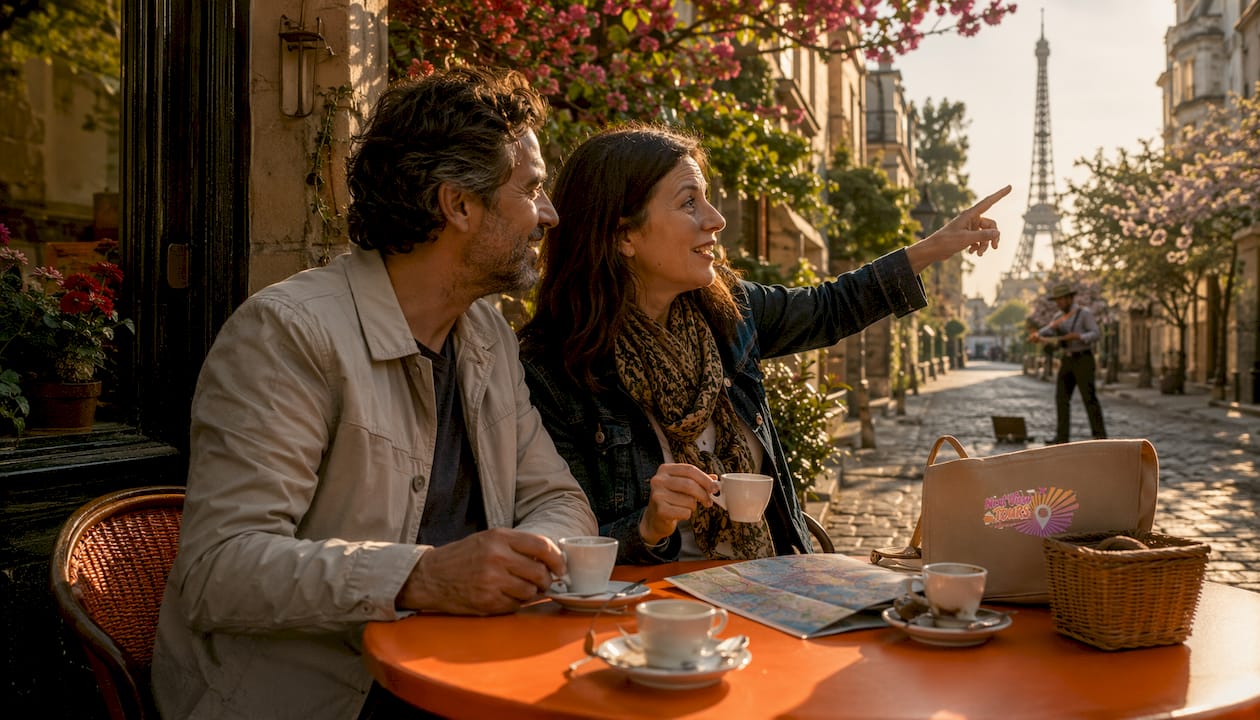
Best time to visit: April through June and September through October offer the best weather with manageable crowds.
Key experiences:
- Pre-book the Louvre and Musée d’Orsay to skip the entrance lines
- Walk the Seine at dusk from the Pont des Arts toward the Île de la Cité
- Take a day trip to Versailles on a Tuesday or Wednesday when it’s less crowded
4. Seville: Andalusia’s most passionate city
Seville is where flamenco feels like a living tradition rather than a performance for tourists. The Real Alcázar, a royal palace with Moorish architecture that influenced the Alhambra in Granada, is one of the most beautiful buildings in Europe. The Cathedral of Seville, the largest Gothic cathedral in the world, contains the tomb of Christopher Columbus. The city’s tapas culture is serious: small plates, cold sherry, and long evenings.
Best time to visit: March through May, or October through November. Seville in July regularly exceeds 100°F.
Key experiences:
- Attend a tablao flamenco show in the Triana neighborhood
- Explore the Real Alcázar early in the morning before tour groups arrive
- Walk the Barrio Santa Cruz, the old Jewish quarter, at sunset
5. Edinburgh: drama built into every stone
Edinburgh’s geography is inseparable from its character. The city grew around a volcanic crag, and Edinburgh Castle sits at its peak, visible from almost everywhere. The Royal Mile connects the castle to the Palace of Holyroodhouse, passing closes (narrow alleyways) that date to the medieval period. Arthur’s Seat, an ancient volcano within the city limits, offers a 45-minute hike with views across the Firth of Forth.
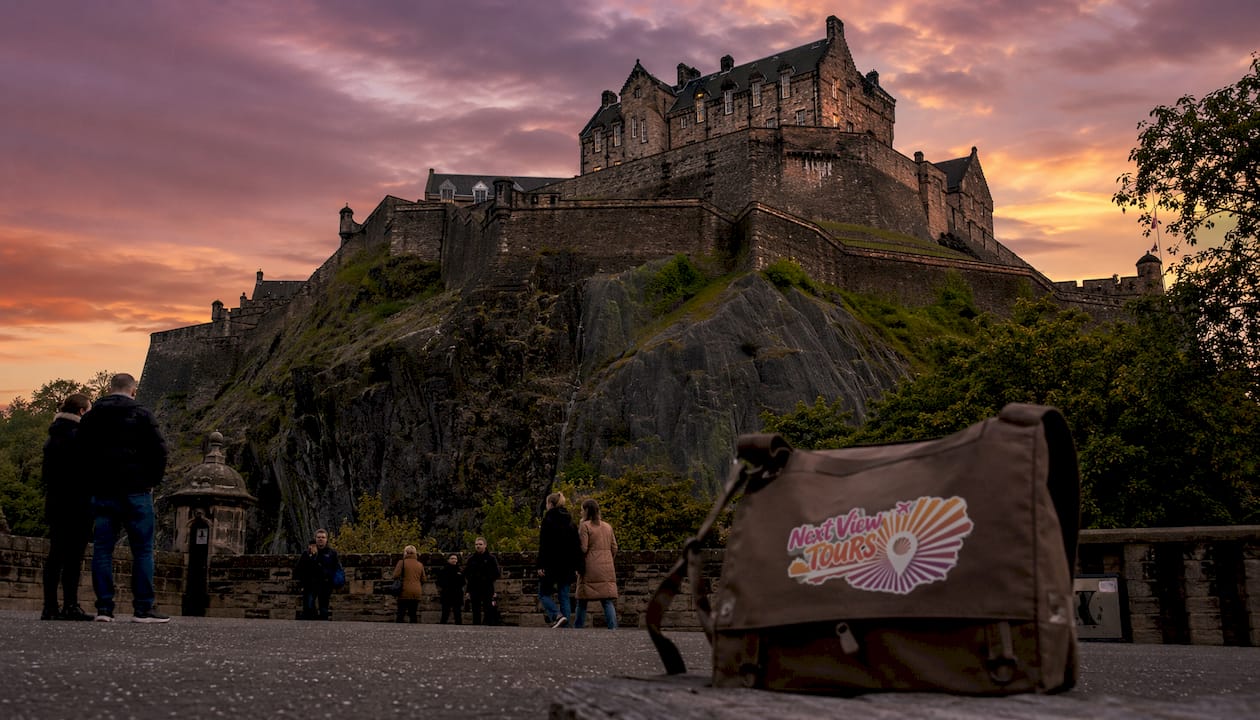
Best time to visit: May through September for the best weather. August brings the Edinburgh Festival Fringe, the world’s largest arts festival, which is extraordinary but extremely busy.
Key experiences:
- Walk the Royal Mile from the castle to Holyroodhouse
- Climb Arthur’s Seat for a perspective on the city that no viewpoint platform can match
- Visit the Scotch Whisky Experience for a serious introduction to Scotland’s defining spirit
6. Prague: a literary city with Gothic bones
Prague’s cultural depth extends well beyond its famous skyline. Designated a UNESCO Creative City of Literature, the city carries the legacy of Franz Kafka, Václav Havel, and a centuries-old tradition of intellectual life. The Old Town Square, with its Astronomical Clock dating to 1410, draws crowds for good reason. But Prague’s real texture lives in its jazz clubs, its Art Nouveau cafes, and its opera houses, which offer world-class performances at a fraction of Western European prices.
Best time to visit: April through May, or September through October. December brings a beautiful Christmas market atmosphere.
Key experiences:
- Cross the Charles Bridge at dawn before the crowds arrive
- Attend an evening opera or classical concert at the Estates Theatre, where Mozart himself conducted
- Explore the Josefov, Prague’s historic Jewish Quarter, for one of Europe’s most moving historical sites
7. Dublin: where history and hospitality overlap
Dublin punches above its size. Trinity College’s Long Room library, home to the Book of Kells, is one of the most visually stunning spaces in Europe. The city’s pub culture is genuinely social rather than performative: conversations with strangers happen naturally, and traditional music sessions appear in ordinary neighborhood pubs without a cover charge. The Guinness Storehouse offers more than a pint at the top; it’s a well-designed museum of Irish industrial and cultural history.
Best time to visit: May through September. Irish weather is unpredictable year-round, but summer offers the longest days and the best chance of sunshine.
Key experiences:
- Visit the Book of Kells at Trinity College early in the day
- Take a day trip to the Cliffs of Moher or the Wicklow Mountains
- Spend an evening in the Liberties or Stoneybatter neighborhoods for local pub culture away from Temple Bar
8. Ljubljana: Europe’s most underrated capital
Ljubljana is the kind of city that makes experienced travelers wonder why they didn’t come sooner. The Slovenian capital is walkable, architecturally beautiful, and genuinely uncrowded compared to its Central European neighbors. The Triple Bridge, designed by architect Jože Plečnik, connects the old town to the modern city over the Ljubljanica River. Ljubljana Castle sits above the city and offers views across the Julian Alps on clear days. As one of the top hidden gems in Europe, it rewards travelers who look beyond the obvious.
Best time to visit: April through October. The city’s outdoor café culture is at its best in summer.
Key experiences:
- Rent a bike and cycle along the Ljubljanica River
- Take a day trip to Lake Bled, one of the most photographed lakes in Europe
- Visit the Central Market on a Friday morning for local produce, cheese, and conversation
9. Marseille: France’s oldest city, still misunderstood
Marseille has a reputation that doesn’t match the reality. France’s second-largest city and its oldest, founded by Greek sailors around 600 BCE, has a raw, multicultural energy that feels nothing like Paris. The MuCEM (Museum of European and Mediterranean Civilisations) is a world-class cultural institution housed in a stunning contemporary building on the waterfront. The Calanques, a series of dramatic limestone inlets just outside the city, offer some of the best coastal hiking in Europe.
Best time to visit: May through June, or September through October. July and August are hot and busy, but the Calanques are at their most vivid.
Key experiences:
- Walk the Vieux-Port (Old Port) at sunrise before the fish market sets up
- Hike or take a boat to the Calanques de Morgiou or Sugiton
- Visit Notre-Dame de la Garde, the basilica that watches over the city from its hilltop
10. Oslo: where Viking history meets modern design
Oslo is expensive by any measure, but it delivers experiences that justify the cost. The Viking Ship Museum houses three of the best-preserved Viking ships in the world, pulled from burial mounds in the Oslo Fjord. The Munch Museum holds the world’s largest collection of Edvard Munch’s work, including multiple versions of The Scream. The city’s waterfront has transformed dramatically in recent years, with the Aker Brygge and Tjuvholmen districts offering architecture, galleries, and seafood restaurants along the fjord.
Best time to visit: May through August for long days and outdoor activities. December offers Christmas markets and the possibility of snow.
Key experiences:
- Visit the Viking Ship Museum before it moves to its new location
- Take the ferry to Bygdøy Peninsula to access multiple museums in one afternoon
- Ride the Holmenkollen ski jump for views over the city and fjord
11. Porto: Portugal’s most soulful city
Porto has a melancholy beauty that’s hard to explain until you’re standing on the Dom Luís I Bridge watching the sun drop behind the Douro River. The city’s historic center, a UNESCO World Heritage Site, climbs steeply from the riverfront through layers of azulejo-tiled buildings, baroque churches, and narrow streets. The port wine lodges of Vila Nova de Gaia, directly across the river, offer tastings in centuries-old cellars. Local cuisine, especially the francesinha sandwich and fresh seafood, is a reason to visit on its own. Understanding how local cuisine shapes travel is key to getting the most from Porto.
Best time to visit: April through June, or September through October.
Key experiences:
- Cross the Dom Luís I Bridge on foot for views in both directions
- Take a Douro River cruise toward the wine country
- Visit the Livraria Lello bookshop, one of the most beautiful in the world
12. Lake Garda: Italy’s most dramatic lake
Lake Garda sits at the meeting point of the Italian Alps and the Po Valley, and the contrast of snow-capped peaks above Mediterranean vegetation is genuinely striking. The lake’s western shore, particularly the towns of Limone sul Garda and Gargnano, offers dramatic cliff-hugging roads and deep blue water. Sirmione, on a narrow peninsula at the southern end, holds Roman ruins, a medieval castle, and natural thermal springs. The lake works well as a base for day trips to Verona (40 minutes by train) or Brescia.
Best time to visit: May through June, or September. July and August are peak season with corresponding crowds and prices.
Key experiences:
- Take a ferry between the lake’s towns rather than driving
- Visit the Scaligero Castle in Sirmione
- Hike above Malcesine for views across the full length of the lake
13. Pamukkale: Turkey’s surreal thermal landscape
Pamukkale, in southwestern Turkey, looks like something from another planet. The site’s white travertine terraces, formed by calcium-rich thermal waters flowing down the hillside over millennia, create a series of natural pools that visitors can wade through. At the top of the terraces sits Hierapolis, an ancient Roman city with a remarkably well-preserved necropolis and theater. The combination of natural wonder and archaeological depth makes Pamukkale one of the most genuinely unusual sites in the broader European travel region.
Best time to visit: April through May, or September through October. Summer heat can be intense.
Key experiences:
- Walk the terraces barefoot (shoes are required to be removed to protect the formations)
- Swim in the Antique Pool at Hierapolis, which contains submerged Roman columns
- Stay overnight in Pamukkale village to see the terraces at sunrise before day-trippers arrive
14. The Greek Islands: a different island for every traveler
The Greek Islands aren’t one destination; they’re dozens, each with a distinct character. Santorini delivers the iconic caldera views and white-washed architecture of Oia. Rhodes holds a medieval fortress city, a UNESCO World Heritage Site, that you can walk through in an afternoon. Crete offers Minoan archaeological sites, gorge hikes through Samaria, and a food culture that rivals the mainland. Corfu has Venetian architecture and lush green hills. The choice of island shapes the entire experience.
Best time to visit: May through June, or September through October. July and August are peak season; Santorini in particular becomes extremely crowded.
Key experiences:
- Watch the sunset from Oia in Santorini (arrive two hours early for a spot)
- Explore the Palace of the Grand Master in Rhodes Old Town
- Hike the Samaria Gorge in Crete, one of Europe’s longest gorges
How to plan your Europe trip without burning out
The single biggest mistake American travelers make in Europe is trying to cover too many countries in too little time. Choosing a travel region rather than a random scatter of countries dramatically simplifies logistics, reduces transit stress, and gives you more quality time in each place. A Mediterranean focus (Italy, France, Spain, Greece) or a Central European focus (Austria, Czech Republic, Hungary, Slovenia) each makes geographic and logistical sense in a way that mixing Scandinavia with the Balkans does not.
Pacing matters more than most travelers expect. Budget at least 2–3 full days per major city, plus buffer days for delays or spontaneous detours. Rushing through Florence in a single afternoon to catch a train to Venice means you’ll remember neither properly.
Transport options by region:
- Rail: Europe’s rail network is the backbone of efficient city-to-city travel. High-speed trains like the Frecciarossa (Italy), AVE (Spain), and Thalys (France/Belgium) link major cities in 2–4 hours, city center to city center, with no airport security theater.
- Budget airlines: Ryanair, easyJet, and Wizz Air connect secondary cities cheaply, but factor in baggage fees and remote airport locations. Best for longer hops (Dublin to Porto, Oslo to Prague) where rail isn’t practical.
- Car rental: Ideal for Lake Garda, the Greek Islands (on larger islands like Crete), and rural areas. Not recommended for city-to-city travel in Western Europe.
Seasonality at a glance:
- Spring (April through May): Best overall. Mild temperatures, blooming landscapes, manageable crowds. Ideal for Florence, Seville, Porto, and the Greek Islands.
- Summer (June through August): Peak season everywhere. Book accommodation and major attractions months in advance. Pamukkale and Scandinavia are at their best; Mediterranean cities are at their most crowded.
- Fall (September through October): Second-best window. Crowds thin, prices drop, and the light is extraordinary. Prague, Edinburgh, and Marseille are particularly good in fall.
- Winter (November through February): Best for Christmas markets (Vienna, Prague, Strasbourg) and avoiding crowds at major museums. Not ideal for the Greek Islands or Lake Garda.
Flights: Open-jaw flights (flying into one city, departing from another) save multiple travel days and eliminate backtracking. Flying into Rome and out of Lisbon, for example, lets you move logically westward through Italy, France, and Portugal without retracing your steps.
The Schengen Area covers over 29 European countries, meaning you cross borders without repeated passport checks. This makes multi-destination itineraries far more fluid than they might seem on paper.
Pro Tip: For overcrowded sites like Dubrovnik’s Old Town or Santorini’s Oia, arrive early morning before cruise ship passengers disembark, or consider nearby alternatives. Zadar on Croatia’s Dalmatian Coast, for instance, offers Roman ruins, a medieval old town, and the famous Sea Organ with a fraction of Dubrovnik’s crowds.
What Nextviewtours knows that most travel guides miss
Most travel guides tell you where to go. Fewer tell you how to actually experience a place rather than just photograph it. Nextviewtours operates across Central and Western Europe with guided and customizable tours departing from Vienna, Salzburg, Prague, Budapest, and Hallstatt, and the philosophy behind every itinerary is the same: depth over distance.
A guided tour through Prague’s Jewish Quarter with someone who understands the neighborhood’s history changes what you see. A private day trip from Vienna to Hallstatt means you arrive before the Instagram crowds and leave when you want. Group tours create the kind of spontaneous connections with fellow travelers that solo itineraries rarely produce. The multi-country touring approach Nextviewtours uses is built around exactly the regional logic described above: coherent geographic clusters that maximize what you experience without exhausting you.
What experienced travelers consistently overlook:
- The value of a local guide who can get you into a restaurant that doesn’t appear on any app
- The difference between seeing a cathedral and understanding what it meant to the people who built it
- How much energy you save when someone else handles transport, timing, and logistics
- The cultural touchpoints that only reveal themselves when you slow down: a morning market, a neighborhood church, a conversation with a shopkeeper
Nextviewtours offers family-friendly tours, private experiences, adventure trips, and group departures across the destinations covered in this guide. The range of formats means you can match the tour structure to how you actually travel, not to a generic itinerary built for the average visitor.
Sample itineraries connecting Europe’s best destinations
Planning a multi-destination trip works best when the geography makes sense. These three itineraries connect the must-see cities above into logical, low-stress routes.
10 days in Central Europe
Vienna → Salzburg → Hallstatt → Prague → Budapest
This is one of the most rewarding routes in Europe for first-time visitors. Vienna’s imperial palaces, concert halls, and coffee house culture set the tone. Salzburg, two hours west by train, offers Mozart’s birthplace and the backdrop for The Sound of Music. Hallstatt, a short bus and ferry ride from Salzburg, is a lakeside village so picturesque it inspired a replica in China. Prague adds Gothic architecture and Bohemian culture. Budapest closes the loop with thermal baths, ruin bars, and the Danube at night.
Logistics: All five destinations connect by rail or regional bus. No flights needed. Total travel time between cities averages 2–3 hours.
12 days in the Mediterranean
Barcelona → Seville → Lisbon → Porto
Start in Barcelona for Gaudí’s architecture and the Gothic Quarter, then take the AVE high-speed train to Seville (2.5 hours) for Andalusian culture. Cross into Portugal by bus or train to Lisbon, then take a short train north to Porto. This route moves logically westward, ending at Porto’s airport for a direct flight home.
Logistics: The AVE train between Barcelona and Seville is one of Europe’s best rail experiences. The Lisbon to Porto train runs frequently and takes about three hours.
14 days in Italy and Greece
Florence → Venice → Athens → Santorini → Rhodes
Fly into Florence, spend three days in the Renaissance city, then take the high-speed train to Venice for two nights. Fly from Venice to Athens, explore the Acropolis and the National Archaeological Museum, then take a ferry or short flight to Santorini. Close with Rhodes, whose medieval Old Town is one of the best-preserved in Europe. Fly home from Rhodes.
Logistics: The Florence to Venice train takes about two hours. Ferry connections between Greek islands are frequent in summer but require advance booking in July and August.
Getting between Europe’s top destinations: what actually works
The practical question for American travelers isn’t whether Europe is accessible. It’s which transport mode makes sense for which leg of the trip.
Rail is the default for distances under 500 miles. The Eurostar connects London to Paris in about two hours and fifteen minutes. Italy’s Frecciarossa covers the Florence to Venice route in two hours. Spain’s AVE links Madrid to Barcelona in two and a half hours. These trains arrive at city-center stations, which means no 45-minute taxi ride from a remote airport. For a multi-destination Europe trip, rail passes (Eurail or Interrail for non-EU residents) can offer good value when you’re covering multiple countries in one trip.
Ferries matter more than most Americans expect. The Greek Islands, Croatia’s Dalmatian Coast, and the Norwegian fjords all rely on ferry networks that are efficient, scenic, and often the only practical way to move between destinations. Book ferry tickets in advance for summer travel, particularly for popular routes like Athens to Santorini.
Budget airlines fill the gaps rail can’t. Connections like Oslo to Prague, Dublin to Lisbon, or Edinburgh to Marseille don’t have practical rail alternatives. Budget carriers make these routes affordable, but read the baggage policies carefully before booking. A “cheap” flight with checked luggage fees can cost more than a train ticket.
Within cities, public transit is almost always the right answer. Rome’s metro is limited but its bus network covers the city. Prague’s tram system is excellent. Vienna’s U-Bahn is one of the best urban transit systems in Europe. Renting a car in a major European city is rarely worth the cost or the stress of navigating narrow medieval streets.
Accessibility considerations: Most major European train stations and airports have elevator access and assistance services for travelers with mobility needs. The older parts of cities like Venice, Dubrovnik, and Santorini involve significant stairs and uneven cobblestones. If accessibility is a priority, Ljubljana, Porto’s flat waterfront, and Oslo’s modern infrastructure are among the more manageable options.
Key Takeaways
Europe’s most rewarding trips in 2026 combine geographic focus with adequate time per destination, ideally 2–3 days per major city, rather than racing through as many countries as possible.
| Point | Details |
|---|---|
| Choose a travel region | Focusing on one region (Mediterranean, Central Europe) reduces transit stress and increases quality time per destination. |
| Pace your itinerary | Budget at least 2–3 full days per major city plus buffer days to avoid travel fatigue and rushed experiences. |
| Use open-jaw flights | Flying into one city and departing from another saves travel days and eliminates backtracking across the continent. |
| Rail connects the major cities | High-speed trains like the Frecciarossa, AVE, and Eurostar link key cities in 2–4 hours, city center to city center. |
| Nextviewtours for guided depth | Nextviewtours offers private, group, and customized tours departing from Vienna, Prague, Budapest, and beyond for travelers who want expert-led experiences across Central and Western Europe. |
Why the “see everything” approach is the wrong goal
The conventional wisdom about European travel, especially among first-time visitors from the United States, is that more destinations equal a better trip. Cover twelve cities in three weeks and you’ve “done” Europe. This thinking produces exhausted travelers with a collection of photographs and very few actual memories.
The destinations in this guide are genuinely worth your time. But the ones that stay with you are almost always the ones where you slowed down long enough to understand what you were looking at. Prague’s Astronomical Clock is impressive for thirty seconds. The story of the medieval craftsmen who built it, the political history embedded in its symbolism, and the literary culture that grew up around it are what make the city worth three days.
Families traveling with children often find that one well-chosen destination with a mix of history, outdoor space, and flexibility produces a better trip than an ambitious multi-country sprint. Couples tend to remember the evenings in Porto or the afternoon on Lake Garda more than the fifth cathedral of the week. Solo travelers often find that a guided group tour through Central Europe creates connections and context that independent travel, for all its freedom, doesn’t always provide.
The Greek Islands are a good example of this principle. Santorini’s sunset is on every bucket list, and it deserves to be. But travelers who spend a week on Crete, hiking the Samaria Gorge, eating in village tavernas, and visiting the Minoan ruins at Knossos, come home with something richer than a postcard view. Both experiences are valid. The question is what kind of traveler you are and what kind of trip you want to remember.
Europe rewards the curious and the patient. The must-see destinations in this guide are starting points, not checkboxes.
See Europe the way it deserves to be seen with Nextviewtours
Knowing where to go is only half the equation. Getting there with the right guide, the right group size, and an itinerary built around what you actually care about is what separates a good trip from one you talk about for years.
Nextviewtours offers private, group, and customized tours departing from Vienna, Salzburg, Prague, Budapest, and Hallstatt, covering the destinations in this guide and dozens more across Central and Western Europe. Whether you want a single day trip from Vienna to Hallstatt, a multi-day route through the Czech Republic and Slovakia, or a fully customized private itinerary built around your interests, the options are there. Expert local guides handle the logistics, the context, and the cultural depth that transforms a list of places into a real experience. Browse the full range of tour formats and departures and book the one that fits how you travel.


Comments are closed