

 Uncategorized
TL;DR:
- European all-inclusive tours offer comprehensive packages including lodging, meals, activities, and transit.
- They are ideal for first-time visitors, families, and travelers seeking convenience and structured experiences.
- Choosing the right tour involves checking detailed inclusions, understanding flexibility, and aligning with personal travel preferences.
Most travelers picture a beachside resort when they hear “all-inclusive.” But across Europe, all-inclusive tours have evolved into something far richer: curated journeys through ancient cities, alpine landscapes, and cultural heartlands where every detail is handled for you. Whether you’re a first-time visitor to Prague or a seasoned traveler eyeing a multi-day Danube adventure, understanding what all-inclusive really means can transform how you plan and experience your trip. This guide breaks down the concept, compares your options, and helps you decide if this travel style fits your next European adventure.
Table of Contents
- Defining all-inclusive tours: More than just resorts
- Key features of all-inclusive tours in Europe
- Comparing all-inclusive vs. customizable and group tours
- When and why to choose an all-inclusive tour
- A traveler’s perspective: The real value of all-inclusive tours
- Explore your all-inclusive tour options with Next View Tours
- Frequently asked questions
Key Takeaways
| Point | Details |
|---|---|
| Comprehensive travel solution | All-inclusive tours cover lodging, meals, activities, and transit, making travel seamless. |
| Variety across Europe | Europe offers all-inclusive tours for cities, countryside, adventures, and themed trips. |
| Easy comparison for planning | Comparing all-inclusive with customizable and group tours helps you match your needs. |
| Convenience and value | All-inclusive packages save time and reduce stress, especially for new or busy travelers. |
| Expert advice matters | Careful review of inclusions maximizes your enjoyment and avoids unexpected costs. |
Defining all-inclusive tours: More than just resorts
The phrase “all-inclusive” gets used loosely, and that’s where confusion begins. In the resort world, it typically means unlimited food and drinks at a fixed location. In European travel, the concept stretches much further. An all-inclusive tour bundles together the core elements of a trip so you’re not piecing things together from a dozen different booking platforms.
At its heart, an all-inclusive European tour covers lodging, meals, activities, and transit, offering travelers a complete vacation package. You arrive, and the experience unfolds around you. No scrambling for train tickets. No debating which restaurant to trust. No surprise costs at checkout.
“All-inclusive tours in Europe include lodging, meals, activities, and transit, offering travelers a comprehensive vacation package.”
But the real story is what sits beyond that baseline. European all-inclusive tours come in many shapes:
- City-focused cultural tours: Multi-day experiences in Vienna, Budapest, or Prague with guided museum visits, local dining, and transfers included
- Adventure and nature trips: Hiking tours through the Austrian Alps or Slovak countryside with gear, guides, and meals covered
- Themed experiences: Wine tours, Christmas market circuits, or historical heritage journeys with curated itineraries
- Day trips with full inclusions: Single-day excursions from cities like Salzburg or Vienna where transport, entry fees, and a guide are all part of the package
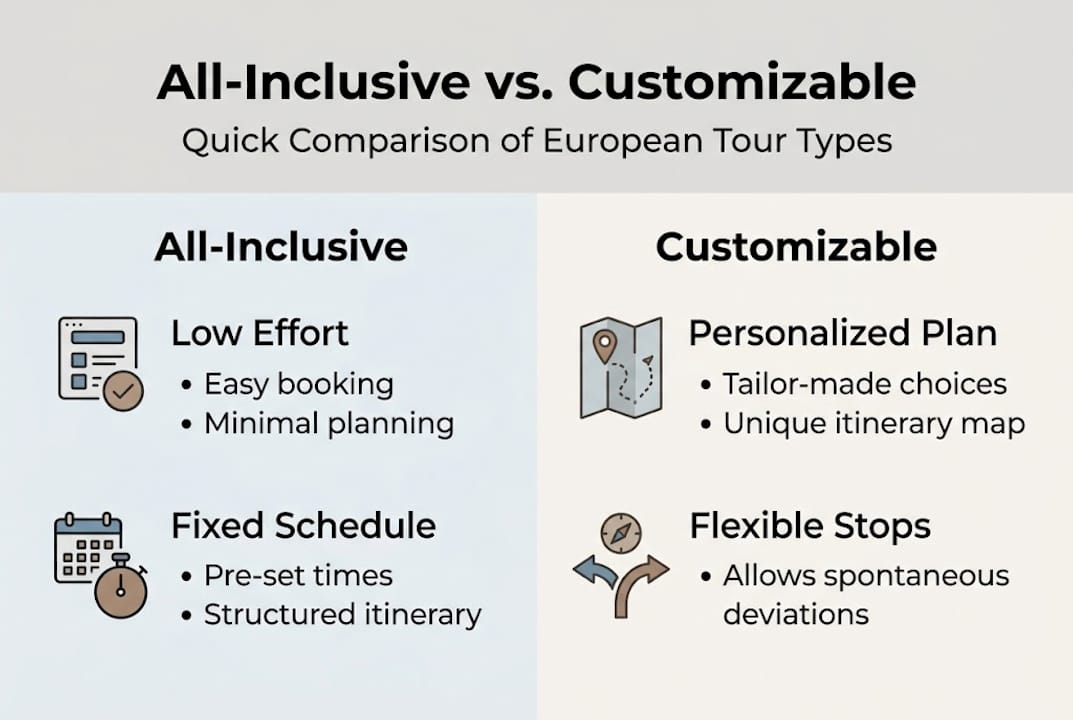
One important distinction is the difference between a fixed itinerary and a flexible one. Some all-inclusive tours follow a strict schedule, which works beautifully for travelers who want everything decided. Others allow a degree of personalization within the package structure. If you want to understand how group tours work alongside all-inclusive options, the format matters a lot.
The European context also adds unique value. Unlike tropical resort packages, European all-inclusive tours often incorporate rich historical and cultural layers. You’re not just visiting a place; you’re moving through centuries of architecture, art, and tradition with an expert at your side. That’s a fundamentally different kind of travel experience.
Key features of all-inclusive tours in Europe
Now that we know what defines all-inclusive tours, let’s break down their key features and components, especially in the European travel landscape.
The foundation of any good all-inclusive package is what’s actually covered. European all-inclusive tours can include guided sightseeing, cultural workshops, and exclusive group activities that you simply wouldn’t find booking independently. Here’s a comparison of what’s typically included across common European tour types:
| Feature | Day trips | Multi-day tours | Adventure tours |
|---|---|---|---|
| Transportation | Yes | Yes | Yes |
| Accommodation | No | Yes | Yes |
| Meals | Partial | Full board | Full board |
| Guided excursions | Yes | Yes | Yes |
| Entry tickets | Yes | Yes | Varies |
| Cultural workshops | Sometimes | Often | Rarely |
Beyond the basics, the real differentiators are the extras. Skip-the-line tickets at popular sites like Hallstatt or the Vienna State Opera save hours of waiting. Local expert guides add layers of meaning to places that might otherwise feel like a quick photo stop. Some packages even include exclusive evening events or private venue access.
Here’s how to identify what’s truly included before you book:
- Read the full itinerary, not just the highlights summary
- Look for a specific inclusions list with line items
- Check for a “not included” section, which reputable providers always publish
- Ask about group size, since smaller groups often mean more personalized attention
- Confirm whether tips, personal purchases, and optional upgrades are extra
Exploring winter tour benefits is a great example of how seasonal all-inclusive packages add extra value through curated experiences that match the time of year.
Pro Tip: The best all-inclusive tours are transparent about what they don’t cover. If a provider buries the exclusions or makes them hard to find, treat that as a warning sign.
Comparing all-inclusive vs. customizable and group tours
Having explored what’s included in all-inclusive tours, let’s compare them with customizable and group options.
Customizable tours differ from all-inclusive packages by offering tailored activity choices, flexibility, and often higher costs. That flexibility is genuinely valuable for travelers with very specific interests or schedules, but it also means more planning work on your end.
Here’s a side-by-side comparison to help you think through the decision:
| Feature | All-inclusive tours | Customizable tours | Group tours |
|---|---|---|---|
| Planning effort | Low | High | Low |
| Flexibility | Moderate | Very high | Low |
| Cost predictability | High | Variable | High |
| Social experience | Moderate | Low | High |
| Personalization | Moderate | Very high | Low |
| Best for | Convenience seekers | Independent travelers | Social travelers |
Each format has a clear audience. Understanding the group tour definition helps clarify why some travelers prefer the social energy of a shared itinerary, while others want the freedom to linger at a gallery or skip a scheduled stop entirely.
Who benefits most from each option:
- All-inclusive tours: Families, first-time visitors, busy professionals, and travelers who want peace of mind
- Customizable tours: Experienced travelers, those with niche interests, and people revisiting a destination
- Group tours: Solo travelers seeking community, budget-conscious travelers, and those who enjoy shared discovery
The trade-off with all-inclusive tours is real. You gain convenience and cost certainty, but you give up some spontaneity. If you’ve ever spent two hours debating where to eat in an unfamiliar city, you’ll understand why many travelers happily make that trade.

When and why to choose an all-inclusive tour
After understanding comparisons, it’s important to know when and why to choose an all-inclusive tour for your next European adventure.
All-inclusive tours are ideal for first-time European visitors, families, and travelers seeking convenience over unplanned adventure. That’s not a limitation; it’s a feature. Knowing your travel style honestly is the first step to a great trip.
Here are the key factors to consider before booking:
- Time constraints: If you have limited days in Europe, an all-inclusive tour maximizes every hour without wasted logistics
- Familiarity with the destination: First-time visitors to Central Europe benefit enormously from a guided framework
- Travel group composition: Families with young children or older adults often find all-inclusive formats far less stressful
- Budget clarity: Knowing the total cost upfront helps with financial planning and avoids surprise expenses
- Language barriers: Having a guide who speaks the local language and navigates cultural nuances is genuinely valuable
Understanding the difference between group and private tours also matters here. Private all-inclusive tours offer maximum flexibility within a fully managed framework, while group versions bring cost savings and social energy.
There are pitfalls to watch for, too. Some all-inclusive packages pad their schedules with low-quality stops or mandatory shopping visits. Others have hidden costs for meals that aren’t at partner restaurants. Knowing how to prepare for group tours before you travel helps you ask the right questions and set realistic expectations.
Pro Tip: Book all-inclusive tours that publish real traveler reviews with specific details about what was and wasn’t included. Vague praise is less useful than a review that says “lunch on day two was not included despite the listing.”
A traveler’s perspective: The real value of all-inclusive tours
Here’s what most travel articles won’t tell you: the greatest value of an all-inclusive tour isn’t the money you save. It’s the mental space you reclaim.
When every logistical decision is made for you, something shifts. You stop managing your trip and start experiencing it. You notice the detail on a Baroque facade in Vienna because you’re not simultaneously calculating train times or hunting for a cash machine. That shift from manager to participant is where the real joy lives.
Veteran travelers often discover this after several independent trips. The freedom of planning everything yourself is genuinely exciting the first few times. But after your third missed connection or fourth mediocre meal chosen out of exhaustion, the appeal of a well-organized package becomes clear.
All-inclusive tours also surface experiences you’d never find alone. A local guide who grew up near Hallstatt knows stories no guidebook captures. A deeper look at customization options shows that even within structured packages, there’s often room to personalize the moments that matter most to you.
The honest truth is that convenience and depth are not opposites. The best all-inclusive tours in Europe prove that every single day.
Explore your all-inclusive tour options with Next View Tours
If you’re ready to find an all-inclusive tour that suits your style, here’s an easy way to start exploring top options.
At Next View Tours, we offer a wide range of European tours designed for every kind of traveler. From day trips out of Vienna, Salzburg, and Prague to multi-day adventures across Europe, our packages are built around genuine experiences, not just checked boxes. Whether you’re traveling solo, with family, or as a couple, you’ll find options that match your interests and budget. Browse our full range of trip types and formats to see what’s available, and reach out to our team for personalized recommendations. Your next European adventure is closer than you think.
Frequently asked questions
Are all-inclusive tours always the best value?
All-inclusive tours often provide great value through bundled pricing and convenience, but customizable tours may offer more flexibility for travelers with very specific interests or itineraries.
What is typically not included in an all-inclusive tour?
Personal expenses, optional upgrades, and tips are usually not covered, even when guided sightseeing and cultural workshops are part of the package.
Do all-inclusive tours work for solo travelers?
Absolutely. All-inclusive tours are ideal for solo travelers who want built-in social experiences, safety, and the convenience of not planning everything alone.
How can I check if a tour is truly all-inclusive?
Review the detailed inclusions list from the provider; reputable companies like those offering complete vacation packages always publish a clear breakdown of what’s covered.
What types of destinations offer all-inclusive tours in Europe?
From Vienna and Budapest to alpine nature reserves and Czech countryside, European all-inclusive tours span cities, cultural sites, and adventure landscapes across the continent.


Comments are closed