
 Uncategorized
TL;DR:
- Customizing family trips ensures activities suit all ages and interests for a memorable experience.
- Matching destinations to family needs involves considering accessibility, activities, and atmosphere.
- Working with expert planners creates personalized itineraries that enhance comfort and enjoyment.
Standard family tours often leave someone unhappy. The teens are bored at the museum, the grandparents are exhausted after the third hike, and the little ones are melting down before lunch. Sound familiar? Generic itineraries are built for the average traveler, not for your specific family. The good news is that Europe is one of the most customizable travel destinations on the planet, offering everything from Alpine adventures to Renaissance art galleries to cycling trails through tulip fields. This guide walks you through a proven, step-by-step method to design a European family trip that genuinely works for every age, interest, and energy level in your group.
Table of Contents
- Identify your family’s preferences and travel style
- Select the best destinations for your family
- Collaborate with expert planners for tailored itineraries
- Add personal touches and confirm the details
- Why cookie-cutter tours rarely work for families
- Ready to design your family’s perfect Europe tour?
- Frequently asked questions
Key Takeaways
| Point | Details |
|---|---|
| Start with preferences | Clarifying your family’s interests and travel styles is the foundation for a successful custom tour. |
| Choose destinations wisely | Pick European locations that blend adventure, culture, and nature for all ages. |
| Work with experts | Tour experts can tailor flexible, age-appropriate itineraries and suggest local gems. |
| Personal touches matter | Special experiences and thoughtful details turn a good family trip into an unforgettable adventure. |
Identify your family’s preferences and travel style
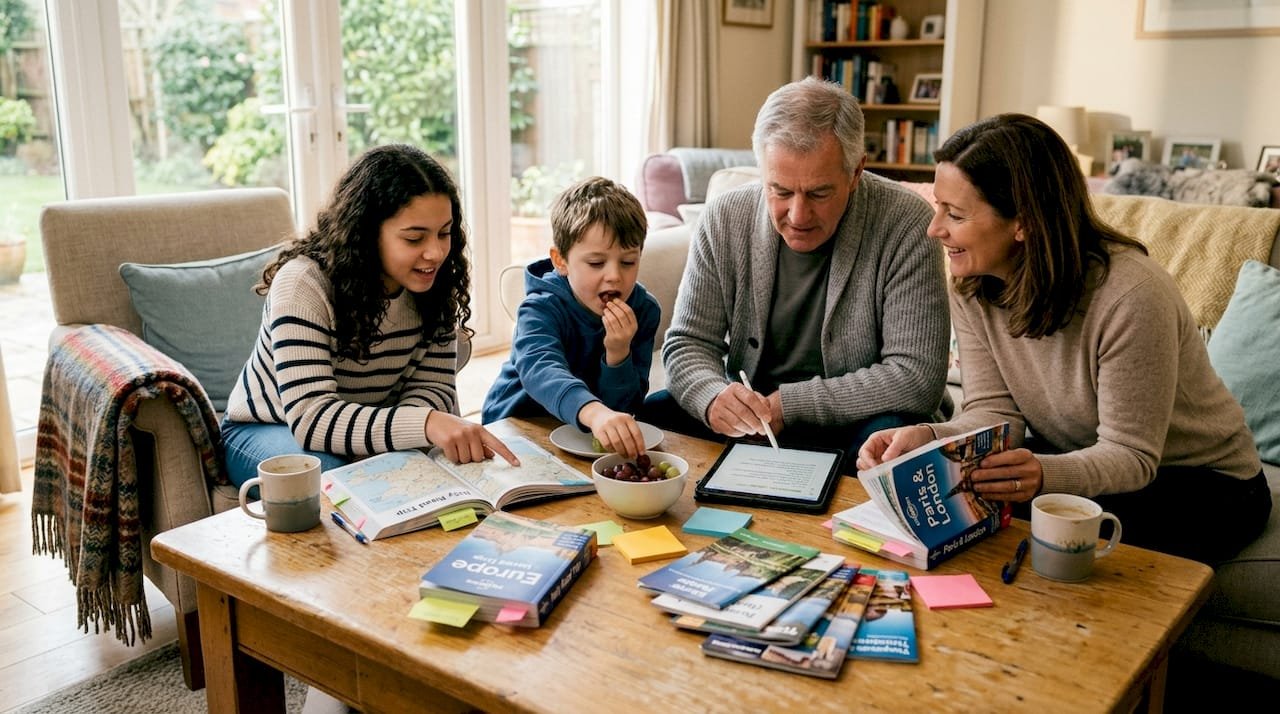
With the need for customization understood, the first step is digging into your family’s preferences. Before you open a single travel website, sit down together and have an honest conversation. What does each person actually want from this trip? You might be surprised by the answers.
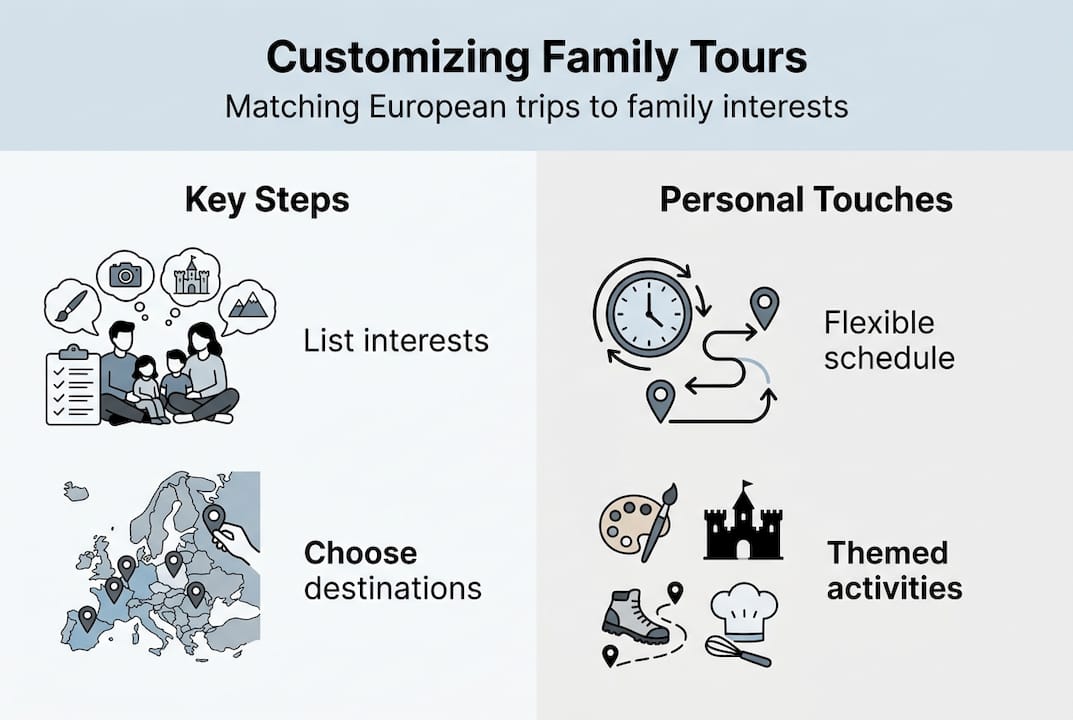
Customizing family tours starts with identifying interests such as adventure, culture, and nature, alongside travel style, comfort levels, and group dynamics. That framework sounds simple, but it carries real weight. A family with a seven-year-old, a fourteen-year-old, and two grandparents has four completely different sets of needs. Recognizing that upfront saves enormous frustration later.
Here are the most common interest categories families tend to fall into:
- Adventure seekers: Hiking, zip-lining, white-water rafting, cycling routes
- Culture lovers: Museums, historic castles, local markets, cooking classes
- Nature enthusiasts: National parks, lake districts, mountain landscapes, wildlife spotting
- Relaxation-focused: Spa towns, scenic train rides, slow-paced village walks
- Food and experience driven: Street food tours, farm visits, vineyard tastings (for adults)
Beyond interests, consider your family’s travel style. Do you prefer a packed schedule or long, lazy mornings? Are you comfortable with rustic accommodations, or do you need certain amenities for young children or elderly travelers? Understanding how family tours work in terms of pacing and structure helps you set realistic expectations before you commit to anything.
Group dynamics matter enormously here. Toddlers need nap windows and short walking distances. Teenagers need moments of independence and activities that feel genuinely exciting, not educational in a forced way. Grandparents may need accessible transport, comfortable seating, and a slower pace overall. When you map these needs honestly, you create the foundation for an itinerary that nobody has to merely tolerate.
Pro Tip: Create a simple shared document where each family member lists their top three must-haves and one hard no. Reviewing these together before planning removes guesswork and prevents last-minute disappointments. You can also check out family travel tips for Europe for more practical preparation strategies.
Select the best destinations for your family
Once interests are defined, it’s time to translate preferences into ideal European destinations. Not every city or region suits every family, and matching the right place to your group’s profile makes all the difference.
Over 80 million families travel to Europe each year, which means the infrastructure for family travel is well-developed across the continent. Still, some destinations stand out more than others depending on what your family values most.
| Destination | Best for | Key features |
|---|---|---|
| Switzerland | Adventure and nature | Alps, hiking, cable cars, scenic trains |
| Netherlands | Culture and biking | Flat terrain, world-class museums, bike-friendly cities |
| Italy | Culture and food | Ancient ruins, Renaissance art, regional cuisine |
| Austria | Mix of all | Vienna’s history, Hallstatt’s nature, Salzburg’s music |
| Czech Republic | History and affordability | Prague’s architecture, medieval towns, accessible transport |
Popular family destinations include Switzerland, the Netherlands, and Italy, allowing for a natural balance of adventure, nature, and culture depending on your priorities. Austria and the Czech Republic are equally strong choices, especially for families who want rich history without overwhelming crowds.
When evaluating any destination, ask yourself these questions:
- Is public transportation accessible for strollers or mobility aids?
- Are there activities suitable for the youngest and oldest members of your group?
- Does the region offer a mix of indoor and outdoor options in case of weather changes?
- Are family-friendly accommodations available at a reasonable price point?
- Is the destination safe and well-reviewed by other traveling families?
Balancing urban and rural settings also adds depth to your trip. A few days in Vienna followed by a retreat to the Austrian lake district gives your family both cultural stimulation and natural calm. Cities offer museums, restaurants, and entertainment. Countryside settings offer breathing room, slower pacing, and often the most memorable moments of the whole trip.
For a deeper look at matching places to your family’s profile, the full guide to family-friendly trips covers destination-by-destination breakdowns in detail. You can also browse examples of family tours to see how real itineraries are structured across different European regions.
Collaborate with expert planners for tailored itineraries
Selecting where to go is only half the work. Now ensure the itinerary truly fits your family by leveraging expert help. Many families underestimate how much value a skilled tour planner adds, especially when the group has diverse needs.
| Approach | Pros | Cons |
|---|---|---|
| DIY planning | Full control, potentially lower cost | Time-intensive, easy to miss key details |
| Expert planner | Personalized, stress-free, insider knowledge | Higher upfront cost |
| Group tour | Affordable, social | Less flexible, generic pacing |
Custom and private tours excel in personalization but cost more compared to standard group tours, making them ideal for families who want a narrative journey rather than a checklist of sights. The difference between ticking off landmarks and actually connecting with a place is significant, especially when children are involved.
An expert planner does more than book hotels. They align every detail to your family’s interests, recommend age-appropriate activities, build in strategic downtime, and often have access to exclusive experiences that aren’t listed on general booking platforms. Think private after-hours museum visits, guided foraging walks, or a cooking class in a local family’s kitchen.
Important: The cost of a custom tour reflects the depth of planning and local expertise behind it. Families who invest in professional guidance consistently report higher satisfaction and fewer on-the-ground surprises. Think of it as paying for peace of mind, not just logistics.
Flexibility is another major advantage. A good planner builds themed days into your schedule, so a history-loving parent and an adventure-hungry teenager can both find their moments. Understanding the difference between private and group tours helps you decide which model fits your budget and expectations. You can also explore what defines a great family tour to set the right benchmarks before you start conversations with any provider.
Pro Tip: When speaking with a tour planner, bring your family’s shared document from Step 1. A good planner will use those priorities to shape the itinerary rather than offering you a pre-built package with minor adjustments.
Add personal touches and confirm the details
With main elements set, the last phase is making your journey truly yours and ensuring nothing is overlooked. This is where good trips become great ones.
Adding personal touches like themed experiences, special events, or local surprises, followed by a thorough review of all details before confirming, transforms a well-organized trip into a genuinely memorable one. Here’s how to approach this final phase:
- Choose themed days that reflect each family member’s passion. A cooking day in Bologna, a cycling day through Amsterdam’s canals, or a castle exploration day in Slovakia can give structure and excitement to your schedule.
- Plan special moments for birthdays, anniversaries, or family reunions. A private boat on Lake Bled or a candlelit dinner in a Prague courtyard adds emotional weight to the trip.
- Balance education with relaxation. Build in unscheduled afternoons where the family simply wanders, discovers a local café, or rests. These moments often become the most talked-about memories.
- Confirm accommodation details carefully. Connecting rooms, family apartments, and ground-floor access for strollers or mobility aids matter more than most families realize until they arrive.
- Review your final itinerary for pacing. If every day is packed from morning to night, something needs to come out. Fatigue is the fastest way to ruin a family trip.
Browse sample themed family experiences to spark ideas for your own itinerary. Understanding the importance of tour personalization also helps you communicate your vision clearly to any provider you work with.
Pro Tip: Print or save a one-page summary of your itinerary with emergency contacts, accommodation addresses, and daily highlights. Share it with every adult in the group before departure so everyone feels informed and confident.
Why cookie-cutter tours rarely work for families
Having covered each step, it’s worth considering why truly customized planning makes all the difference for families. Generic tours are designed for efficiency, not connection. They move at a pace that suits the average adult traveler, skip the spontaneous moments that children love, and offer little room for a slow morning when someone wakes up exhausted.
The conventional wisdom says group tours save money and simplify logistics. That’s true. But saving money on a trip that half your family doesn’t enjoy isn’t actually saving anything. The real cost is the missed opportunity for shared engagement, which is what family travel is ultimately about.
Small tweaks carry enormous impact. Swapping one museum visit for a hands-on craft workshop. Adding a picnic stop in a meadow instead of another restaurant lunch. Letting the teenagers choose one full afternoon activity. These adjustments cost almost nothing but change the emotional texture of the entire trip.
For families, the reasons to book family tours that are truly personalized go beyond preference. They go to the heart of why you travel together in the first place: to build shared memories that belong only to your family. A checklist of famous sights fades quickly. A story your kids still tell ten years later does not.
Ready to design your family’s perfect Europe tour?
If this approach resonates, here are your next steps for expert help and inspiration. At Next View Tours, we specialize in building European family experiences that fit your group, not the other way around.
Whether you’re drawn to the cultural layers of Vienna and Prague, the natural beauty of the Austrian Alps, or the historic streets of Budapest and Salzburg, we can shape an itinerary around what your family actually loves. Explore our expert guide to customized tours to see how the process works, get inspired by our private tour customization tips, or browse all available trip types to find the right starting point for your family’s European adventure.
Frequently asked questions
What are the advantages of customizing a family tour in Europe?
Custom and private tours offer greater personalization and flexibility than standard group tours, letting you choose age-appropriate activities, set your own pace, and select accommodations that genuinely suit your family’s needs.
How do I balance different family interests on a European trip?
Start by listing each person’s priorities, then rotate themed days so everyone gets their moment. Tour customization lets you blend adventure, culture, and nature into a single itinerary without forcing any one experience on the whole group.
Are custom family tours more expensive than group tours?
Yes, tailored experiences cost more but deliver exclusive access, flexible scheduling, and a level of satisfaction that generic group tours rarely match for families with diverse needs.
What makes a destination family-friendly in Europe?
Family-friendly destinations prioritize safety, diverse activity options, good transport infrastructure, and accommodations that work for children and multigenerational groups traveling together.
Recommended
- Family Tours Explained: Creating Unforgettable Europe Trips – Next View Tours
- How to Customize Private Tours for Unique European Experiences – Next View Tours
- 7 Smart Customised Tour Ideas for Your Next European Adventure – Next View Tours
- Why book family tours for Europe trips in 2026 – Next View Tours
- Disneyland Paris must-sees 2026: Familienfreundlich


Comments are closed