
 Uncategorized
TL;DR:
- Adventure tourism combines physical activity, nature, and cultural immersion to create transformational travel experiences. It is a rapidly growing industry valued at $1.3 trillion and includes both hard and soft activities suitable for diverse fitness levels. Authentic experiences emphasize active participation, cultural exchange, and environmental responsibility, promoting deeper engagement and lasting memories.
Adventure tourism is defined as travel that intentionally combines at least two of three core elements: physical activity, connection with nature, and cultural immersion. This industry-standard definition separates adventure tourism from casual sightseeing and positions it as one of the fastest-growing sectors in global travel. The global adventure tourism market is projected to reach $1.3 trillion, reflecting how deeply travelers now crave experiences that challenge and transform them. The biggest misconception is that you need to be an elite athlete to participate. Curiosity and willingness to engage are the real entry requirements.
What is adventure tourism, and how is it defined?
Adventure tourism is the practice of traveling to participate in experiences that push you beyond your everyday comfort zone through physical engagement, natural settings, or cultural exchange. The Adventure Tourism Development Index recognizes that a trip qualifies as adventure tourism when it satisfies at least two of those three pillars. That threshold matters because it rules out passive beach vacations while including experiences as varied as hiking in the Austrian Alps, kayaking through sea caves in Croatia, or joining a cooking class in a local Czech home.
The term “adventure travel” is used interchangeably with adventure tourism in most industry contexts. Both refer to the same category of intentional, active, and immersive travel. What makes this definition powerful is its flexibility. You do not need to jump from a plane or scale a glacier. A guided wildlife tracking walk in Slovakia that immerses you in local ecology and forest traditions qualifies fully under the definition.
The core adventure market represents 45% of European outbound travelers. That figure signals that adventure tourism is not a niche pursuit. It is the dominant mode of meaningful travel for nearly half of all Europeans traveling abroad.
How does adventure tourism differ from ecotourism and traditional travel?
Adventure tourism, ecotourism, and traditional tourism are related but distinct. Understanding the differences helps you choose the right experience and set accurate expectations before you book.
Traditional tourism is largely passive. You visit landmarks, take photographs, and consume experiences prepared for you. The traveler remains a spectator. A bus tour through Vienna’s Ringstrasse qualifies as traditional tourism. You observe the architecture but do not engage with it physically or culturally beyond surface-level appreciation.
Ecotourism focuses on environmental education and conservation. The primary goal is to minimize ecological impact while learning about natural systems. Travelers who visit a protected wetland reserve in Hungary to observe migratory birds are participating in ecotourism. The emphasis is on understanding and preserving, not on personal physical challenge.
Adventure tourism prioritizes active physical engagement and personal challenge alongside nature and culture. The traveler is a participant, not an observer. Here is how the three sectors compare across key dimensions:
- Level of physical activity: Traditional tourism is low; ecotourism is low to moderate; adventure tourism is moderate to high.
- Primary goal: Traditional tourism seeks relaxation and sightseeing; ecotourism seeks conservation awareness; adventure tourism seeks personal challenge and transformation.
- Traveler role: Traditional tourism positions you as a consumer; ecotourism as a learner; adventure tourism as an active participant.
- Cultural interaction: Traditional tourism is surface-level; ecotourism is nature-focused; adventure tourism integrates deep cultural exchange.
- Environment: Traditional tourism uses developed infrastructure; ecotourism uses protected natural areas; adventure tourism spans both wild and cultural settings.
The sectors do overlap. A multi-day rafting trip through a protected river valley in Austria can satisfy criteria for both ecotourism and adventure tourism simultaneously. The distinction lies in which element drives the experience design.
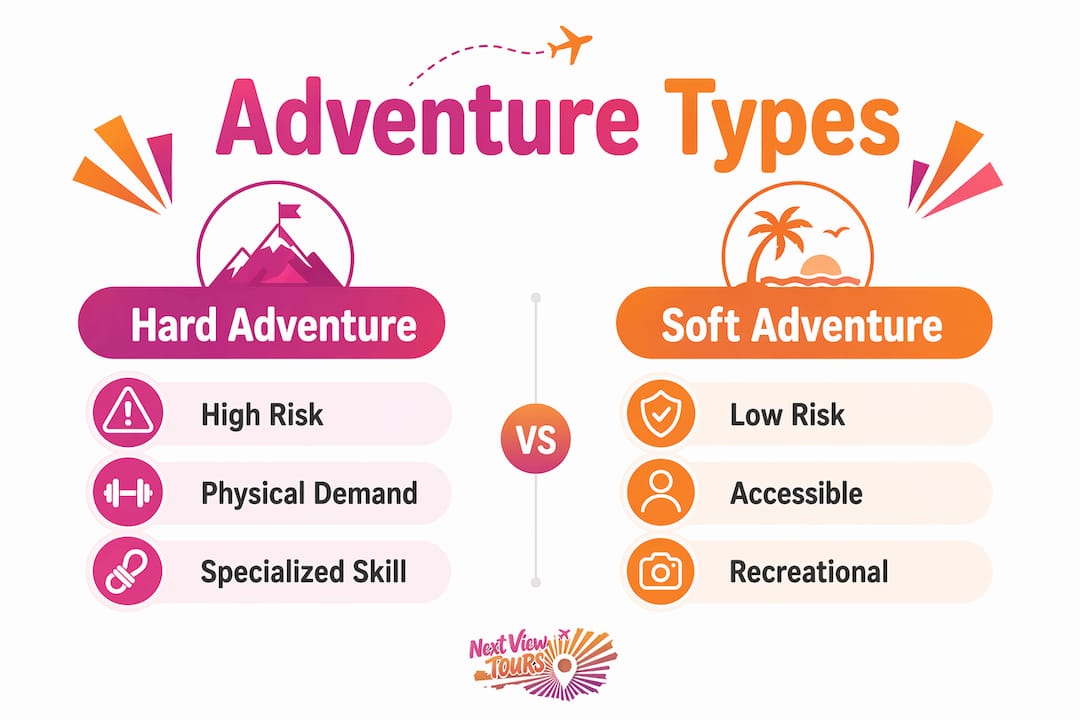
Hard adventure vs. soft adventure: what is the difference?
Adventure tourism is classified into two broad categories: hard adventure and soft adventure. This classification helps travelers match experiences to their fitness level, risk tolerance, and personal goals.
Hard adventure: high intensity, higher stakes
Hard adventure involves activities that carry significant physical demand and measurable risk. These experiences typically require specific gear, prior training, or technical skill. Examples include rock climbing in the Dolomites, white-water rafting on Class IV or V rapids, mountaineering in the Alps, and paragliding over Salzburg. Participants accept a higher degree of uncertainty as part of the experience. The reward is a proportionally intense sense of accomplishment.
Soft adventure: accessible, rewarding, and widely popular
Soft adventure activities constitute the largest share of adventure tourism participants globally, precisely because they are accessible to a wide audience. Hiking on marked trails, cycling through the Bohemian countryside, guided cave tours in Slovakia, or a kayaking day trip on a calm lake all qualify as soft adventure. These activities still push you outside your daily routine, but they do not require specialized training or elite fitness.
| Category | Risk Level | Fitness Required | Examples | Audience |
|---|---|---|---|---|
| Hard Adventure | High | Advanced | Rock climbing, mountaineering, Class V rafting | Experienced, trained travelers |
| Soft Adventure | Low to moderate | Beginner to moderate | Hiking, cycling, kayaking, cave tours | Broad audience, families, beginners |
The boundary between hard and soft adventure is fluid and perception-dependent. A moderate hike in the Tatras Mountains can feel like soft adventure to a seasoned trekker and like hard adventure to a first-time hiker. Environmental conditions, weather, and group dynamics all shift the experience. This is why personal perception matters as much as the activity label itself.
Pro Tip: When selecting an adventure activity, rate yourself honestly on two scales: physical readiness and psychological comfort with uncertainty. Both matter equally. A physically easy activity in an unfamiliar wilderness setting can challenge you just as much as a demanding sport on familiar terrain.
Why cultural interaction and nature connection matter in adventure travel
Physical activity alone does not fully define adventure tourism. The most authentic adventure travel experiences are built on active participation and cultural exchange, not just adrenaline or exertion. This distinction separates a memorable trip from a forgettable workout.
Cultural immersion in adventure tourism goes well beyond visiting a museum or watching a folk performance. It means engaging with communities on their own terms. Consider these examples of genuine cultural interaction within adventure travel:
- Joining a local family in rural Bohemia for a traditional bread-baking session after a morning hike.
- Learning navigation techniques from a Slovak forest guide during a multi-day wilderness trek.
- Participating in a harvest festival in the Austrian countryside as part of a cycling tour through wine country.
- Sharing a meal prepared from foraged ingredients with a local guide after a wildlife tracking excursion in Hungary.
Connection with nature in adventure tourism is equally active. You are not watching nature through a bus window. You are moving through it, reading it, and responding to it. Wildlife tracking in the Carpathian forests, night kayaking under a clear sky in Hallstatt, or swimming in a thermal lake in Slovakia all create a direct, physical relationship with the natural world.
Pro Tip: Ask your tour operator whether local guides are from the communities you will visit. Guides with deep local roots deliver cultural context that no scripted tour can replicate. This single factor often determines whether an adventure trip feels authentic or staged.
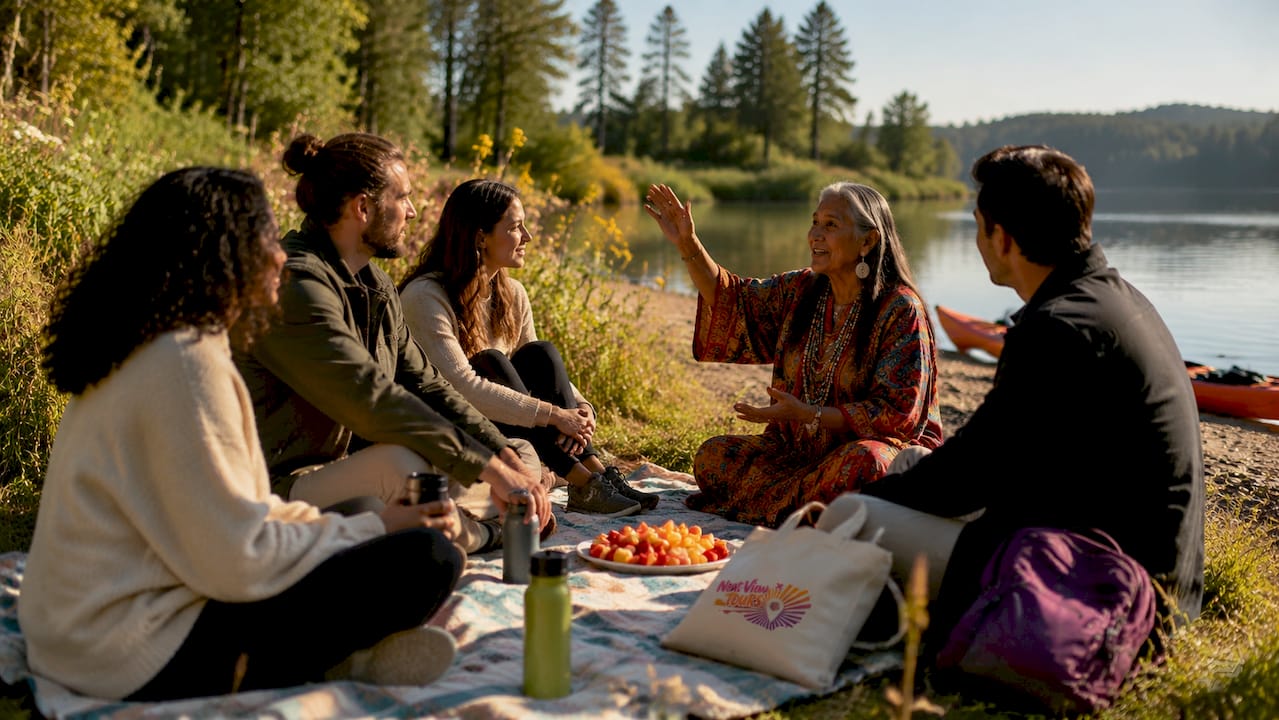
The myth that adventure travel is purely about risk and adrenaline misses the point. Transformative adventure experiences range from kayaking in sea caves to cooking classes in local homes. The common thread is intentional engagement, not danger.
How should you prepare for an adventure tourism trip?
Preparation for adventure travel is more about mindset than muscle. The essential shift lies in moving from passive tourist to active participant before you even pack your bag. Here is a practical sequence for preparing well:
-
Assess your physical baseline honestly. You do not need peak fitness for most soft adventure activities, but you do need to know your limits. Walk or hike regularly in the weeks before a trekking trip. Build stamina gradually rather than cramming exercise into the final week.
-
Define your risk tolerance clearly. Identify which types of uncertainty you find exciting versus genuinely stressful. Heights, water, remote locations, and physical exertion each carry different psychological weight for different people. Choose activities that stretch you without overwhelming you.
-
Research the cultural context of your destination. Adventure tourism in Central Europe, for example, carries specific customs around hospitality, outdoor etiquette, and local land use. Knowing these in advance shows respect and deepens your experience.
-
Pack for function, not fashion. Layering systems, waterproof footwear, and a quality daypack matter far more than brand names. Check the specific gear recommendations from your tour provider and follow them precisely.
-
Prepare for digital disconnection. Many of the best adventure destinations in Europe, from the Slovak karst region to the Austrian lake district, have limited connectivity. Treat this as a feature, not a flaw. Offline maps, downloaded guides, and a paper journal serve you better than a full phone charge.
-
Understand the environmental responsibility you carry. Off-the-beaten-track destinations are increasingly preferred by adventure travelers, which means fragile ecosystems and small communities absorb more visitor impact. Follow Leave No Trace principles and support locally owned businesses.
A practical resource for planning multi-day adventures can help you sequence logistics so that preparation feels manageable rather than overwhelming.
Key takeaways
Adventure tourism delivers its greatest value when physical activity, nature connection, and cultural immersion work together rather than in isolation.
| Point | Details |
|---|---|
| Core definition | Adventure tourism requires at least two of three elements: physical activity, nature, and cultural immersion. |
| Hard vs. soft adventure | Soft adventure reaches the widest audience; hard adventure demands specific skills and higher risk acceptance. |
| Cultural depth matters | Active participation with local communities creates more lasting memories than physical challenge alone. |
| Mindset over muscle | Preparation for adventure travel starts with a mental shift from observer to participant, not just physical training. |
| Market significance | The global adventure tourism market is projected at $1.3 trillion, reflecting mainstream demand for immersive travel. |
What adventure tourism has taught me about meaningful travel
After years of designing and experiencing adventure trips across Europe, from the thermal valleys of Hungary to the limestone gorges of Bohemia, one pattern stands out clearly. The trips that stay with travelers longest are rarely the most extreme ones. They are the ones where something unexpected required genuine engagement.
A group that gets caught in afternoon rain on a Hallstatt ridge hike and has to navigate back with a local guide learns more about the landscape, and themselves, than any clear-weather summit photo could capture. That moment of mild adversity, handled together, becomes the story they tell for years. The shift from consumer to participant is where the real value of adventure tourism lives.
Traveler expectations are also evolving in a direction I find genuinely encouraging. Travelers from Germany, the UK, and increasingly India and China are seeking immersive experiences off the standard tourist circuit. They want to eat where locals eat, walk where locals walk, and understand what makes a place distinct. Adventure tourism, at its best, is the format that delivers exactly that. The physical activity is the vehicle. The culture and the landscape are the destination.
— Next
Explore adventure tours across europe with Nextviewtours
Nextviewtours designs adventure travel experiences across Austria, the Czech Republic, Slovakia, Hungary, and beyond, built around the three pillars that define the category: physical activity, nature, and cultural depth.

Whether you are looking for a soft adventure cycling tour through the Bohemian countryside or a multi-day trekking experience in the Slovak mountains, Nextviewtours matches the experience to your interests and fitness level. Every itinerary integrates local guides, authentic cultural encounters, and natural settings that go well beyond the standard tourist route. Browse the full range of adventure trip types to find the experience that fits your pace, or explore top multi-day options across Europe to start planning your next meaningful trip.
FAQ
What is the standard definition of adventure tourism?
Adventure tourism is defined as travel that includes at least two of three elements: physical activity, connection with nature, and cultural immersion. This definition comes from industry standards used by adventure travel organizations globally.
Do you need to be fit to try adventure tourism?
No. Adventure tourism is defined by curiosity and engagement, not athletic ability. Soft adventure activities like hiking, cycling, and guided nature walks are accessible to most fitness levels.
What are the main types of adventure tourism activities?
Adventure tourism activities split into hard adventure, such as rock climbing, mountaineering, and white-water rafting, and soft adventure, such as hiking, kayaking, cycling, and cultural immersion tours.
How is adventure tourism different from ecotourism?
Adventure tourism prioritizes active physical engagement and personal challenge, while ecotourism focuses on environmental education and conservation. The two sectors overlap but serve different primary traveler motivations.
What is the best way to choose an adventure tourism experience?
Match the activity to your honest physical baseline and risk tolerance, then prioritize operators who use local guides and integrate genuine cultural exchange. A practical trip selection guide can help you narrow down options by destination and activity type.


Comments are closed