 Uncategorized
Most European travelers face the same dilemma when planning a trip: do you wander through cobblestone streets and world-class museums, or do you breathe in mountain air and hike through protected wilderness? City breaks are the most popular leisure trip type among Europeans, with 73% planning intra-Europe travel. Yet nature tourism is booming for entirely different reasons, drawing a growing wave of eco-conscious explorers who want something slower, quieter, and more connected to the land. If you have ever stood at that crossroads, this guide is built for you. We will break down both tour styles side by side so you can plan your ideal European journey with confidence.
Table of Contents
- What defines a nature tour?
- What makes a city tour unique?
- Nature vs city tours: key differences at a glance
- Pros and cons: when to pick nature or city tours
- How to plan your perfect European tour experience
- Discover your next adventure with Next View Tours
- Frequently asked questions
Key Takeaways
| Point | Details |
|---|---|
| Nature tours offer calm | Nature tours deliver relaxation, scenic beauty, and eco-friendly activities perfect for slow-paced explorers. |
| City tours maximize culture | City tours provide access to landmark sights, vibrant culture, and convenience for first-time or short-term visitors. |
| Tour type impacts experience | Your choice between nature or city tours influences itinerary pace, group size, and sustainability. |
| Combination is possible | Blending city and nature tours tailors each trip to fit your interests and maximizes adventure. |
What defines a nature tour?
Nature tours are built around the landscape itself. The destination is not a city skyline or a famous cathedral. It is a glacier, a forest trail, a lakeside village, or a protected wildlife corridor. These experiences prioritize scenery, sustainability, and gentle activities that let you absorb your surroundings at a human pace.
If you are curious about what this looks like in practice, nature tours explained covers the full picture for European destinations. The typical activities you will encounter include:
- Hiking and trail walking through national parks and alpine regions
- Wildlife watching, from bird spotting in wetlands to deer tracking in forested reserves
- Lakeside walks and kayaking in glacial or volcanic lake systems
- Guided park tours led by local naturalists who know the terrain intimately
- Slow travel stays at eco-lodges or sustainable guesthouses
Nature tours attract travelers who want to slow down. They appeal to eco-conscious visitors, families seeking outdoor education, and solo adventurers who find cities overwhelming. The low-impact nature travel philosophy is central to this style, emphasizing minimal footprint and maximum connection with the environment.
“The best nature tours do not just show you a landscape. They teach you to read it.” This is the difference between a scenic drive and a genuinely transformative outdoor experience.
One important nuance: as nature tourism grows in popularity, protected areas face a conservation paradox. More visitors mean more economic support for conservation, but also more pressure on fragile ecosystems. Choosing responsible operators matters enormously. A good nature tourism guide can help you identify which providers genuinely prioritize the environment.
Pro Tip: Book nature tours at least six to eight weeks in advance for peak summer months. Guided spots in protected areas are often capped to limit environmental impact, and they sell out faster than most travelers expect.
What makes a city tour unique?
City tours operate on a completely different energy. They are dense, layered, and endlessly varied. In a single afternoon, you might stand inside a Baroque palace, eat at a centuries-old market, and stumble upon a contemporary art installation tucked into a medieval alley. That kind of cultural compression is something only urban environments can offer.
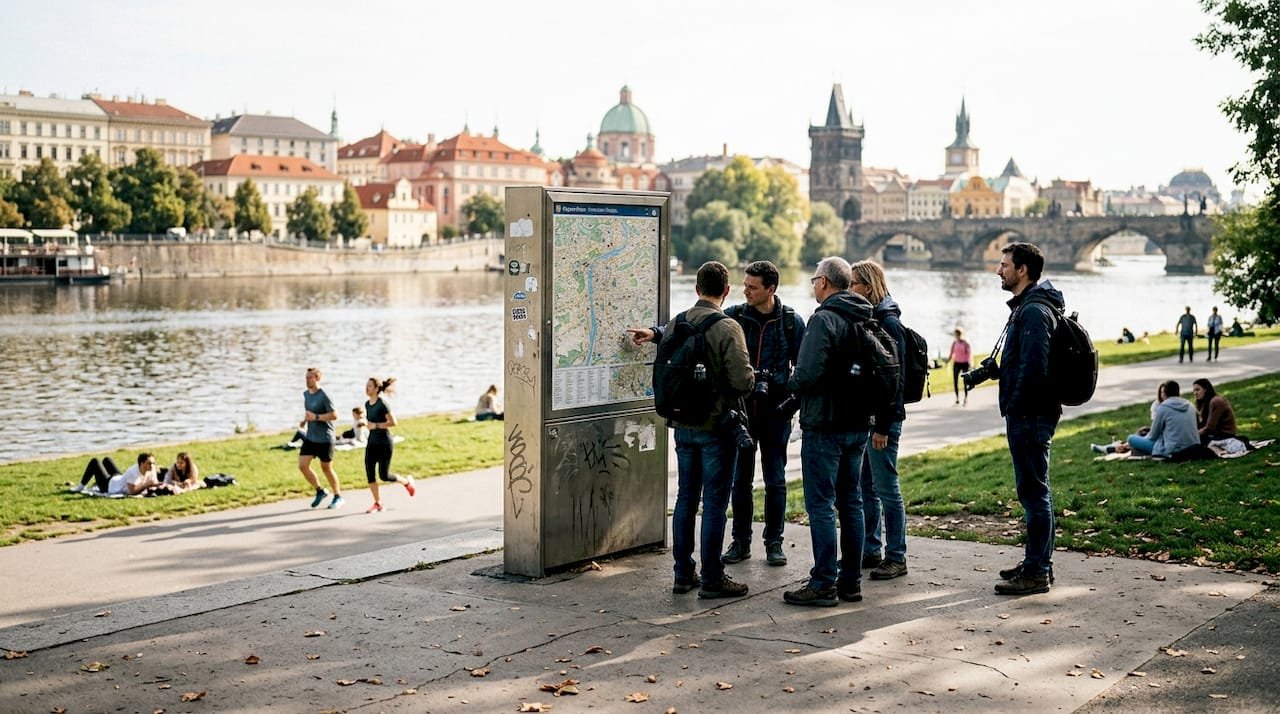
City breaks are the most popular leisure trip type in Europe, and it is easy to understand why. Cities like Vienna, Prague, Budapest, and Salzburg pack extraordinary history, architecture, food, and nightlife into walkable distances. The classic city tour experience typically includes:
- Museum and gallery visits with expert-guided context
- Historic landmark tours covering palaces, cathedrals, and old town districts
- Culinary experiences from street food markets to fine dining
- Nightlife and entertainment options for evening exploration
- Flexible itineraries that suit couples, solo travelers, families, and groups equally
City tours also offer unmatched convenience. Public transport, accommodation variety, and accessibility features make them the easiest option for travelers with limited mobility or tight schedules. If you are planning a warm-weather trip, summer city trip ideas can help you map out the best urban experiences across Europe. For couples specifically, romantic city tours offer curated itineraries designed around shared discovery.
Pro Tip: Arrive at major city landmarks before 9 a.m. or after 4 p.m. to avoid the thickest tourist crowds. Many guided tours offer early-access options that let you experience iconic spaces in near-total quiet.
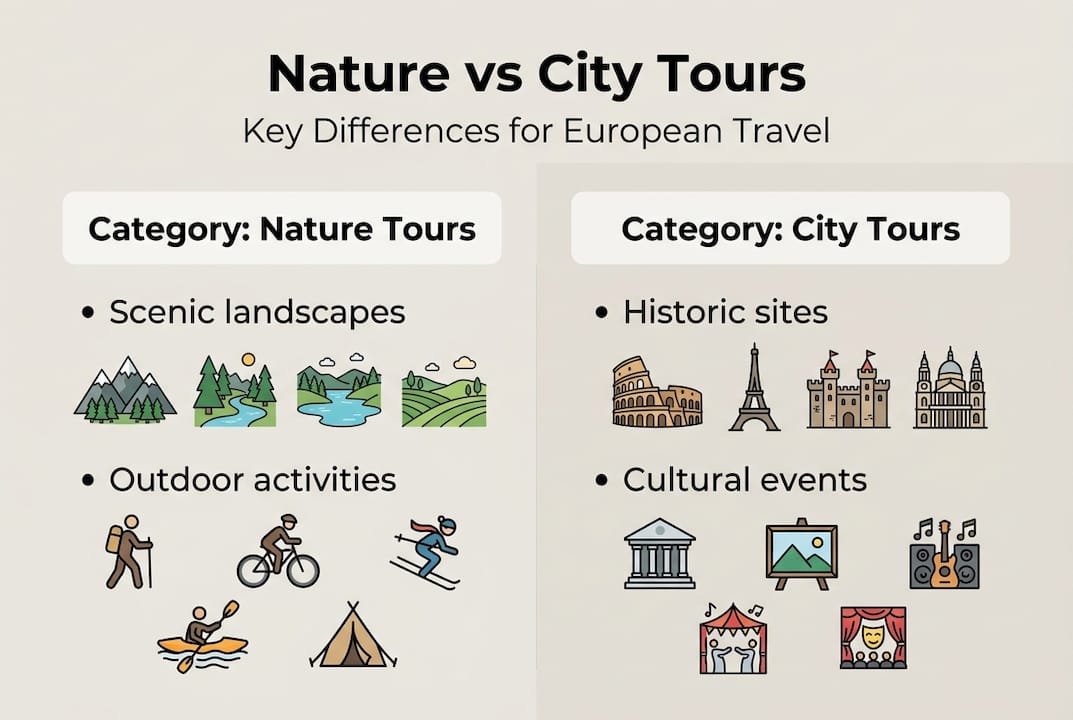
Nature vs city tours: key differences at a glance
With both types defined, here is a side-by-side look to crystallize the main differences for European trips.
| Feature | Nature tours | City tours |
|---|---|---|
| Primary activity | Hiking, wildlife, lakeside walks | Museums, landmarks, culinary scenes |
| Travel pace | Slow, immersive | Fast, varied |
| Typical traveler | Eco-conscious, outdoor lovers | Culture seekers, urban explorers |
| Accommodation | Eco-lodges, rural guesthouses | Hotels, apartments, hostels |
| Crowd factor | Low to moderate | Moderate to high |
| Sustainability | High focus, low impact | Variable, depends on operator |
| Best season | Spring and fall | Year-round, peaks in summer |
Protected areas shape tourism distribution across rural Europe, increasing overnight stays in natural zones while also raising conservation concerns. Meanwhile, 73% of Europeans plan intra-Europe travel with city breaks peaking sharply in summer months.
“Nature and city tours are not competing options. They are two different answers to the same question: what kind of traveler do you want to be right now?”
For travelers interested in learning while they explore, educational city tours offer structured programs that blend history, science, and culture into a single itinerary. These work especially well for student groups or families with curious kids.
Pros and cons: when to pick nature or city tours
Spotting the contrasts is only half the picture. Evaluating pros and cons helps you choose wisely.
Nature tours: pros
- Deep connection with landscapes and wildlife
- Lower crowd density in most destinations
- Strong sustainability credentials when booked responsibly
- Ideal for physical activity and mental restoration
Nature tours: cons
- Over-visitation can harm protected ecosystems if poorly managed
- Limited accessibility for travelers with mobility challenges
- Fewer dining and entertainment options in remote areas
- Weather dependency is higher than in urban settings
City tours: pros
- Culture, food, and nightlife all concentrated in one place
- Excellent accessibility and transport infrastructure
- Flexible scheduling and wide range of tour formats
- Suitable for all group sizes and travel styles
City tours: cons
- Higher crowd density at peak times
- Can feel rushed if you try to cover too much
- Environmental footprint is harder to control
- Sensory overload is a real risk for first-time visitors
To decide between the two, work through this checklist:
- Travel pace: Do you want to move fast and see a lot, or slow down and go deep?
- Sustainability: Is minimizing your environmental impact a priority for this trip?
- Access needs: Does your group include travelers who need urban infrastructure?
- Group size: Large groups often find city tours more logistically manageable.
- Trip length: Short breaks favor cities; longer trips open the door to nature immersion.
Exploring the benefits of European tours in more detail can help you weigh these factors against your specific travel goals.
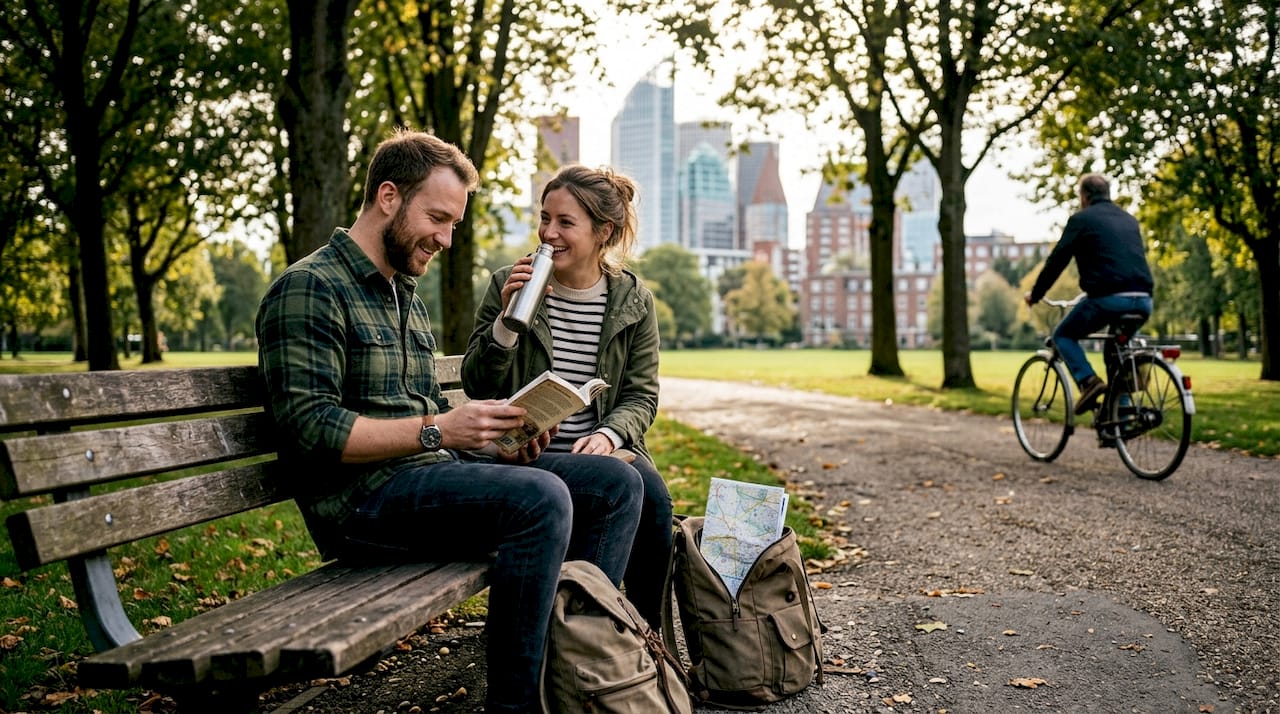
Pro Tip: If you are traveling in a group with mixed preferences, consider a hybrid itinerary. Spend two days in a city like Vienna or Prague, then add a day trip into the surrounding countryside. You get the best of both worlds without sacrificing either.
How to plan your perfect European tour experience
Ready to make your choice? Here is how to turn these insights into the European trip of your dreams.
- Define your travel style first. Are you energized by crowds and cultural density, or restored by open space and quiet trails? Your honest answer shapes everything else.
- Set your trip length. City breaks are concentrated and popular in summer, while nature trips often involve multi-region itineraries that reward longer stays.
- Research your destination’s seasonal rhythm. Alpine nature tours peak in summer and early fall. City tours in Central Europe are vibrant year-round but most crowded in July and August.
- Choose your operator carefully. Look for providers who offer transparent sustainability practices, local guides, and flexible booking options.
- Build in buffer time. Whether you are navigating a city metro or a mountain trail, unexpected moments are often the best ones. Leave room for them.
| Trip type | Best months | Ideal duration | Crowd level |
|---|---|---|---|
| Nature tour | April to June, September | 3 to 7 days | Low to moderate |
| City tour | March to November | 2 to 4 days | Moderate to high |
| Hybrid tour | May, September, October | 5 to 10 days | Variable |
For practical route-building, day trip planning tips offer expert frameworks for structuring your time efficiently. If you want something truly tailored, custom tour ideas can help you design an itinerary that blends city culture with outdoor adventure. For inspiration on sustainable nature stays, luxury eco nature vacation ideas show what thoughtful, low-impact travel can look like at its finest.
Pro Tip: September and early October are arguably the best months for both tour types in Central Europe. Crowds thin out, prices drop, and the light is extraordinary. It is the insider window that most travelers miss.
Discover your next adventure with Next View Tours
Having the information is great, but finding the right provider makes all the difference for a seamless experience. At Next View Tours, we specialize in helping travelers like you move from inspiration to action, whether that means a guided city walk through Vienna’s imperial districts, a lakeside nature escape near Hallstatt, or a fully customized hybrid adventure across Austria, the Czech Republic, Slovakia, and beyond.
We offer day trips, multi-day tours, private experiences, group adventures, and family-friendly itineraries, all designed to match your pace and priorities. You can explore trip types to find the format that fits your travel style, browse our city tour options for urban inspiration, or dive into our customized tour guide to build something entirely your own. Your ideal European adventure is closer than you think, and we are here to help you find it.
Frequently asked questions
What is the main difference between nature and city tours in Europe?
Nature tours focus on scenic landscapes, sustainability, and outdoor activities like hiking or lakeside walks, while city tours center on cultural attractions, historic landmarks, and urban experiences. The core distinction is pace: nature tours slow you down, and city tours speed you up.
Which type of tour is more popular among European travelers?
City breaks remain the most popular leisure trip type among Europeans, though nature tourism is growing steadily as more travelers prioritize sustainability and outdoor connection.
Can I combine city and nature tours in one European trip?
Absolutely. Nature trips favor multi-region exploration, making it easy to pair a city stay with a countryside or mountain excursion. Many travelers find this hybrid approach gives them the richest overall experience.
What are the top factors to consider when choosing a tour style?
Think about your preferred travel pace, your group’s accessibility needs, how much you value sustainability, and how long your trip will be. These four factors will point you clearly toward the right choice.
Are nature tours suitable for families or older travelers?
Nature tours prioritize gentle activities like lakeside walks and guided park tours, making them accessible and enjoyable for a wide range of ages and fitness levels. Many operators also offer family-specific itineraries with adjusted pacing.
Recommended
- Europe Adventure Trip Workflow: Plan Your Ultimate Journey – Next View Tours
- 7 Smart Customised Tour Ideas for Your Next European Adventure – Next View Tours
- How to Select Nature Tours Europe: Step-by-Step Guide – Next View Tours
- Nature Tours Explained: Eco Travel Across Europe – Next View Tours
- Oplevelser for naturelskere: 7 steder i Danmark 2026 – Rejs i Danmark
- Checklist natuurvakantie Ameland: luxe en duurzaam 2026 – Breeze Ameland


Comments are closed