

 Uncategorized
Planning a multi-country European tour feels intimidating at first. The logistics seem complex, the costs feel unpredictable, and the fear of burning out mid-trip is real. But here’s the surprising truth: a well-planned multi-country journey can actually cost less than booking each destination separately, and it can deliver far richer experiences than a single-country stay. Europe welcomed 756 million tourists in recent years, and travelers who combine destinations consistently report better value and deeper memories. This guide walks you through every layer of planning, from route design to packing, so you can travel confidently across borders.
Table of Contents
- Why choose a multi-country tour in Europe?
- Planning your route and itinerary: The essentials
- Transport, passes, and cross-border logistics: What to know
- Packing, budgeting, and cultural tips for a seamless experience
- Why slow-travel beats ‘checklist’ touring: A fresh perspective
- Ready to plan your perfect multi-country adventure?
- Frequently asked questions
Key Takeaways
| Point | Details |
|---|---|
| Smart route planning | Plan your route to reduce wasted travel time and make the most of each destination. |
| Maximize savings | Multi-country tours can save money with smart transport choices and advance bookings. |
| Master logistics | Using rail passes and understanding border requirements helps your tour run smoothly. |
| Cultural awareness | Respect local customs and etiquette to enhance your experience across different borders. |
| Slow travel mindset | Spending more quality time in each country leads to richer memories and less stress. |
Why choose a multi-country tour in Europe?
The idea that visiting multiple countries is always chaotic or expensive is one of the most persistent myths in travel. In reality, Europe’s compact geography and well-connected infrastructure make it one of the easiest regions in the world to explore across borders. When you plan smartly, combining destinations saves you money on long-haul flights, reduces the number of expensive hotels you need to book in major gateway cities, and gives your trip a natural narrative arc.
Think about the contrast between spending two weeks in one country versus moving through three or four. In a single trip, you could experience Vienna’s imperial grandeur, Prague’s medieval charm, Budapest’s thermal culture, and Bratislava’s understated elegance. Each city tells a different story. Together, they form something far more memorable than any single destination could offer alone.
That said, multi-country travel comes with real challenges you should plan for:
- Time absorption: Every border crossing or city change costs you roughly half a day in transit and settling in.
- Hidden costs: Currency exchange fees, ATM charges, and baggage fees on budget airlines add up quickly.
- Visa complexity: While much of Europe falls under the Schengen Area, some countries have separate requirements.
- Decision fatigue: Too many options can lead to poor choices and rushed experiences.
“Multi-country trips are more affordable than separate visits, but travelers must watch for hidden costs like fees and currency exchange.”
The key is balance. You want enough variety to feel the cultural richness of Europe, but not so many stops that you spend more time in transit than in the moment. A good rule of thumb: aim for a minimum of two nights in each location, with three or more nights in cities that reward deeper exploration.
For a broader look at getting started, the Europe tour planning steps at Next View Tours offer a clear framework that works for first-timers and experienced travelers alike.
Planning your route and itinerary: The essentials
Knowing why multi-country tours work, the next step is building an efficient plan. Route design is where most travelers either succeed or struggle, and the difference usually comes down to sequencing.
Here’s a step-by-step approach that works:
- List your non-negotiables first. Write down the three to five destinations you absolutely must visit. These anchor your route.
- Map them geographically. Avoid zigzagging across the continent. Group nearby countries together to minimize travel time.
- Add connectors. Once your anchors are set, look for interesting cities or towns that fall naturally between them.
- Assign realistic time. Budget at least two to three nights per stop. Anything less and you’re just passing through.
- Choose your entry and exit points. This is where open-jaw flights become your best tool. Flying into one city and out of another eliminates expensive backtracking.
Pro Tip: Rick Steves advises tackling destinations with more “cultural hairiness” (places that feel more foreign or complex) earlier in your trip when your energy and curiosity are highest. Save more familiar or relaxed destinations for the end.
Seasonality matters more than most people realize. Mediterranean regions like southern France, Spain, and Italy become crowded and expensive in peak summer. Visiting them in late spring or early fall gives you better weather, thinner crowds, and lower prices. Central European cities like Prague and Vienna are wonderful year-round, though winter brings a magical atmosphere with fewer tourists.

| Destination | Best season | Crowd level | Notes |
|---|---|---|---|
| Vienna, Austria | Spring / Fall | Moderate | Mild weather, cultural events |
| Prague, Czech Republic | Spring / Fall | High in summer | Book ahead in July/August |
| Budapest, Hungary | Year-round | Moderate | Thermal baths best in cooler months |
| Mediterranean coast | Late spring / Early fall | Very high in summer | Avoid August if possible |
| Salzburg, Austria | Summer / Winter | High | Christmas markets are exceptional |
For more detailed guidance, the European tour planning explained page and European day trip tips from Next View Tours offer practical frameworks you can apply directly to your itinerary.
Transport, passes, and cross-border logistics: What to know
With your basic itinerary set, let’s decode the details of actually moving between countries. Transportation is where multi-country tours either flow smoothly or fall apart, and your choices here affect both your budget and your experience.
You have three main options: rail passes, point-to-point train tickets, and budget flights. Each has its place.
Rail passes like Eurail or Interrail offer flexibility and are ideal if your route covers many countries. Over 1.2 million passes were sold in 2023, reflecting strong demand. However, passes don’t always cover seat reservations on high-speed trains, which can cost extra. Always book reservations in advance for routes like Paris to Amsterdam or Vienna to Prague.
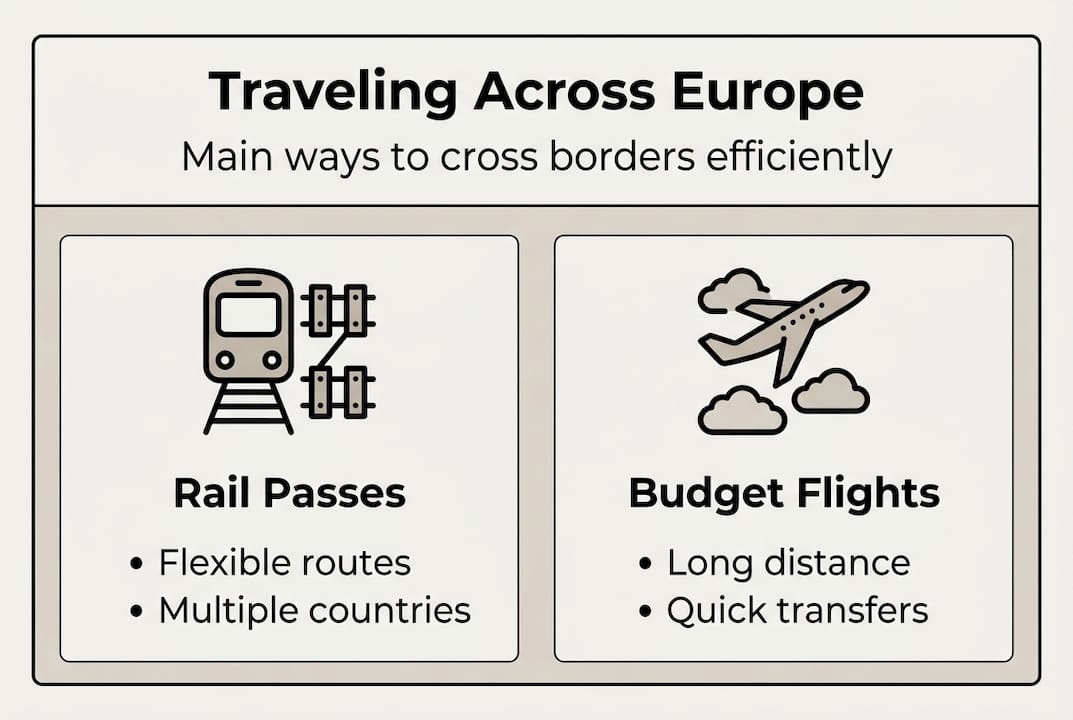
Point-to-point tickets are often cheaper if your route is fixed and you book early. They work well for travelers who have confirmed dates and don’t need flexibility.
Budget flights can save time on longer routes, but factor in airport transfers, baggage fees, and check-in time. What looks like a 40-euro flight can easily become 100 euros once you add the extras.
| Transport type | Best for | Key advantage | Watch out for |
|---|---|---|---|
| Eurail/Interrail pass | Flexible multi-country routes | Freedom to change plans | Reservation fees on fast trains |
| Point-to-point tickets | Fixed itineraries booked early | Lower cost | No flexibility if plans change |
| Budget flights | Long distances | Speed | Hidden fees, airport transfers |
| Night trains | Overnight legs | Saves hotel costs | Limited routes, book early |
Night trains deserve special mention. They function as moving hotels, carrying you from one city to another while you sleep. Routes connecting Vienna, Prague, Budapest, and beyond are growing again in 2026, making them a smart choice for travelers who want to save both time and accommodation costs.
Pro Tip: Always check your passport validity before crossing borders. Most European countries require at least six months of validity beyond your travel dates. Schengen visa holders can stay up to 90 days across member states combined, not per country.
For budget-friendly Europe travel strategies and a deeper look at how to structure your travel adventure workflow, Next View Tours has dedicated resources that break down costs by destination and trip type.
Packing, budgeting, and cultural tips for a seamless experience
Once you know how to move between countries, master the everyday details that make travel smooth and enjoyable. Packing and budgeting are where small decisions compound into big differences.
Packing smart for multi-country trips:
- Pack for the climate range, not just one destination. Central Europe in spring can mean warm afternoons and cold evenings.
- Use a carry-on only if possible. Checked bags slow you down and add fees on budget airlines.
- Bring a universal adapter. Plug types vary across Europe.
- Pack a small day bag for city exploration, separate from your main luggage.
Budgeting realities to plan for:
As noted by travel experts, multi-country trips offer real savings, but hidden costs erode budgets fast. ATM withdrawal fees, dynamic currency conversion charges, and data roaming can add 10 to 15 percent to your total spend if you’re not careful.
- Use a travel-friendly bank card with no foreign transaction fees.
- Withdraw local currency in larger amounts to reduce per-transaction fees.
- Buy a local SIM card or an international eSIM before you travel.
- Budget a daily buffer of 20 to 30 euros for unexpected costs.
Cultural awareness across borders:
Europe’s charm lies in its diversity, and that diversity extends to social norms. Tipping customs vary widely: generous in Austria, modest in Czech Republic, almost unnecessary in Hungary. Dress codes matter in religious sites across all countries. Learning a few words in each local language, even just “hello” and “thank you,” opens doors and earns genuine warmth from locals.
Pro Tip: Download offline maps and a translation app before you arrive in each country. Connectivity gaps happen, especially in rural areas or older train stations.
For inspiration on how to organize your experience, explore customized tour ideas and multi-day trip organization guides that show how different trip styles can be tailored to your pace and interests.
Why slow-travel beats ‘checklist’ touring: A fresh perspective
As you plan your multi-country journey, consider a mindset shift that can transform your experience from good to unforgettable. Most travelers, especially first-timers, fall into the trap of treating Europe like a checklist. Ten countries in fourteen days sounds impressive until you realize you spent most of that time in transit, exhausted, and unable to recall what made each place special.
The real magic of multi-country travel happens in the unhurried moments. A long breakfast in a Vienna coffee house. A spontaneous detour to a Slovak village market. An evening walk along the Danube in Budapest with no agenda. These are the memories that last.
Rick Steves’ core advice is worth repeating here: avoid one-night stands. Every move costs you half a day. Staying longer in fewer places doesn’t mean you’re seeing less. It means you’re actually seeing what you’re visiting.
We’ve seen this pattern repeatedly with travelers who book private tour organization tips through us. The ones who slow down come back more satisfied, more curious, and more eager to return. The ones who rush often feel they need a vacation from their vacation.
Balance is the real goal. Choose depth over breadth, and you’ll leave Europe feeling genuinely enriched.
Ready to plan your perfect multi-country adventure?
You now have the tools to design a multi-country European tour that’s efficient, affordable, and deeply rewarding. The next step is turning that plan into a real experience.
At Next View Tours, we specialize in helping travelers like you bring these journeys to life. Whether you’re drawn to Europe’s diverse trip types, looking for the warmth of Europe family tours, or ready to explore how to choose adventure trips that match your energy and interests, our team is here to guide you. From Vienna to Prague, Salzburg to Budapest, we offer curated options and fully customized itineraries that take the guesswork out of planning.
Frequently asked questions
Are multi-country tours in Europe cheaper than visiting each country separately?
Yes, they often are because you save on long-haul flights and unlock local transport discounts, but as multi-country trip costs show, hidden fees like currency exchange and baggage charges can offset savings if you’re not careful.
What’s the best way to travel between countries in Europe?
Train passes like Eurail offer flexibility for most routes, and with over 1.2 million passes sold in 2023, they remain a popular choice, though budget flights or buses are sometimes faster or more cost-effective depending on your route.
How do I avoid travel fatigue when touring multiple countries?
Limit location changes, plan for downtime, and follow the advice to avoid one-night stays since every move absorbs roughly half a day and disrupts your rhythm.
Do I need separate visas for each European country?
No, not for most travelers. Most of Europe falls within the Schengen Area, which allows a single visa for stays up to 90 days across member states, but always check specific country requirements well before your trip.
Recommended
- How to Plan Europe Tour: Step-by-Step Trip Guide – Next View Tours
- Europe Adventure Trip Workflow: Plan Your Ultimate Journey – Next View Tours
- Tour Planning Explained: Unlocking Better European Journeys – Next View Tours
- Benefits of European Tours: Complete Guide for 2024 – Next View Tours
- International travel tech tips for seamless connectivity | Lumo eSIM Store


Comments are closed